Candidate Kwon Young-se "Sufficient Discussions Must Take Place for Inter-Korean Summit"
[Asia Economy Reporter Yoo In-ho] On the 10th, Kwon Young-se, nominee for Minister of Unification, stated, “We have an open stance toward inter-Korean dialogue, including summit talks, but inter-Korean summits can be pursued only after sufficient prior discussions.”
![[Image source=Yonhap News]](http://www.asiae.co.kr/news/img_view.htm?img=2022042509290542005_1650846546.jpg)
In a written response submitted to the National Assembly Foreign Affairs and Unification Committee on the same day, Kwon responded to a question from Park Hong-geun, a member of the Democratic Party of Korea, regarding the necessity of inter-Korean or South-North-US summit talks after the new government’s inauguration. He said, “Inter-Korean summits need to proceed in a direction that contributes to substantive progress in inter-Korean relations, such as North Korea’s denuclearization, and peace on the Korean Peninsula.”
He indicated that there is no plan to rush the summit, saying, “When the current fluid and serious provocation phase subsides, the time will come to consider specific measures at an appropriate opportunity.”
Regarding the possibility of pursuing an inter-Korean summit, in response to a question from Kim Kyung-hyup of the Democratic Party, Kwon maintained a cautious stance, saying, “Mutual trust must be established and sufficient prior discussions must take place.”
On the Yoon Suk-yeol administration’s North Korea policy, he said, “It is not a hardline policy but a flexible combination of principles and pragmatism,” and added, “We will normalize the current situation of severed inter-Korean dialogue and ongoing North Korean provocations to establish principled inter-Korean relations.”
He further stated, “We will respond to North Korean provocations firmly and with principles, while making every effort to maintain stable situation management and create momentum for dialogue.”
Regarding the cessation of North Korean provocations and denuclearization solutions, he expressed the view that “It is important to create a mutually predictable, phased framework for denuclearization to move toward substantive denuclearization.”
On the Moon Jae-in administration’s Korean Peninsula peace process, he evaluated, “Efforts were made to develop inter-Korean relations, but I think the denuclearization aspect could have been strengthened more pragmatically.”
Regarding the Moon administration’s declaration of the end of the war, he said, “Given the current situation on the Korean Peninsula with ongoing North Korean provocations, it is premature,” and added, “It could be considered once the overall conditions mature.” This appears to practically suggest its abandonment.
On the issue of reopening the Kaesong Industrial Complex, Kwon said, “It can be reviewed according to the progress of North Korea’s denuclearization negotiations and agreement implementation,” and added, “If the issue of large cash transfers to Kaesong, which concerns the international community, is sufficiently resolved, we can consider pursuing partial sanctions exemptions to create conditions for reopening the complex.”
Regarding the distribution of leaflets to North Korea, he said, “Personally, I am opposed, but fundamentally it should be viewed from a liberal perspective,” and added, “We will carefully and comprehensively examine concerns about legal regulation and the safety of residents in border areas.”
Hot Picks Today
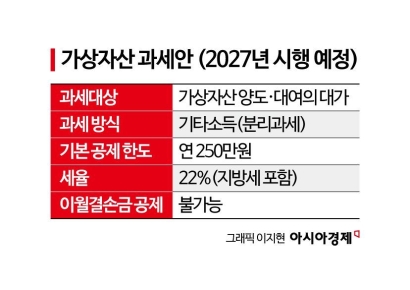 "Stocks Are Not Taxed, but Annual Crypto Gains Over 2.5 Million Won to Be Taxed Next Year... Investors Push Back"
- "Not Jealous of Winning the Lottery"... Entire Village Stunned as 200 Million Won Jackpot of Wild Ginseng Cluster Discovered at Jirisan
- "Even With a 90 Million Won Salary and Bonuses, It Doesn’t Feel Like Much"... A Latecomer Rookie Who Beat 70 to 1 Odds [Scientists Are Disappearing] ③
- "Rather Than Endure a 1.5 Million KRW Stipend, I'd Rather Earn 500 Million in the U.S." Top Talent from SNU and KAIST Are Leaving [Scientists Are Disappearing] ①
- "How Did an Employee Who Loved Samsung End Up Like This?"... Past Video of Samsung Electronics Union Chairman Resurfaces
Kwon, a former ambassador to China, emphasized regarding Korea-China relations, “Although the situation on the Korean Peninsula is difficult due to strategic competition between the US and China, the war in Ukraine, and frequent North Korean provocations, cooperation between Korea and China is very important for denuclearization of the Korean Peninsula and peace and common prosperity in Northeast Asia.”
© The Asia Business Daily(www.asiae.co.kr). All rights reserved.







