500 Companies Say "Yoon Administration Temporarily Suspends Regulations to Boost Economy"
FKI Announces '2022 Regulatory Reform Perception'

[Asia Economy Reporter Kim Jin-ho] A suggestion has been made that the new Yoon Seok-yeol administration, launching on the 10th, should temporarily suspend regulations to stimulate the economy. This is because, despite the Moon Jae-in administration's efforts to promote regulatory reform, companies still feel the impact is minimal.
On the 9th, the Federation of Korean Industries commissioned Research & Research, a polling agency, to survey 500 companies on the '2022 Regulatory Reform Perception Index,' which was found to be 95.9. This is a slight increase compared to last year (92.1).
The Regulatory Reform Perception Index indicates how satisfied companies are with the previous year's government's regulatory reform efforts. Although it rose slightly compared to last year, companies generally remain dissatisfied with the government's regulatory reform achievements.
Companies dissatisfied with regulatory reform cited the introduction or strengthening of regulations in relevant areas (25.8%) and insufficient improvement of core regulations in relevant fields (24.7%) as the main reasons for dissatisfaction. This was followed by 'insufficient resolution of invisible regulations' (19.1%) and 'lack of regulatory reform will among public officials' (18.0%).
In particular, companies that responded as dissatisfied with regulatory reform felt the greatest burden from the 'Serious Accidents Punishment Act' (27.3%).

Regarding the direction of the new government's regulatory reform policy, responses were high for 'temporary suspension of regulations to stimulate the economy' (28.5%) and 'improvement of outdated regulations that conflict with global standards' (22.9%). Next were 'reorganization of related regulations to foster new industries' (20.4%) and 'improvement of public officials' regulatory reform mindset' (13.8%).
The area that the new government should prioritize most for regulatory reform was identified as 'labor regulations' (25.2%). This is interpreted as companies continuing to feel burdened by strengthened labor regulations such as the 52-hour workweek system and the Serious Accidents Punishment Act.
Regarding expectations for the new government's regulatory reform, 24.6% responded 'expect,' while 24.0% responded 'do not expect.'
Hot Picks Today
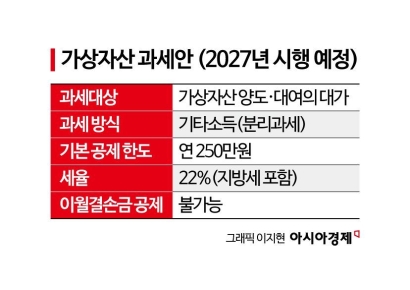 "Stocks Are Not Taxed, but Annual Crypto Gains Over 2.5 Million Won to Be Taxed Next Year... Investors Push Back"
- "Not Jealous of Winning the Lottery"... Entire Village Stunned as 200 Million Won Jackpot of Wild Ginseng Cluster Discovered at Jirisan
- "Even With a 90 Million Won Salary and Bonuses, It Doesn’t Feel Like Much"... A Latecomer Rookie Who Beat 70 to 1 Odds [Scientists Are Disappearing] ③
- "Rather Than Endure a 1.5 Million KRW Stipend, I'd Rather Earn 500 Million in the U.S." Top Talent from SNU and KAIST Are Leaving [Scientists Are Disappearing] ①
- "How Did an Employee Who Loved Samsung End Up Like This?"... Past Video of Samsung Electronics Union Chairman Resurfaces
Yoo Hwan-ik, head of the Industry Division at the Federation of Korean Industries, stated, "Typically, regulatory reform is actively pursued at the beginning of an administration but often ends with a fizzle toward the end," and suggested, "When the new government launches, continuous reform through systemic improvements rather than one-time regulatory reforms is necessary."
© The Asia Business Daily(www.asiae.co.kr). All rights reserved.







