"Car Insurance Fraud Patients Scale 648.4 Billion KRW, Over-treatment Increases When Economy Worsens"

[Asia Economy Reporter Changhwan Lee] A survey revealed that the scale of overtreatment for minor injuries among domestic automobile insurance patients amounts to approximately 640 billion KRW. It is pointed out that as the economy worsens, so-called "nai-ron" patients may increase, which could lead to a rise in automobile insurance premiums.
According to the Insurance Research Institute's report titled "Economic Environmental Changes and Overtreatment of Minor Injuries in Automobile Insurance" on the 20th, based on the 2019 data, the scale of overtreatment for minor injury patients classified as injury grades 12 and 14, calculated through the personal injury claim rates and per capita medical expenses across 17 metropolitan cities and provinces, is 646.8 billion KRW. This accounted for 64.5% of the medical expenses for minor injury patients in automobile insurance in 2019.
The report analyzed that the falsely claimed medical expenses estimated from regional personal injury claim rates and per capita medical expenses amount to 111.5 billion KRW, and the inflated treatment costs for minor injury patients not suspected of false claims, summed by region, total 535.3 billion KRW.
Overtreatment of minor injury patients in automobile insurance is a type of moral hazard. Although the injuries are minor (external environmental changes), patients can receive treatment without any deductible (expanded coverage), and they undergo more treatment than the injury level warrants for the purpose of compensation such as settlement money.
There is concern that overtreatment could ultimately lead to insurance fraud. According to the Financial Supervisory Service's insurance fraud detection statistics, 63.4% of automobile insurance fraud cases in South Korea in 2020 were related to overtreatment. The scale of automobile insurance fraud was 382.9 billion KRW, accounting for 42.6% of the total insurance fraud amount of 898.6 billion KRW.
The problem is that concerns about overtreatment increase as economic conditions worsen. The report evaluated that unemployment rates, consumer price inflation rates, and personal injury claim rates have a proportional relationship.
The analysis suggests that higher unemployment and consumer price inflation rates increase automobile operation (or maintenance) costs, which may lead to a relatively stronger compensation-seeking mentality following accidents.
Ultimately, rising consumer price inflation and unemployment rates can lead to an increase in loss amounts and an expansion of overtreatment through higher personal injury claim rates.
Senior Research Fellow Yongsik Jeon of the Insurance Research Institute stated, "The overtreatment scale of 648.4 billion KRW corresponds to a 4.6 percentage point increase in loss ratio and a 31,200 KRW increase in premiums," adding, "An increase in loss amounts and overtreatment expansion can lead to greater pressure for premium adjustments."
Hot Picks Today
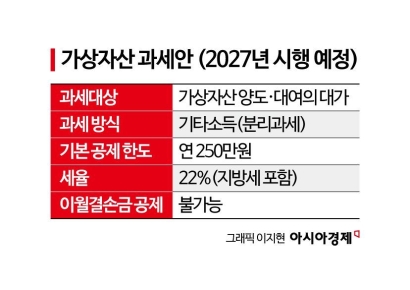 "Stocks Are Not Taxed, but Annual Crypto Gains Over 2.5 Million Won to Be Taxed Next Year... Investors Push Back"
- "Not Jealous of Winning the Lottery"... Entire Village Stunned as 200 Million Won Jackpot of Wild Ginseng Cluster Discovered at Jirisan
- "Rather Than Endure a 1.5 Million KRW Stipend, I'd Rather Earn 500 Million in the U.S." Top Talent from SNU and KAIST Are Leaving [Scientists Are Disappearing] ①
- "How Did an Employee Who Loved Samsung End Up Like This?"... Past Video of Samsung Electronics Union Chairman Resurfaces
- "Even With a 90 Million Won Salary and Bonuses, It Doesn’t Feel Like Much"... A Latecomer Rookie Who Beat 70 to 1 Odds [Scientists Are Disappearing] ③
Senior Research Fellow Jeon emphasized, "There is a continuous need to explore institutional improvements that can suppress the expansion of overtreatment," and "It is necessary to improve compensation systems that can curb the pressure for premium increases caused by rising insurance payouts and overtreatment."
© The Asia Business Daily(www.asiae.co.kr). All rights reserved.