Soaring Exchange Rates... Threatening the 1,250 Won Threshold
Won-Dollar Exchange Rate Surpasses 1240 Won
Highest Increase Since COVID-19 Pandemic
Dollar Demand Rises Amid Prolonged Ukraine Crisis
Inflation and Raw Material Price Instability Intensify
![[Image source=Yonhap News]](http://www.asiae.co.kr/news/img_view.htm?img=2022031510160578686_1647306965.jpg)
As the war between Russia and Ukraine prolongs, there are forecasts that the KRW-USD exchange rate could surge beyond 1,250 won, a psychological threshold for the South Korean economy. Since the 2000s, the 1,250 won level has been regarded as an upper support line for the KRW-USD exchange rate, and it was only breached during critical periods surrounding South Korea, such as the global financial crisis and the COVID-19 pandemic. Economic experts diagnose that the current situation facing the South Korean economy is no less severe. This is due to a multitude of domestic and international risks directly or indirectly affecting the exchange rate, including the possibility of Russia's default, U.S. interest rate hikes, and the lockdown in Shenzhen, China.
According to the financial market on the 15th, the KRW-USD exchange rate started trading at 1,242 won in the Seoul foreign exchange market. Although it fell by 0.3 won compared to the previous trading day, it still remains at a high level. Until mid-last month, many forecasts predicted the exchange rate would hover around the 1,200 won level, but as Russia's invasion of Ukraine intensified and global inflation concerns spread, the exchange rate surged to its highest level in 1 year and 10 months the day before.
Typically, during global economic crises, demand for the U.S. dollar, considered a safe-haven asset, surges, causing the KRW-USD exchange rate to rise sharply. The most recent example was in early 2020, when fears of an economic recession due to the suspension of economic activities in major countries amid the spread of COVID-19 caused the exchange rate to spike to around 1,280 won. At that time, demand for the dollar surged, leading to a simultaneous plunge in the KOSPI and KOSDAQ indices.
The recent sharp rise in the exchange rate is also due to signs that the Ukraine crisis may prolong and the imminent interest rate hike by the U.S. Federal Reserve (Fed), which has caused a rapid increase in dollar demand. With investment sentiment shrinking, domestic stock prices are also struggling. On this day, the KOSPI opened at 2,630.31, down 15.34 points (0.58%) from the previous trading day.
If geopolitical risks persist, there is a high possibility that the 1,250 won level, considered the floor for the won's value decline, will be breached. Looking at past cases, the exchange rate has shown volatility whenever there were major international risks such as the 2008 global financial crisis, the 2010 European fiscal crisis involving Greece, the 2016 Chinese credit crisis, and the 2019 U.S.-China trade dispute. Gong Dong-rak, a researcher at Daishin Securities, explained, "Most of the external conditions surrounding the exchange rate are perceived as factors exerting additional upward pressure on the exchange rate," adding, "There is also a possibility that the exchange rate will exceed 1,250 won in the short term." Some even suggest that the exchange rate could reach the 1,300 won level for the first time in 12 years and 8 months since July 13, 2009.
If the exchange rate rises excessively, it could lower the export competitiveness of domestic companies and further increase domestic inflationary pressures, inevitably harming the domestic economy. A foreign exchange operator at the Bank of Korea pointed out on this day, "With the escalation of geopolitical risks related to Russia's invasion of Ukraine, uncertainties regarding the normalization of major countries' monetary policies are gradually increasing," adding, "Amid economic sanctions against Russia, the rise in raw material prices is expected to expand, while concerns about economic slowdown are also significantly increasing."
Hot Picks Today
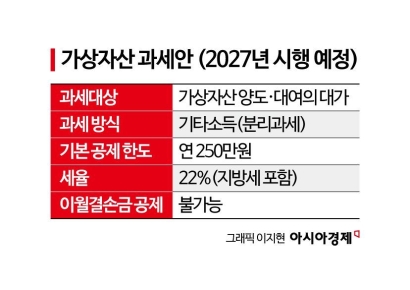 "Stocks Are Not Taxed, but Annual Crypto Gains Over 2.5 Million Won to Be Taxed Next Year... Investors Push Back"
- "Not Jealous of Winning the Lottery"... Entire Village Stunned as 200 Million Won Jackpot of Wild Ginseng Cluster Discovered at Jirisan
- "Even With a 90 Million Won Salary and Bonuses, It Doesn’t Feel Like Much"... A Latecomer Rookie Who Beat 70 to 1 Odds [Scientists Are Disappearing] ③
- "Rather Than Endure a 1.5 Million KRW Stipend, I'd Rather Earn 500 Million in the U.S." Top Talent from SNU and KAIST Are Leaving [Scientists Are Disappearing] ①
- "How Did an Employee Who Loved Samsung End Up Like This?"... Past Video of Samsung Electronics Union Chairman Resurfaces
Some opinions suggest that since the exchange rate has already surpassed the 1,240 won level, forecasting the upper limit is not very meaningful. However, considering that the exchange rate rose to the 1,280 won level during the early spread of COVID-19 before continuously declining, there is also analysis that the rise will be limited around 1,280 won. The market expects that peace negotiations over the Ukraine crisis, U.S. Fed interest rate hikes, and raw material prices will influence exchange rate volatility.
© The Asia Business Daily(www.asiae.co.kr). All rights reserved.







