Supreme Court Sentences Emergency Patient Transport Company CEO to 18 Years for Assaulting Employee and Neglect Leading to Death

[Asia Economy Reporter Choi Seok-jin, Legal Affairs Specialist] The head of an emergency patient transport company was sentenced to a heavy prison term after repeatedly assaulting and neglecting an employee, leading to the employee's death.
According to the legal community on the 1st, the Supreme Court's 2nd Division (Presiding Justice Cho Jae-yeon) recently upheld the original sentence in the appeal trial of Mr. A, who was charged with murder and violations of the Labor Standards Act (assault on an employee), sentencing him to 18 years in prison and ordering him to wear an electronic location tracking device for 10 years.
Mr. A, who operated a private emergency patient transport company in Gimhae City, Gyeongsangnam-do, was tried on charges of murdering emergency medical technician Mr. B, an employee, by assaulting him from around 1:24 p.m. on December 24, 2020, until the early morning of the following day.
At the time, Mr. A began assaulting Mr. B because Mr. B had caused an accident while driving the ambulance and failed to take appropriate measures. When Mr. B was unable to walk properly due to the assault, Mr. A continued the assault, accusing him of "pretending" and other reasons.
The assault lasted about 12 hours, during which Mr. B suffered fractured ribs and severe bleeding, falling into traumatic shock and gradually losing strength and consciousness. However, Mr. A left Mr. B collapsed on the cold office floor and slept in the duty room for seven hours.
Upon waking in the morning, Mr. A left Mr. B groaning on the office floor unattended for about an hour before placing him on a makeshift bed and moving him to a private ambulance. However, Mr. A left Mr. B unattended in the ambulance until they reached the restaurant he operated. Ultimately, Mr. B died from multiple injuries, including the mechanism of traumatic shock. Mr. A reported the incident to 119 (emergency services) seven hours after Mr. B's death.
The first-instance court found Mr. A guilty of murder, sentencing him to 18 years in prison and ordering him to wear an electronic location tracking device for 10 years after release.
Mr. A claimed in court that he assaulted Mr. B only to make him obey and work, denying any intent to kill, but this was not accepted. The Supreme Court precedent was cited, stating that the intent required for murder does not necessarily require a purpose or planned intent to kill; it is sufficient to recognize or foresee the possibility or risk that death may result from one's assault.
The court also pointed out that Mr. A, who had eight prior convictions for violence, gradually increased the severity of the assaults, repeatedly attacking the same victim. He forced the victim to say he was pretending to be ill and filmed it, demonstrating a bold and cruel method of crime. The court also noted the very poor circumstances after the crime, such as attempts to conceal the murder or destroy evidence.
Regarding the order to wear the electronic location tracking device, the court stated, "The defendant also committed violence against others besides the victim, and the defendant's spouse and employees feared him and could not stop the murder. Considering this, the defendant appears to have weak social bonds that could help prevent recidivism after release. For the defendant's correction and prevention of reoffending, additional measures such as this order are necessary after reintegration into society."
The appellate court and the Supreme Court also agreed with the first-instance court's judgment.
In the appeal trial, Mr. A argued that the second-instance court's ruling was illegal for not reducing his sentence despite his voluntary surrender.
However, the Supreme Court pointed out, "Even if voluntary surrender is recognized, the court may only reduce or exempt the sentence at its discretion. Therefore, the appellate court's failure to reduce the sentence for voluntary surrender is not illegal, and the claim that the ruling is illegal for not reducing the sentence falls under an argument of excessive sentencing."
Hot Picks Today
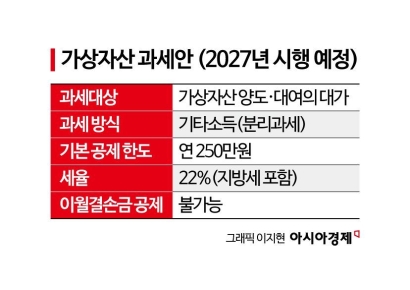 "Stocks Are Not Taxed, but Annual Crypto Gains Over 2.5 Million Won to Be Taxed Next Year... Investors Push Back"
- "Not Jealous of Winning the Lottery"... Entire Village Stunned as 200 Million Won Jackpot of Wild Ginseng Cluster Discovered at Jirisan
- "Even With a 90 Million Won Salary and Bonuses, It Doesn’t Feel Like Much"... A Latecomer Rookie Who Beat 70 to 1 Odds [Scientists Are Disappearing] ③
- General Strike D-1: Final Negotiations Between Samsung Electronics Labor and Management Over One Key Issue
- "How Did an Employee Who Loved Samsung End Up Like This?"... Past Video of Samsung Electronics Union Chairman Resurfaces
Furthermore, the court stated, "Considering the defendant's age, character, environment, relationship with the victim, motives, means and results of each crime, and circumstances after the crime as recorded, even if the circumstances argued in the appeal are taken into account, it cannot be said that the appellate court's decision to uphold the first-instance sentence of 18 years imprisonment is grossly unfair," thus dismissing Mr. A's appeal.
© The Asia Business Daily(www.asiae.co.kr). All rights reserved.