Oil Refiners Increased January Operating Rates... Closely Watching 'Ukraine Invasion' (Comprehensive)
January Operating Rate Rises to Average 80%
Increased Volatility from Russia Crisis Poses Burden

On the 24th (local time), when Russia launched its invasion of Ukraine, flames and smoke rose from the Border Guard duty facility in the Kyiv area, the capital of Ukraine, which was destroyed by shelling. (Image source=Yonhap News)
View original image[Asia Economy Reporter Moon Chaeseok] As international crude oil prices surged, refining margins improved, prompting oil refiners to raise their plant operating rates to an average of over 80%. This marks the first time in 1 year and 10 months since March 2020, when COVID-19 began spreading in earnest in South Korea, that operating rates have climbed into the 80% range. The Singapore complex refining margin, a profitability indicator, is currently in the $7 range per barrel, exceeding the breakeven point of $4?5 per barrel, suggesting potential for improved earnings. However, the increased volatility in oil prices due to Russia's invasion of Ukraine this month is cited as a risk factor.
According to the Korea National Oil Corporation and the Korea Petroleum Association on the 25th, the average operating rate of domestic refiners last month was 81.6%, up 2.9 percentage points from December 2021. It rose 9.9 percentage points compared to 71.7% in the same month last year. Operating rates exceeding 80% have not been seen since March 2020 (80.65%), marking 1 year and 10 months. The annual average operating rate fell from 87.8% in 2018 and 82.8% in 2019 to 75.9% in 2020 and 74.4% in 2021 after COVID-19, but has recovered to 81.6% this year.

The refining margin, a profitability indicator, has continued its upward trend, recording over $7 per barrel for three consecutive weeks. According to the securities industry, it was $7.5 in the first week of February, $7.4 in the second week, and $7.4 again last week. This is the first time since four consecutive weeks from the second week of October to the first week of November last year that the refining margin has stayed above $7 for three straight weeks. The average refining margin for February is $7.7, marking the highest level in 2 years and 4 months since September 2019 ($7.7).
According to the refining industry, refiners' earnings typically increase when oil prices "steadily trend upward." Despite the impact of Omicron last month, refiners raised their operating rates because the consensus is that they anticipated increased oil demand due to the global economic recovery.
However, if oil price volatility increases due to Russia's invasion of Ukraine, it could become a burden for refiners. On the 24th (local time), West Texas Intermediate (WTI) crude oil futures and Brent crude futures both surpassed $100 per barrel for the first time in 8 years since 2014. Global investment banks such as JP Morgan forecast that international oil prices could rise to $150 per barrel in the first quarter. If the surge in oil prices is driven by supply concerns rather than demand recovery, the margin spread between refined product prices and crude oil prices could narrow, reducing refiners' profits.
Hot Picks Today
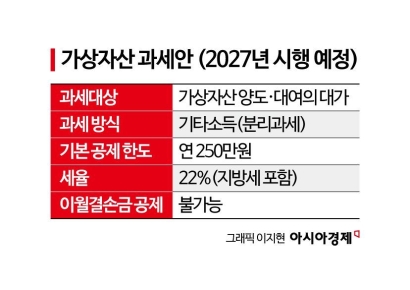 "Stocks Are Not Taxed, but Annual Crypto Gains Over 2.5 Million Won to Be Taxed Next Year... Investors Push Back"
- "Not Jealous of Winning the Lottery"... Entire Village Stunned as 200 Million Won Jackpot of Wild Ginseng Cluster Discovered at Jirisan
- "Even With a 90 Million Won Salary and Bonuses, It Doesn’t Feel Like Much"... A Latecomer Rookie Who Beat 70 to 1 Odds [Scientists Are Disappearing] ③
- General Strike D-1: Final Negotiations Between Samsung Electronics Labor and Management Over One Key Issue
- "How Did an Employee Who Loved Samsung End Up Like This?"... Past Video of Samsung Electronics Union Chairman Resurfaces
An industry official said, "If oil prices surge due to supply concerns rather than demand increases, uncertainty grows, which can hinder stable earnings growth for refiners. We need to closely monitor whether Russia's invasion of Ukraine will turn into a prolonged conflict during the process of adjusting operating rates."
© The Asia Business Daily(www.asiae.co.kr). All rights reserved.