[Weekly Review] Last Year's National Budget Deficit 30 Trillion Won... Countries with Large Fiscal Spending See Higher Inflation

[Asia Economy Sejong=Reporter Dongwoo Lee] The national budget recorded a deficit for the third consecutive year last year. This is the result of increased fiscal spending due to COVID-19, and it is certain that the government's finances will record a deficit again this year, making a historic first of four consecutive years of deficits after the statistics are compiled. Even with the new government taking office, it will be difficult to significantly reduce the increased spending, raising concerns that fiscal soundness issues could hamper our economy for years to come.
First Three Consecutive Years of Deficit Since the IMF Crisis
According to the "Monthly Fiscal Trends and Issues February Edition" released by the Ministry of Economy and Finance on the 17th, the government's fiscal status indicator, the "integrated fiscal balance," was tentatively estimated to have a deficit in the 30 trillion won range for the year 2021.
The integrated fiscal balance is the figure obtained by subtracting net expenditures from net revenues of the central government. Last year, total revenues were estimated at 570 trillion won, and total expenditures at around 600 trillion won. The Ministry of Economy and Finance had forecasted a 90.3 trillion won deficit based on the second supplementary budget last year, but due to a sharp increase in real estate tax revenues, national taxes collected exceeded initial expectations by 61 trillion won, reducing the deficit size somewhat. The deficit widened slightly compared to the cumulative deficit of 22.4 trillion won from January to November estimated last month.
Looking in detail at last year's total revenues, national tax revenues amounted to 344.1 trillion won, an increase of 58.6 trillion won compared to the previous year. The tax collection progress rate was 109.5%. Asset-related taxes centered on real estate, such as capital gains tax, inheritance and gift tax, comprehensive real estate tax, and securities transaction tax, surged, and corporate tax also increased, resulting in a 61.2608 trillion won (21.6%) increase compared to the original budget (282.8174 trillion won). Non-tax revenues such as fines were estimated at 30 trillion won, and fund revenues at 196 trillion won.
Annual total expenditures reached a record high of 600 trillion won, increasing by 50 trillion won from the previous year due to COVID-19 damage support, quarantine response, and economic support. As a result, the government's integrated fiscal balance recorded deficits for three consecutive years: -12 trillion won in 2019, -71.2 trillion won in 2020, and around -30 trillion won in 2021. This is the first time since the foreign exchange crisis from 1997 to 1999 that there have been three consecutive years of deficits.
Countries That Spent More Money Saw Higher Inflation
Countries with larger COVID-19-related fiscal spending than South Korea generally experienced higher inflation rates. While monetary policy by central banks, such as interest rates, is cited as the main cause, large-scale government fiscal spending is also pushing prices up. Some political circles demanding an increase in the supplementary budget argue that South Korea's fiscal spending is relatively low, but there are growing concerns that expanding the supplementary budget and injecting more money could further stimulate rapidly rising inflation.
According to a review report by the National Assembly Budget and Accounts Committee and data from various national statistical agencies compiled on the 15th, from March 2020 when COVID-19 emerged to September 2021, South Korea's fiscal spending ratio to GDP was 16.5%, which is lower than the United States (27.9%), Japan (45.0%), the United Kingdom (36.0%), Germany (43.1%), and France (24.8%), but inflation rates were generally lower as well.
As of December last year, when South Korea's consumer prices rose 3.7% compared to a year earlier, the United States, with a fiscal spending ratio 1.7 times higher, had an inflation rate of 7.0%. The United Kingdom and Germany, with fiscal spending ratios 2.2 and 2.6 times higher respectively, had inflation rates of 4.8% and 5.7% (5.3% when applying Germany's internal standards). France, with a fiscal spending ratio 1.5 times higher, had an inflation rate of 3.4%, similar to South Korea. Japan, which spent the most relative to GDP, had a relatively low inflation rate of 0.8%.
In particular, the United States, where "direct fiscal spending" such as expenditure expansion and tax reductions, rather than "indirect fiscal spending" like equity investment, loans, guarantees, asset purchases, and debt assumption, accounted for the largest share at 25.5% of GDP, had the highest inflation rate at 7.0%. The increase compared to the inflation rate in December 2019 before COVID-19 (2.3%) was 4.7 percentage points, larger than other countries (UK 3.4 points, Germany 4.2 points, France 1.8 points). Inflation in January this year also reached 7.5% year-on-year, the highest in 40 years since February 1982.

Hong Nam-ki, Deputy Prime Minister and Minister of Economy and Finance, is delivering opening remarks at the "Expanded Macroeconomic and Financial Meeting" held at the Bankers' Hall in Jung-gu, Seoul on the 11th. Attending the meeting were Deputy Prime Minister Hong, Lee Ju-yeol, Governor of the Bank of Korea, Jung Eun-bo, Governor of the Financial Supervisory Service, and other heads of economic and financial authorities.
View original imageNumber of Employed Increased by 1.135 Million in January... Largest Increase in 22 Years
The number of employed persons in January increased by 1.135 million compared to the same period last year. This is the largest increase in 21 years and 10 months since March 2000 (1.211 million). This is due to the base effect of the employment shock last January when employment dropped by nearly 1 million due to COVID-19 and the favorable export conditions. Despite the strong spread of Omicron, employment in accommodation and food service industries, which were among the hardest hit by COVID-19, increased for two consecutive months.
According to the "January Employment Trends" recently released by Statistics Korea, the number of employed persons last month was 26.953 million, an increase of 1.135 million compared to a year earlier. This marks 11 consecutive months of increase since the rebound in March last year.
In particular, employment among people in their 30s turned positive for the first time in 23 months, resulting in employment increases across all age groups for the first time in 90 months. Employment among the youth increased by 321,000, marking the largest increase since February 2000.
Hot Picks Today
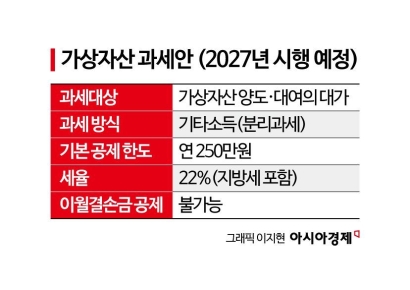 "Stocks Are Not Taxed, but Annual Crypto Gains Over 2.5 Million Won to Be Taxed Next Year... Investors Push Back"
- "Not Jealous of Winning the Lottery"... Entire Village Stunned as 200 Million Won Jackpot of Wild Ginseng Cluster Discovered at Jirisan
- "Rather Than Endure a 1.5 Million KRW Stipend, I'd Rather Earn 500 Million in the U.S." Top Talent from SNU and KAIST Are Leaving [Scientists Are Disappearing] ①
- "How Did an Employee Who Loved Samsung End Up Like This?"... Past Video of Samsung Electronics Union Chairman Resurfaces
- "Even With a 90 Million Won Salary and Bonuses, It Doesn’t Feel Like Much"... A Latecomer Rookie Who Beat 70 to 1 Odds [Scientists Are Disappearing] ③
Employment last month also increased by 68,000 compared to the previous month (seasonally adjusted), recovering to 100.5% of the pre-COVID-19 crisis level. The employment rate for those aged 15 and over was 59.6%, up 2.2 percentage points from the same period last year. The number of unemployed was 1.143 million, down 427,000 from a year earlier. The unemployment rate fell by 1.6 percentage points to 4.1%. The economically inactive population was 17.104 million, down 476,000, marking 11 consecutive months of decline.
© The Asia Business Daily(www.asiae.co.kr). All rights reserved.







