From Hanbok to Vietnamese Traditional Dress... "China's Theft is Absurd"

[Asia Economy Reporter Hwang Sumi] Following the controversy over the Korean traditional costume Hanbok, China’s cultural appropriation surrounding Vietnam’s Ao Dai has become a new issue.
According to Vietnamese media reports, China Daily introduced a garment showcased by a certain brand during the 2019 Spring-Summer Fashion Week as an innovative Chinese-style design.
This angered Vietnamese netizens. Despite the top being as long as the Vietnamese traditional Ao Dai and even wearing the traditional Vietnamese hat, there was no mention of it being Vietnamese style; instead, it was described as Chinese-style design.
The Ao Dai is a Vietnamese traditional costume characterized by a long top with slits on the sides extending below the waist. It must be worn with pants and has long sleeves. In contrast, the Chinese Qipao is heavily influenced by Western styles, often featuring a long top without pants, revealing more skin and having a more curved silhouette.
China claims that the Ao Dai is a modified form of the Qipao.
Vietnam responded to China’s claim with reactions such as "It’s shocking to steal like this" and "It’s absurd."
Another incident that provoked Vietnam was at the 2020 Miss Earth pageant held online, where a Chinese contestant wore an Ao Dai as her traditional costume.
At that time, the Vietnamese side protested, questioning why the long top and pants worn by the contestant were considered traditional Chinese attire. However, neither the contestant nor the Miss Earth organization issued any statements.
Hot Picks Today
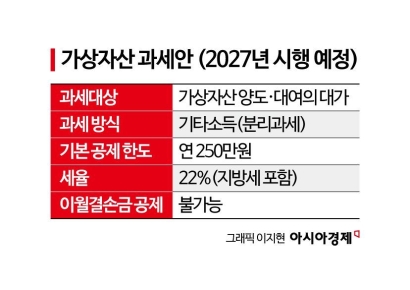 "Stocks Are Not Taxed, but Annual Crypto Gains Over 2.5 Million Won to Be Taxed Next Year... Investors Push Back"
- "Not Jealous of Winning the Lottery"... Entire Village Stunned as 200 Million Won Jackpot of Wild Ginseng Cluster Discovered at Jirisan
- "Rather Than Endure a 1.5 Million KRW Stipend, I'd Rather Earn 500 Million in the U.S." Top Talent from SNU and KAIST Are Leaving [Scientists Are Disappearing] ①
- "How Did an Employee Who Loved Samsung End Up Like This?"... Past Video of Samsung Electronics Union Chairman Resurfaces
- "Even With a 90 Million Won Salary and Bonuses, It Doesn’t Feel Like Much"... A Latecomer Rookie Who Beat 70 to 1 Odds [Scientists Are Disappearing] ③
Meanwhile, at the opening ceremony of the 2022 Beijing Winter Olympics held on the 4th, a woman wearing Hanbok appeared as a representative of a Chinese ethnic minority, sparking controversy. Domestic netizens strongly opposed this, saying, "China’s act of claiming Hanbok, a uniquely Korean costume, as its own," and especially foreign viewers who watched the opening ceremony expressed concerns that they might mistake Hanbok for Chinese attire, criticizing it as "cultural invasion."
© The Asia Business Daily(www.asiae.co.kr). All rights reserved.







