Samsung Electronics Sets Record High Sales... Overcoming 'Winter' Concerns, Demonstrates Semiconductor Power

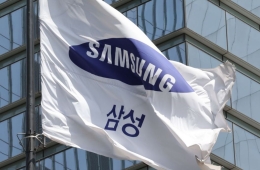
Samsung Electronics achieved a record high performance with annual sales exceeding 279 trillion won. On the 7th, Samsung Electronics announced that its preliminary consolidated results for last year showed sales of 279.04 trillion won and an operating profit of 51.57 trillion won. The Samsung flag is fluttering in the wind in front of Samsung Electronics' Seocho building on this day. Photo by Moon Honam munonam@
View original image[Asia Economy reporters Jeong Hyunjin and Gu Eunmo] Samsung Electronics' record-high sales last year were largely due to semiconductors. Although the year began with high expectations for a semiconductor supercycle, concerns grew in the second half that the memory semiconductor market would face a 'winter' due to a sudden downturn. However, overall semiconductor demand remained solid, and the decline in the memory market was more limited than expected, resulting in minimal damage. Strong sales in the set sectors such as mobile and consumer electronics also contributed to the record performance.
This year, memory semiconductors are expected to improve in the second half, and foundry (semiconductor contract manufacturing) prices are anticipated to rise, boosting both sales and profitability. With mobile and home appliances demand expected to increase alongside economic recovery, rosy forecasts have emerged since the beginning of the year that Samsung Electronics could surpass the 300 trillion won sales mark.
Semiconductors Achieve Record Sales... 'Alert' to Market Changes
Samsung Electronics did not disclose segment-specific results on this day, but securities firms estimate that the semiconductor division posted sales in the high 26 trillion won range and operating profit in the mid-9 trillion won range in the fourth quarter. Semiconductor sales exceeded the previous quarterly record set in the third quarter, and operating profit is estimated to have significantly surpassed that of the first and second quarters. This was driven by increased IT investments by companies and growing demand for data centers, which boosted server DRAM demand. Based on this, annual semiconductor sales last year are estimated at around 95 trillion won, with operating profit near 30 trillion won, far exceeding the 86.3 trillion won in semiconductor sales during the supercycle year of 2018.
Samsung Electronics closely monitored changes in the memory semiconductor market last year. At the start of the year, it was expected that the semiconductor shortage would continue and memory semiconductor demand would remain high, sustaining an upward trend throughout the year. However, the situation reversed in the second half. For example, the fixed transaction price of DDR4 8Gb 1Gx8 2133MHz PC DRAM rose 33% compared to the end of the previous year in the first half of last year but dropped more than 9% in October, the first month of the fourth quarter. Nevertheless, the price decline in memory semiconductors in the second half was less severe than expected, and demand for server semiconductors remained high. Based on this, Samsung Electronics reclaimed the global semiconductor No. 1 position from Intel after three years.
Semiconductor Boom Expected Again This Year... Countdown to 300 Trillion Won in Sales

The semiconductor industry, which determines Samsung Electronics' performance, is expected to remain strong this year. The memory semiconductor market, which has been in a downcycle since the second half of last year, is anticipated to recover sooner than expected, possibly as early as the second quarter or at the latest during the second half of this year. Securities firms have revised their forecasts, expecting the price decline for DRAM and NAND flash to be less severe than initially predicted, adjusting the expected drop from the 10% range to single digits. Additionally, Samsung's expanding foundry business is experiencing price increases due to the global semiconductor shortage, which is expected to drive both sales growth and profitability improvements.
Lee Wonsik, a researcher at Korea Investment & Securities, said, "We have raised Samsung Electronics' annual memory segment sales estimate to 89.2 trillion won and operating profit estimate to 34.1 trillion won, up 8% and 22%, respectively. As set production improves and front-end companies reduce inventory of memory products, recent lockdown measures in the Xi'an region by the Chinese government have caused supply disruptions for both DRAM and NAND, creating a more favorable pricing negotiation environment for Samsung Electronics."
Samsung Electronics plans to continue expanding its business competitiveness through large-scale investments in the semiconductor sector this year as well. The third semiconductor production line, 'P3,' at the Pyeongtaek campus is scheduled for completion in the second half of this year, and preparations for the fourth production line, 'P4,' will be underway. Additionally, construction of the second foundry plant in the United States, announced last year, is expected to begin in the first half of this year.
Strong Sales in Sets Including Foldable Phones and TVs
Another key driver of Samsung Electronics' strong performance last year was foldable phones. The high-end third-generation foldable phones, the Galaxy Z Fold3 and Galaxy Z Flip3, released in August last year, are estimated to have sold about 8 million units, surpassing the total foldable phone sales of 2020 within about a month of launch.

Samsung Electronics achieved a record high performance with annual sales exceeding 279 trillion won. On the 7th, Samsung Electronics announced that its preliminary consolidated results for last year showed sales of 279.04 trillion won and an operating profit of 51.57 trillion won. Citizens are passing by at the Samsung Electronics Delight Shop on the same day. Photo by Moon Honam munonam@
View original imageThe IT & Mobile (IM) division, responsible for smartphones, is estimated to have posted sales and operating profit of around 107 trillion won and 14 trillion won, respectively, last year. In the fourth quarter, operating profit is expected to be between 2.9 trillion and 3.1 trillion won, slightly below the previous quarter's 3.361 trillion won but improved compared to the same period last year (2.42 trillion won). Although shipments were initially expected to decline due to parts shortages, improved parts supply led to a slight increase in shipments compared to the third quarter, contributing to better results. Kangho Park, a researcher at Daishin Securities, explained, "Performance improvement exceeding market growth rates is expected again this year."
Hot Picks Today
 After Topping 8,000 Instead of Hitting 10,000... KOSPI Plunges—When Will It Rebound?
- "Samsung and Hynix Were Once for the Underachievers"... Hyundai Motor Employee's Lament
- [Breaking] Court Rules Against Samsung Electronics Union...1 Billion Won per Day Penalty for Exceeding Strike Scope
- Six Economic Organizations Urge Withdrawal of Samsung Electronics Strike Plan...Warn of National Loss of Opportunity
- "That? It's Already Stashed" Nightlife Scene Crosses the Line [ChwiYak Nation] ③
The consumer electronics division (formerly CE division) is estimated to have achieved sales of 55 trillion won and operating profit of 3.7 trillion won last year, driven by strong sales of flagship Neo QLED TVs and the Bespoke home appliance series. Samsung Electronics maintained its No. 1 market share in the TV market last year, holding the top position for 16 consecutive years since 2006.
© The Asia Business Daily(www.asiae.co.kr). All rights reserved.