Hyundai Engineering Advances Ammonia Decomposition Clean Hydrogen Production Project
Eco-friendly with No Carbon Dioxide Emissions in Production Process
Producing 300kg of Hydrogen per Day in a Single Container Scale
Taking Full-Scale Steps to Revitalize the Hydrogen Economy

Kim Chang-hak, CEO of Hyundai Engineering (center), is taking a commemorative photo after signing a business cooperation and investment agreement to promote the 'Ammonia Reforming Hydrogen Project' with Kim Geon-tae, co-CEO of AAR (right), and Yang Ye-jin, co-CEO of AAR (left). / Photo by Hyundai Engineering.
View original imageHyundai Engineering is promoting the commercialization of an "Ammonia Decomposition Hydrogen Production System" that utilizes ammonia, considered a next-generation eco-friendly raw material.
Hyundai Engineering announced on the 6th that it has signed an investment agreement with AAR, a company possessing ammonia-based hydrogen production technology, and plans to proceed with commercialization after demonstration of a system that decomposes ammonia through spontaneous electrochemical reactions to produce high-purity (99.99%) hydrogen without generating carbon dioxide.
Hyundai Engineering explained that as climate change and environmental issues caused by the continuous increase in carbon dioxide emissions have become global concerns, it has focused on "eco-friendly hydrogen production using ammonia," a technology that does not generate carbon dioxide during the hydrogen production process.
The "ammonia decomposition hydrogen production" method being developed this time decomposes ammonia in aqueous solution through spontaneous electrochemical reactions, enabling hydrogen production with minimal energy input. It is differentiated from existing production methods in that it can produce high-purity hydrogen without a separate hydrogen separation process.
Additionally, ammonia can be easily liquefied at room temperature and has a smaller volume, allowing transportation of 1.7 times more quantity than hydrogen at lower transportation costs using the same container. In particular, a production system the size of one container can produce 300 kg of hydrogen per day, enough to refuel about 50 Hyundai Nexo hydrogen vehicles, making it less constrained by location and more cost-competitive compared to existing hydrogen production methods, according to the company.
In the short term, Hyundai Engineering plans to invest in and operate hydrogen refueling stations and industrial hydrogen production plants. This business model involves installing "ammonia decomposition hydrogen production" facilities at hydrogen demand sites to produce and supply clean hydrogen on-site. In the mid to long term, the company plans to supply and install these facilities for power plants and fuel cells for buildings.
Hyundai Engineering has actively pursued the discovery and development of ESG-based eco-friendly new businesses in preparation for the spread of global ESG management and the advent of the carbon-neutral era. In July last year, through organizational restructuring, it launched the G2E (Green Environment & Energy) division, which is dedicated to eco-friendly energy businesses such as carbon dioxide resource utilization, clean hydrogen production, next-generation small reactors, and environmental resource circulation projects, and is continuously promoting technology development and active investment.
Recently, in cooperation with GT, Hyundai Engineering completed and entered the demonstration phase of a "carbon dioxide capture and resource utilization facility" at Hyundai Steel's Incheon plant site, which produces hydrogen and electricity through carbon dioxide (CO2) treatment and manufactures various high-value-added carbonates used as raw materials for chemicals, pharmaceuticals, and daily necessities. The company is also advancing the commercialization of a "clean hydrogen production through waste plastic resource utilization" project, having completed demonstration tests this year.
A Hyundai Engineering official stated, "Following the carbon dioxide reduction and resource utilization and clean hydrogen production through waste plastic resource utilization projects, entering the clean hydrogen production business using ammonia will contribute to realizing 'carbon neutrality,' which is emerging as a global trend, and will play a key role in Hyundai Motor Group’s hydrogen value chain through high-purity hydrogen production." He added, "We will become a global environmental and energy company by securing sustainable new growth engines through active investment and research and development in the eco-friendly energy business sector."
Hot Picks Today
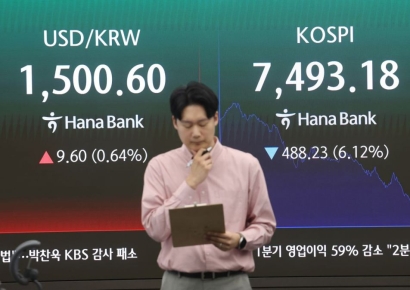 After Topping 8,000 Instead of Hitting 10,000... KOSPI Plunges—When Will It Rebound?
- "Samsung and Hynix Were Once for the Underachievers"... Hyundai Motor Employee's Lament
- [Breaking] Court Rules Against Samsung Electronics Union...1 Billion Won per Day Penalty for Exceeding Strike Scope
- Stronger Fines for Personal Data Leaks Start Tomorrow... Higher Sales Standards Applied
- "That? It's Already Stashed" Nightlife Scene Crosses the Line [ChwiYak Nation] ③
© The Asia Business Daily(www.asiae.co.kr). All rights reserved.







