Only Half of Single-Person Households Earn Living Expenses Themselves... Majority Are Unmarried
Statistics Korea Announces Results of Household and Housing Sectors from 2020 Population and Housing Census Sample Aggregation

[Sejong=Asia Economy Reporter Moon Chaeseok] It has been revealed that only half of the single-person households in South Korea maintain their living expenses by working themselves. More than half of single-person households were unmarried.
Statistics Korea announced the '2020 Population and Housing Census Sample Tabulation Results on Household and Housing Characteristics' on the 24th. The results were compiled through interviews, internet, mobile, and telephone surveys conducted on 20% sample households nationwide as of midnight on the 1st of last month. The Population and Housing Census surveys and compiles data on all residents living in Korea every five years.
More than half unmarried... Over half do not directly provide for their living expenses
Among the single-person households surveyed, 3,341,000 households (50.3%) were unmarried. This was followed by widowed (20.5%), divorced (16.1%), and married (13.2%). Compared to the 2015 survey, the proportion of unmarried single-person households increased by 6.4 percentage points (p), while widowed households decreased by 8.9 p.
There were 621,000 single-person households with activity limitations, accounting for 9.4% of the total. Among them, 250,000 households (40.2%) required care. Single-person households receiving help from visiting care workers numbered 117,000 (46.8%), and those needing care but without caregivers were 59,000 households (23.6%).
Among single-person households aged 20 and over, 3,501,000 households (53.3%) earned their living expenses through their own work. This was followed by 515,000 households (7.8%) receiving national assistance, and 465,000 households (7.1%) relying on financial assets. For elderly single-person households aged 60 and over, the sources of living expenses were 33.6% mixed, 21.1% national assistance, and 20.6% self-earned, in that order.
One in three single-person households lives alone due to work
The primary reason for living alone among single-person households was related to their own workplace. A total of 2,278,000 households (34.3%) said they lived alone because of their 'own workplace.' This was followed by independence (26.2%) and family reasons (17.0%). Among those who answered workplace reasons, the proportion was 48.8% for unmarried and 48.0% for married individuals.
Regarding the duration of living alone, the highest response rate was for 1 to less than 3 years, with 1,364,000 households (20.5%). Households living alone for 20 years or more also numbered 973,000 (14.6%).
In terms of housing types, detached houses were the most common with 2,919,000 households (43.9%), followed by apartments with 2,126,000 households (32.0%), and non-residential dwellings with 721,000 households (10.8%). Regarding occupancy types, monthly rent households were the most numerous at 2,735,000 (41.2%), followed by owner-occupied homes at 2,279,000 (34.3%), and jeonse (long-term deposit lease) at 1,159,000 (17.5%).
Hot Picks Today
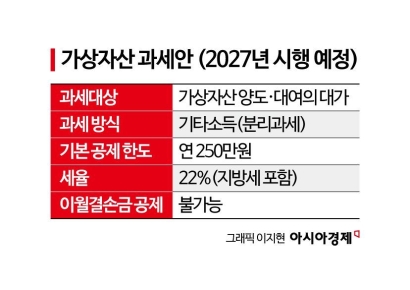 "Stocks Are Not Taxed, but Annual Crypto Gains Over 2.5 Million Won to Be Taxed Next Year... Investors Push Back"
- "Not Jealous of Winning the Lottery"... Entire Village Stunned as 200 Million Won Jackpot of Wild Ginseng Cluster Discovered at Jirisan
- "Even With a 90 Million Won Salary and Bonuses, It Doesn’t Feel Like Much"... A Latecomer Rookie Who Beat 70 to 1 Odds [Scientists Are Disappearing] ③
- "Rather Than Endure a 1.5 Million KRW Stipend, I'd Rather Earn 500 Million in the U.S." Top Talent from SNU and KAIST Are Leaving [Scientists Are Disappearing] ①
- "How Did an Employee Who Loved Samsung End Up Like This?"... Past Video of Samsung Electronics Union Chairman Resurfaces
Meanwhile, the average residence period per household was 8.7 years, a decrease of 0.1 years compared to 2015. The total number of vacant houses was 1,511,000. Reasons for vacancy were sales/rent/moving at 42.9%, occasional use at 27.1%, and unsold/unoccupied at 13.9%, in that order.
© The Asia Business Daily(www.asiae.co.kr). All rights reserved.







