[Good Morning Stock Market] 'No Omicron Lockdown'... Will Domestic Stocks Rebound with US Market Rise?
US Top 3 Indexes Close Higher
Biden: "No Lockdowns for Omicron Variant"
Domestic Market Expected to Start with Limited Gains
Attention Needed on Chinese Economic Indicators During Trading
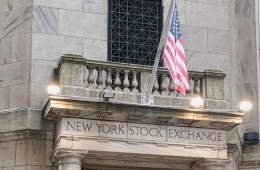
![[Image source=Reuters Yonhap News]](http://www.asiae.co.kr/news/img_view.htm?img=2021113006474841215_1638222469.jpg)
[Asia Economy Reporter Minji Lee] As the U.S. stock market closed higher despite the impact of the Omicron variant, there is a forecast that the domestic stock market may also show an upward trend. This is because concerns about a slowdown in corporate earnings have diminished as the U.S. is not expected to impose lockdown measures.
Sangyoung Seo, Researcher at Mirae Asset Securities: “Domestic stock market to start with limited gains... Monitoring China’s economic indicator results”
The U.S. stock market showed an upward trend last Friday, stabilizing despite the impact of the Omicron variant. Although some of the gains were given back near the end of the trading session as related issues were not fully resolved, expectations for easing of the situation have expanded.
On that day, the Dow Jones Industrial Average rose 0.68%, while the Nasdaq and S&P 500 increased by 1.88% and 1.31%, respectively. A clear upward trend emerged as President Biden asserted that lockdowns are unnecessary. President Biden urged mask-wearing and expanded vaccination but announced that there would be no lockdowns. By sector, large tech stocks, semiconductors, and software showed strength, while financial stocks underperformed.
![[Good Morning Stock Market] 'No Omicron Lockdown'... Will Domestic Stocks Rebound with US Market Rise?](http://www.asiae.co.kr/news/img_view.htm?img=2021113007553041340_1638226529.png)
Currently, Omicron has been detected in South Africa, the UK, Germany, Australia, Hong Kong, and other regions. However, the South African doctor who first discovered Omicron mentioned that symptoms are extremely mild, leading financial markets to believe that its impact will not be as severe as the Delta variant. During the Delta variant wave in July and August, lockdown measures such as factory closures were not necessary, so the economic impact is expected to be limited.
Accordingly, the domestic stock market is predicted to start higher today. If lockdowns such as factory shutdowns do not occur, it could have a favorable effect on the export-dependent domestic stock market. The Philadelphia Semiconductor Index surged 4%, and international oil prices showed a rebound, which are also positive signs.
However, concerns about lockdowns in Southeast Asia, China, and Europe have not been fully resolved, so the likelihood of sustained positive effects is low. Additionally, changes are expected depending on the results of economic indicators such as China’s manufacturing and services PMI, which will be released during the trading session.
Namjoong Moon, Researcher at Daishin Securities: “Omicron emergence likely to have greater impact outside the U.S.”
The impact of Omicron is expected to differ between the U.S. and non-U.S. stock markets. The U.S. market was naturally entering a correction phase amid concerns of overheating, but other markets view Omicron as a trigger for further declines, which is negative.
During the rebound, the U.S. market will be influenced by expectations for the year-end shopping season, the possibility of Senate passage of infrastructure investment legislation, and seasonal factors in the fourth quarter. However, other markets are expected to show distinctly different trends from the U.S. market.
![[Good Morning Stock Market] 'No Omicron Lockdown'... Will Domestic Stocks Rebound with US Market Rise?](http://www.asiae.co.kr/news/img_view.htm?img=2021113007545741337_1638226497.png)
The market shock caused by Omicron is expected to increase volatility depending on future developments related to Omicron. Considering past cases, it is likely to be temporary. When the South African Beta, UK Alpha, and Indian Delta variants occurred in May, September, and October last year, the S&P 500 fell by 3.8%, 9.6%, and 7.5% respectively within less than a month, but the Brazilian Gamma variant in November last year had almost no impact.
![[Good Morning Stock Market] 'No Omicron Lockdown'... Will Domestic Stocks Rebound with US Market Rise?](http://www.asiae.co.kr/news/img_view.htm?img=2021113007571641344_1638226636.png)
Analyzing by scenario, if Omicron is considered a short-term adjustment factor, the expected decline range for the U.S. stock market due to Omicron is estimated to be around -5% to -10%. However, if With Corona is temporarily halted and partial lockdowns are introduced, market volatility will increase and the market is expected to move within a range-bound box. If With Corona is completely stopped, it will be difficult to implement bold fiscal policies as before, and since the infection spread rate is faster than the quarantine speed, economic contraction and downward pressure are expected to increase.
Sungwhan Kim, Researcher at Shinhan Financial Investment: “Omicron variant unlikely to reverse Fed’s hawkish stance”
If the Omicron variant does not lead to a major lockdown and follows a trajectory similar to the Delta variant, the Federal Reserve’s normalization process is expected to continue. The Delta variant caused more disruption to supply than demand, and recalling that experience, inflationary pressures are likely to persist with Omicron as well.
![[Good Morning Stock Market] 'No Omicron Lockdown'... Will Domestic Stocks Rebound with US Market Rise?](http://www.asiae.co.kr/news/img_view.htm?img=2021113007543141336_1638226471.png)
In conclusion, unless the Omicron variant causes a clear sharp drop in demand, it is unlikely that the Fed will easily reverse its hawkish stance. Accordingly, concerns related to monetary policy are expected to peak around the next FOMC meeting. Many members consider spring as the tapering end point, so acceleration may inevitably be discussed at the December FOMC.
Hot Picks Today
 "Stocks Are Not Taxed, but Annual Crypto Gains Over 2.5 Million Won to Be Taxed Next Year... Investors Push Back"
- "Not Jealous of Winning the Lottery"... Entire Village Stunned as 200 Million Won Jackpot of Wild Ginseng Cluster Discovered at Jirisan
- "Jeong Yu-kyung Is a Neighbor"...Itaewon Standalone House with Record 23.2 Billion Won Appraisal Up for Auction [Real Estate AtoZ]
- "How Did an Employee Who Loved Samsung End Up Like This?"... Past Video of Samsung Electronics Union Chairman Resurfaces
- "Even With a 90 Million Won Salary and Bonuses, It Doesn’t Feel Like Much"... A Latecomer Rookie Who Beat 70 to 1 Odds [Scientists Are Disappearing] ③
If exposed to a retreat in monetary policy momentum, the rebound strength of the U.S. stock market is expected to be temporarily limited. However, the index itself is more likely to undergo a time correction rather than a trend correction. Earnings forecasts, especially for IT?the leading sector after the earnings season?are being revised upward, so investors are expected to need sector- and style-specific strategies. In the medium term, monetary policy normalization is expected to create a favorable environment for sectors with sustained earnings improvements, with large growth stocks fitting both conditions.
© The Asia Business Daily(www.asiae.co.kr). All rights reserved.