China Responds to US Strategic Oil Release Proposal: "Will Allocate According to Demand" (Comprehensive)
![[Image source=Reuters Yonhap News]](http://www.asiae.co.kr/news/img_view.htm?img=2021112418305734907_1637746258.jpg)
[Asia Economy Reporter Kwon Jaehee] China stated regarding the U.S. proposal for a joint release of strategic petroleum reserves that "China will allocate the release of reserves according to actual circumstances and demand."
On the 24th, Zhao Lijian, spokesperson for the Chinese Ministry of Foreign Affairs, responded this way during a regular briefing.
He added, "Other necessary measures to stabilize the market will also be taken," but did not disclose related information such as the scale, timing, or method of the release, saying it would be announced at an appropriate time.
He also emphasized, "China is maintaining close communication with all parties, including oil-producing and consuming countries, and hopes to secure a long-term and stable flow of the oil market through communication and cooperation."
This is interpreted as expressing an intention to respond voluntarily while avoiding the appearance of accepting the U.S. request.
Spokesperson Zhao said, "China, as one of the world's major oil producers and consumers, has long valued the stability of the international oil market," and "wants to maintain market balance and long-term stability together with all parties, communicate, and jointly respond to challenges."
The U.S. White House announced on the 23rd (local time) that President Joe Biden had ordered the release of 50 million barrels of strategic reserves to lower oil prices, mentioning that "through diplomatic efforts, major oil-consuming countries including China, India, Japan, South Korea, and the United Kingdom will also participate in this measure."
Earlier, in September, China sold strategic crude oil reserves to the private sector for the first time through an auction method according to domestic industrial needs. The scale was 7.38 million barrels.
At that time, China's State Reserve Bureau of Grain and Materials explained that "(the strategic crude oil) will mainly be supplied to integrated refining enterprises to alleviate the pressure of rising raw material prices on production companies."
China's strategic petroleum reserves, as the world's largest crude oil importer, are known to be around 200 million barrels, equivalent to 40 to 50 days of crude oil imports.
China's stance on the U.S. request for a strategic reserve release may also be seen as expressing dissatisfaction with the U.S. formally inviting Taiwan to the Democracy Summit next month.
Previously, to curb soaring international oil prices, the U.S. requested major oil-consuming countries including South Korea, China, India, and Japan to release strategic reserves.
In response to the U.S. request, Japan decided to release 4.2 million barrels, equivalent to 1 to 2 days of domestic demand, and India decided to release 5 million barrels.
South Korea agreed to participate in the joint release of strategic reserves but stated that specific release volumes and timing will be detailed later.
International oil prices (Dubai crude) rose more than 55%, from $50.5 per barrel on January 5 this year to $78.42 per barrel on the 22nd of this month.
Hot Picks Today
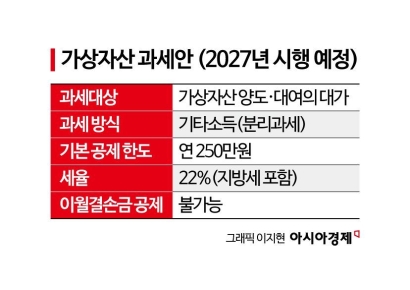 "Stocks Are Not Taxed, but Annual Crypto Gains Over 2.5 Million Won to Be Taxed Next Year... Investors Push Back"
- "Not Jealous of Winning the Lottery"... Entire Village Stunned as 200 Million Won Jackpot of Wild Ginseng Cluster Discovered at Jirisan
- "Even With a 90 Million Won Salary and Bonuses, It Doesn’t Feel Like Much"... A Latecomer Rookie Who Beat 70 to 1 Odds [Scientists Are Disappearing] ③
- "Rather Than Endure a 1.5 Million KRW Stipend, I'd Rather Earn 500 Million in the U.S." Top Talent from SNU and KAIST Are Leaving [Scientists Are Disappearing] ①
- "How Did an Employee Who Loved Samsung End Up Like This?"... Past Video of Samsung Electronics Union Chairman Resurfaces
© The Asia Business Daily(www.asiae.co.kr). All rights reserved.







