Government: "Rapid Bed Shortage Due to Spread of Infection Among Elderly... Will Increase Bed Turnover Rate"
Severe Patient Ratio Increases Faster Than Expected
Excessive Bed Demand Concentrated in the Capital Area
![[Image source=Yonhap News]](http://www.asiae.co.kr/news/img_view.htm?img=2021111517051321721_1636963513.jpg)
[Asia Economy Reporter Seo So-jeong] As the shortage of hospital beds due to the increase in COVID-19 confirmed cases becomes a reality, the government cited the "spread of infection among the elderly" as the reason for the faster-than-expected depletion of beds.
Son Young-rae, head of the Social Strategy Division at the Central Disaster and Safety Countermeasures Headquarters, stated at a back briefing on the 17th, "The government is operating hospital beds assuming 5,000 new confirmed cases, but the current situation shows demand increasing beyond predictions."
Son said, "Recently, the immunity effect of vaccinations has decreased faster than expected, leading to the spread of infections among the elderly," adding, "The proportion of severe cases is also increasing compared to initial predictions."
He explained, "Until last month, about 1.5% of all confirmed cases were severe or critical, but since the end of October, about 2.3% of all confirmed cases have become severe or critical," and "This is believed to be due to the high proportion of elderly patients."
He expressed concern, saying, "Until last week, the proportion of elderly confirmed cases was in the high teens to low twenties percentage-wise, but now it has risen to the low thirties," and "The overall proportion of severe cases is gradually increasing."

In particular, as the outbreak continues in the metropolitan area, the demand for hospital beds there is excessively concentrated, making urgent countermeasures necessary.
Son stated, "The outbreak is growing in the metropolitan area, so the demand for hospital beds there is disproportionately high compared to nationwide demand," adding, "The gap between the metropolitan and non-metropolitan areas is becoming severe."
Accordingly, the government plans to secure hospital beds through two administrative orders this month and to increase the turnover rate of intensive care unit beds to resolve the shortage. Especially for patients whose condition has improved from severe to mild, the government is actively promoting home treatment or transfer to living treatment centers to maximize the utilization of severe care beds.
Son emphasized, "It takes 2 to 4 weeks to secure hospital beds, but intensive care unit beds will increase through administrative orders," and "Currently, the turnover rate and efficiency of intensive care beds are low, but in such a dangerous situation, maximizing turnover is important."
However, the government maintains that it is difficult and limited to significantly increase the number of COVID-19 severe patient beds.
Son said, "Increasing COVID-19 beds is fundamentally done within the scope that does not damage the existing medical system for severe patients such as cancer, and this coexistence is the basic principle," adding, "The goal is to maintain normal medical services while establishing a COVID-19 response system."
Hot Picks Today
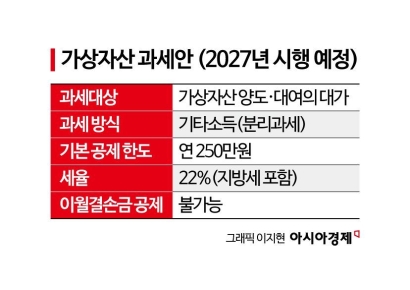 "Stocks Are Not Taxed, but Annual Crypto Gains Over 2.5 Million Won to Be Taxed Next Year... Investors Push Back"
- "Not Jealous of Winning the Lottery"... Entire Village Stunned as 200 Million Won Jackpot of Wild Ginseng Cluster Discovered at Jirisan
- "Rather Than Endure a 1.5 Million KRW Stipend, I'd Rather Earn 500 Million in the U.S." Top Talent from SNU and KAIST Are Leaving [Scientists Are Disappearing] ①
- "How Did an Employee Who Loved Samsung End Up Like This?"... Past Video of Samsung Electronics Union Chairman Resurfaces
- "Even With a 90 Million Won Salary and Bonuses, It Doesn’t Feel Like Much"... A Latecomer Rookie Who Beat 70 to 1 Odds [Scientists Are Disappearing] ③
He added, "We will promptly proceed with additional vaccinations (boosters) to reduce the number of elderly confirmed cases, continue to strengthen quarantine management, and improve the efficiency of intensive care beds."
© The Asia Business Daily(www.asiae.co.kr). All rights reserved.







