China Keeps Benchmark Interest Rate Unchanged for 19 Consecutive Months Despite Economic Slowdown (Comprehensive)
![[Image source=Yonhap News]](http://www.asiae.co.kr/news/img_view.htm?img=2021071211292029952_1626056960.jpg)
[Asia Economy Reporter Kim Suhwan] Although concerns about a sharp economic slowdown are growing in China, the Loan Prime Rate (LPR), which is effectively the benchmark interest rate, has been kept unchanged.
On the 22nd, the People's Bank of China, the central bank, announced that the 1-year and 5-year LPRs for November were recorded at 3.85% and 4.65%, respectively, the same as the previous month.
The LPR, announced by the People's Bank of China and used as the benchmark for corporate and household loans by all financial institutions in China, functions as a de facto benchmark interest rate. The LPR is calculated as the average of the best loan rates reported by 18 commercial banks in China, adding bank funding costs and risk premiums to the 1-year Medium-term Lending Facility (MLF) rate.
The LPR has remained at the same level for 19 consecutive months since April last year.
Despite the overlapping negative factors such as the contraction of the real estate industry due to the Evergrande (Hengda) crisis, the global surge in raw material prices, power shortages, and the spread of COVID-19, which have rapidly weakened China's economic recovery momentum, the market largely expected the LPR to remain unchanged this month as well.
Even national research institutes have suggested the need to shift monetary policy toward a more accommodative stance due to economic contraction, but as the rapid rise in producer prices begins to show signs of transmission to consumer prices, authorities are taking a cautious approach to monetary easing.
Amid the surge in raw material prices such as oil and coal, China's Producer Price Index (PPI) for October rose by 13.5%, the highest in 25 years since statistics began in 1996. Additionally, the Consumer Price Index (CPI) for October also recorded a 1.5% increase, the highest since September last year.
Premier Li Keqiang attended a virtual forum hosted by the World Economic Forum (WEF) on the 16th and stated, "The economy is generally recovering and developing, but at the same time, it is facing new downward pressures," while emphasizing the principle of not implementing "d?shu?m?ngu?n" (大水漫灌, excessive monetary easing policies).
China's quarterly economic growth rate rose to 18.3% in the first quarter, boosted by the base effect from the COVID-19 crisis, but fell below 5% in the third quarter.
Hot Picks Today
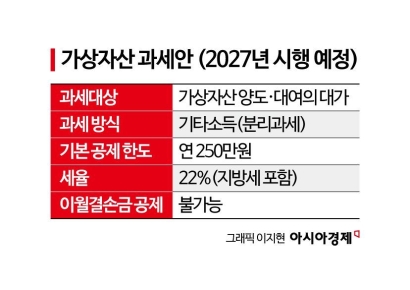 "Stocks Are Not Taxed, but Annual Crypto Gains Over 2.5 Million Won to Be Taxed Next Year... Investors Push Back"
- "Not Jealous of Winning the Lottery"... Entire Village Stunned as 200 Million Won Jackpot of Wild Ginseng Cluster Discovered at Jirisan
- The Second Donghak Ant Movement? ... Individual Investors Keep Buying Despite Foreign Sell-Offs [1-Minute Brief]
- "How Did an Employee Who Loved Samsung End Up Like This?"... Past Video of Samsung Electronics Union Chairman Resurfaces
- "Even With a 90 Million Won Salary and Bonuses, It Doesn’t Feel Like Much"... A Latecomer Rookie Who Beat 70 to 1 Odds [Scientists Are Disappearing] ③
However, on the 17th of last month, People's Bank of China Governor Yi Gang mentioned at the Group of Thirty (G30) meeting that the country could achieve 8% growth this year, suggesting that China has set an internal target to maintain an 8% economic growth rate for this year.
© The Asia Business Daily(www.asiae.co.kr). All rights reserved.