12 Years of Frustration in the National Assembly... Final Review This Year for Simplifying Real Loss Insurance Claims
Paper Documents Replaced by Electronic Documents
Inconvenient Claim Procedures Computerized
Five Bills Proposed by Ruling and Opposition Parties
Passage Faces Difficulties Due to Medical Community Opposition
![[Image source=Yonhap News]](http://www.asiae.co.kr/news/img_view.htm?img=2021052411053747152_1621821937.jpg)
[Asia Economy Reporter Oh Hyung-gil] A bill to simplify the claims procedure for indemnity health insurance, which has 38 million subscribers and is called the "second health insurance," is facing its final review this year.
Although the government is actively supporting the legislation and both ruling and opposition parties have proposed as many as five similar bills, it is difficult to guarantee their passage. This is because the medical community is strongly opposing the bill, citing concerns over the misuse of medical information. The insurance industry is watching the stalled efforts to simplify indemnity insurance claims in the National Assembly for over 12 years with mixed feelings.
According to the National Assembly and the insurance industry on the 22nd, the National Assembly's Legislation and Judiciary Committee's Bill Review Subcommittee 1 is scheduled to review the amendment to the Insurance Business Act, which includes the simplification of indemnity insurance claims, on the 23rd. The review was postponed on the 17th, making this the last chance for the bill to pass.
Five bills related to simplifying indemnity insurance claims were proposed in the 21st National Assembly by Democratic Party lawmakers Ko Yong-jin, Jeon Jae-su, Kim Byung-wook, Jeong Cheong-rae, and People Power Party lawmaker Yoon Chang-hyun. Although the bill was brought to the subcommittee three times since December last year, no agreement has been reached.
The core of the bill to simplify indemnity insurance claims is to replace paper documents required for insurance claims with electronic documents. When an insurance subscriber requests related documents from a medical institution to receive insurance benefits, the medical institution sends the data through a network to the Health Insurance Review and Assessment Service (HIRA) or a third party, which then forwards it to the insurance company.

Medical Community "Concerns Over Patient Information Leakage"
Consumer Groups "Anachronistic Objection"
It is expected that patients will be able to submit documents without visiting medical institutions or insurance companies, enabling automatic insurance claim and payment processes. Medical institutions can also reduce administrative costs associated with issuing unnecessary documents. Currently, hundreds of millions of paper documents are wasted annually.
Most indemnity insurance subscribers reportedly give up on claiming insurance benefits due to the cumbersome claim procedures. According to a survey conducted by consumer groups including Consumer Together on 1,000 people aged 20 or older who subscribed to indemnity insurance in the past two years, 47.2% of respondents had experience giving up on indemnity insurance claims.
However, the medical community opposes the bill, arguing that forcing medical institutions, rather than the parties to the insurance contract, to submit documents is unreasonable and that sensitive patient medical information could be leaked. In particular, there are concerns that HIRA’s access to non-reimbursable items could lead to increased control over medical institutions and reduced revenue.
The insurance industry points out that such opposition is unfounded. Looking at the representative case of claim simplification in automobile insurance, these problems have not occurred. Currently, hospitals submit medical expenses for traffic accident patients through HIRA, and the insurance company pays via a computerized system.
Patients do not need to go through separate procedures, and there have been no cases of sensitive personal information leakage. Overseas, such as in France and the United Kingdom, the digitization of private health insurance claims has increased benefits for insurance subscribers, medical institutions, and insurance companies alike.
Hot Picks Today
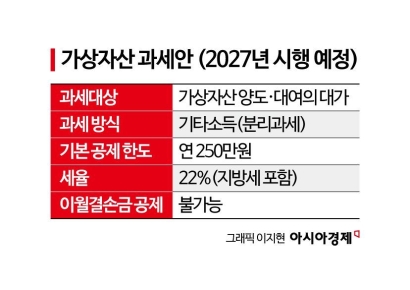 "Stocks Are Not Taxed, but Annual Crypto Gains Over 2.5 Million Won to Be Taxed Next Year... Investors Push Back"
- "Not Jealous of Winning the Lottery"... Entire Village Stunned as 200 Million Won Jackpot of Wild Ginseng Cluster Discovered at Jirisan
- "Jeong Yu-kyung Is a Neighbor"...Itaewon Standalone House with Record 23.2 Billion Won Appraisal Up for Auction [Real Estate AtoZ]
- "How Did an Employee Who Loved Samsung End Up Like This?"... Past Video of Samsung Electronics Union Chairman Resurfaces
- "Even With a 90 Million Won Salary and Bonuses, It Doesn’t Feel Like Much"... A Latecomer Rookie Who Beat 70 to 1 Odds [Scientists Are Disappearing] ③
If the bill fails to pass again due to opposition from the medical community, related discussions will be postponed until after next year’s presidential election, and insurance consumers will have to endure inconvenience. Consumer groups urged through a joint statement, "The claim that submitting paper documents protects personal information while submitting electronically risks personal information leakage is an anachronistic objection," and added, "Since both ruling and opposition parties have proposed amendments to the Insurance Business Act for the digitization of indemnity health insurance claims, the relevant bills must be submitted, reviewed, and passed."
© The Asia Business Daily(www.asiae.co.kr). All rights reserved.