Korea Insurance Research Institute: "Household Debt Issues Must Be Coordinated with Housing Policy"
Need for Housing Policy Coordination
Microprudential and Soundness Regulations More Important Than Debt Suppression

[Asia Economy Reporter Ki Ha-young] It has been argued that not only the Ministry of Economy and Finance, the Bank of Korea, the Financial Services Commission, and the Financial Supervisory Service but also the Ministry of Land, Infrastructure and Transport bear responsibility for the household debt issue. It is pointed out that cooperation with housing policy is necessary to resolve the household debt problem.
Yoon Sung-hoon, Senior Research Fellow at the Korea Insurance Research Institute, pointed out in the report titled "Cases and Implications of Household Debt Adjustment in Major Countries" on the 14th that the Ministry of Land, Infrastructure and Transport cannot be free from this issue in relation to the Bank of Korea Governor's remark at last month's National Assembly audit that the household debt problem is the responsibility of the Bank of Korea, the Financial Services Commission, the Financial Supervisory Service, and the Ministry of Economy and Finance.
Research Fellow Yoon stated, "The increase in household debt accompanies the rise in housing prices, and since the decline in housing prices precedes household debt adjustment, responding to household debt is difficult with the efforts of financial authorities alone," adding, "Cooperation with housing policies that can stabilize housing prices downward is necessary."
He analyzed that, looking at cases in major OECD countries, there has been no instance where household debt was adjusted without housing price adjustment, and basically, housing prices must be stabilized for a soft landing of household debt.
He also pointed out, "If the pace of interest rate hikes accelerates due to inflation instability while housing prices and debt levels are high, it can act as a shock to households and financial markets," adding, "Looking at past cases, to avoid leading to financial instability, micro and macroprudential regulations are more important than suppressing the level of household debt or housing prices themselves."
In Korea's case, as of 2019, the household debt level relative to disposable income was 190.6%, which is very high among major OECD countries, but since loan-to-value ratio (LTV) and debt-to-income ratio (DTI) have been relatively strictly enforced, the possibility of interest rate hikes leading to financial instability is considered low.
However, he advised that monitoring should be strengthened regarding the negative impact of housing price declines caused by interest rate hikes on households' debt repayment ability.
Research Fellow Yoon said, "To prevent housing price declines from leading to financial instability through an expansion of household debt defaults, checking borrowers' repayment ability should be prioritized over regulating the size of household debt itself."
Hot Picks Today
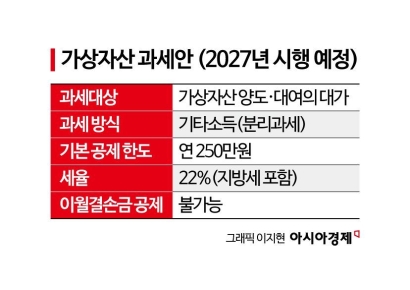 "Stocks Are Not Taxed, but Annual Crypto Gains Over 2.5 Million Won to Be Taxed Next Year... Investors Push Back"
- "Not Jealous of Winning the Lottery"... Entire Village Stunned as 200 Million Won Jackpot of Wild Ginseng Cluster Discovered at Jirisan
- "Even With a 90 Million Won Salary and Bonuses, It Doesn’t Feel Like Much"... A Latecomer Rookie Who Beat 70 to 1 Odds [Scientists Are Disappearing] ③
- General Strike D-1: Final Negotiations Between Samsung Electronics Labor and Management Over One Key Issue
- "How Did an Employee Who Loved Samsung End Up Like This?"... Past Video of Samsung Electronics Union Chairman Resurfaces
He added, "Microprudential regulations such as LTV, DTI, and debt service ratio (DSR) alone cannot prevent systemic risk," and "More consideration is needed on the negative impact of interest rate hikes on consumption and the economy in a situation where household debt levels and housing prices are already high."
© The Asia Business Daily(www.asiae.co.kr). All rights reserved.