[Report] Braille Present but Useless at Many Community Centers... Where Are the Rights of the Visually Impaired?
Braille guide panels left unusable despite presence
Difficulty feeling braille due to antibacterial film on buttons
"Facilities for the disabled must be continuously improved and maintained"

The tactile paving blocks guiding visually impaired individuals are broken in the middle and severely damaged.
Photo by Joohee Kang kjh818@asiae.co.kr
[Asia Economy Reporter Kang Juhee] "This doesn't seem right." , "It seems very inconvenient for visually impaired people."
Braille is almost the only means for visually impaired people to access information. Public facilities such as administrative welfare centers are required by current law to install braille convenience facilities for the convenience of the visually impaired. However, it has been found that many public facilities still do not have braille installed, or even if they do, it is often useless.
On the morning of the 4th, on the occasion of 'Braille Day', the A Administrative Welfare Center in Dongdaemun-gu, Seoul, which was visited, was generally well equipped with braille convenience facilities, but some facilities were so poorly maintained that they were difficult to use.
Upon entering the center, I looked for a braille tactile map that allows visually impaired people to understand the building structure, but it was not noticeable. A braille tactile map is a map for the visually impaired written in braille, which must be installed in public facilities according to the 'Act on the Promotion of Convenience for the Disabled, the Elderly, and Pregnant Women.' It is intended to help visually impaired people who cannot see to understand the location of their destination or the building structure before entering the building.

A map for the visually impaired that is hard to see because it is covered by a banner (left), and the map placed on top of a braille block. Photo by Joohee Kang kjh818@asiae.co.kr
View original imageUpon closer inspection, the braille tactile map of the A Administrative Welfare Center was right next to the entrance to the center. However, the map was obscured by several banners placed in front of it. It was difficult to find without careful attention. Moreover, the map was placed right on the braille blocks, and the voice guidance button did not work when pressed.
The elevator also seemed inconvenient for visually impaired people to use. An antibacterial film to prevent the spread of COVID-19 was attached to the elevator buttons, making it difficult to feel the braille with fingertips. Although tactile blocks were installed in front of the stairs, there was no braille sign on the stair handrails indicating the floor number.
The situation was not much different at another administrative welfare center. Some places did not have a braille tactile map at all, or even though it was a disabled restroom, there was no braille marking on the entrance or walls to distinguish gender.
According to a survey, braille convenience facilities at administrative welfare centers nationwide were found to be insufficient. According to the '2020 Braille Notation Status Survey' announced by the National Institute of the Korean Language in December last year, a total of 6,903 braille convenience facilities were required to be mandatorily installed at 203 administrative welfare centers nationwide.
However, only 2,003 (29%) were properly installed. Improperly installed facilities accounted for 2,463 (35.7%), and 2,437 (35.3%) were not installed at all. Visually impaired people are having difficulties using centers that exist for citizen convenience.

Restroom for the disabled without Braille markings (left), elevator buttons with antibacterial film applied. Photo by Joohee Kang kjh818@asiae.co.kr
View original imageAs of 2019, there were a total of 253,055 visually impaired people registered with the Ministry of Health and Welfare nationwide. According to a survey of 400 of them, administrative welfare centers and other public service facilities were the third most frequently used after welfare facilities and hospitals, and 26.8% answered that they use public service facilities every month. This is why the state and local governments must provide convenience facilities for the disabled in public facilities closely related to citizens' lives.
A representative of the A Administrative Welfare Center said, "The braille tactile map was originally located where the power supply was connected, but after COVID-19, as the entrance was used for visitor logs and temperature checks, the space became narrow, so we had to move its location. The device is in perfect condition, and we plan to complete the installation within a few days and place it in a visible space for improvement."
Hot Picks Today
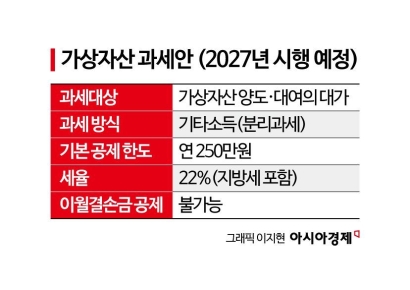 "Stocks Are Not Taxed, but Annual Crypto Gains Over 2.5 Million Won to Be Taxed Next Year... Investors Push Back"
- "Not Jealous of Winning the Lottery"... Entire Village Stunned as 200 Million Won Jackpot of Wild Ginseng Cluster Discovered at Jirisan
- "Even With a 90 Million Won Salary and Bonuses, It Doesn’t Feel Like Much"... A Latecomer Rookie Who Beat 70 to 1 Odds [Scientists Are Disappearing] ③
- "Rather Than Endure a 1.5 Million KRW Stipend, I'd Rather Earn 500 Million in the U.S." Top Talent from SNU and KAIST Are Leaving [Scientists Are Disappearing] ①
- "How Did an Employee Who Loved Samsung End Up Like This?"... Past Video of Samsung Electronics Union Chairman Resurfaces
An expert emphasized that the government or public institutions must continuously improve and manage convenience facilities for the disabled. So-yeon Lee, a researcher at the Korea Blind Union, said, "It is still difficult for visually impaired people to use facilities on their own," adding, "The union will continue to conduct surveys on the status of convenience facilities for the disabled in public facilities, and if deficiencies are found, we will request corrections."
© The Asia Business Daily(www.asiae.co.kr). All rights reserved.







