Last Month's Monetary Policy Committee Mentioned 'Inflation Upside Risk'... "Interest Rates Must Be Raised Immediately"
Minutes of the October 12 Monetary Policy Direction Meeting Released
![[Image source=Yonhap News]](http://www.asiae.co.kr/news/img_view.htm?img=2021082609564792565_1629939407.jpg)
[Asia Economy Reporter Jang Sehee] Last month, as the Bank of Korea's Monetary Policy Committee held the base interest rate steady, two members emphasized the risks of high inflation and a rapid increase in household debt, arguing that the base rate should be raised immediately.
According to the minutes of the Monetary Policy Committee meeting published on the Bank of Korea's website on the 2nd, during the monetary policy direction meeting held on the 12th of last month, among the six members, Im Ji-won and Seo Young-kyung expressed a minority opinion calling for a '0.25 percentage point increase.'
One member mentioned regarding inflation, "The upside risks to the inflation outlook continue to expand," adding, "The recovery in global demand combined with supply issues may cause the rise in raw material prices to last longer than expected."
Another member argued, "Consumer prices have maintained a mid-2% increase rate for six months, and expected inflation has also risen to the mid-2% range, so it is necessary to be cautious about the upside risks in the inflation trend."
He also assessed the financial imbalance situation, stating, "Despite the interest rate hike in August, economic agents' risk appetite and leveraged (borrowed) investments continue," and "Household loans are still increasing rapidly despite strengthened government controls, and housing prices continue to rise."
The remaining members cited the possibility of economic damage due to COVID-19 and supply bottlenecks as grounds for maintaining the current rate.
One member emphasized, "In the case of COVID-19, the speed at which quarantine measures and social distancing policies are eased is an important factor in monetary policy decisions," and added, "We must closely monitor how the downside risks to the global economy caused by rising energy prices and supply chain disruptions will unfold."
Hot Picks Today
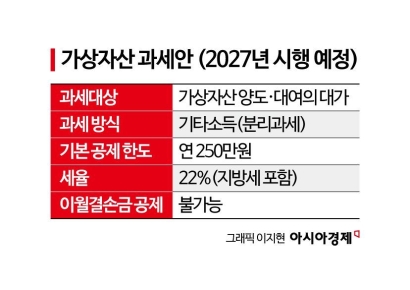 "Stocks Are Not Taxed, but Annual Crypto Gains Over 2.5 Million Won to Be Taxed Next Year... Investors Push Back"
- "Not Jealous of Winning the Lottery"... Entire Village Stunned as 200 Million Won Jackpot of Wild Ginseng Cluster Discovered at Jirisan
- "Even With a 90 Million Won Salary and Bonuses, It Doesn’t Feel Like Much"... A Latecomer Rookie Who Beat 70 to 1 Odds [Scientists Are Disappearing] ③
- "Rather Than Endure a 1.5 Million KRW Stipend, I'd Rather Earn 500 Million in the U.S." Top Talent from SNU and KAIST Are Leaving [Scientists Are Disappearing] ①
- "How Did an Employee Who Loved Samsung End Up Like This?"... Past Video of Samsung Electronics Union Chairman Resurfaces
He added, "In fact, a full transition to tightening is not too late to implement after reviewing the impact of the upcoming tapering (asset purchase reduction) policy by the U.S. Federal Reserve (Fed) on financial markets."
© The Asia Business Daily(www.asiae.co.kr). All rights reserved.







