Domestic Vehicle Registrations Reach 24.78 Million... Era of 1 Million Eco-Friendly Cars
Semiconductor Supply Shortage Causes 14.8% Decrease from Previous Quarter
Eco-friendly Cars Continue to Increase from 460,000 Units in 2018 to 1.06 Million Units in 2021

[Asia Economy Reporter Kangwook Cho] As the number of registered vehicles in South Korea approaches 25 million, eco-friendly cars have surpassed 1 million for the first time.
The Ministry of Land, Infrastructure and Transport announced on the 1st that the cumulative number of registered vehicles reached 24.78 million as of September this year.
This is an increase of 410,000 units (1.7%) compared to the end of last year (24.36 million) and 136,000 units (0.5%) compared to the end of June this year (24.64 million). It is expected that the cumulative number will exceed 25 million in the first quarter of next year.
However, the number of newly registered vehicles in the third quarter was 407,000, a decrease of 71,000 units compared to the second quarter. The largest decreases were seen in Ulsan (27%), Gyeongnam (19%), and Incheon (18%).
This decline in new registrations in the third quarter is attributed to supply shortages from automakers caused by a shortage of vehicle semiconductors.
Among the newly registered vehicles in the third quarter, domestic cars accounted for 331,000 units, or 81.2%, while imported cars accounted for 77,000 units, or 18.8%. The cumulative market share of imported cars has been rising annually, surpassing 10% since 2019 from 9.4% in 2018.
As of September, the number of registered eco-friendly vehicles increased by 90,000 units (9.2%) compared to June this year, reaching 1.063 million. In contrast, gasoline cars increased slightly by 0.6% to 11.68 million, and diesel cars decreased by 0.2% to 9.9 million.
Electric vehicles reached 201,000 units, up 16.4%, hybrid vehicles 844,000 units, up 7.6%, and hydrogen vehicles 17,000 units, up 12.2% respectively.
The share of eco-friendly vehicles steadily increased from 2.0% at the end of 2018, 2.5% at the end of 2019, 3.4% at the end of 2020, to 4.3% as of September this year.
About half of electric vehicles are registered in Gyeonggi, Seoul, and Jeju-do. By region, Gyeonggi had 35,000 units, Seoul 33,000 units, and Jeju 23,000 units in that order.
Regarding the market share of electric vehicle registrations by manufacturer as of the end of September, Hyundai Motor Company accounted for 43.8%, followed by Kia (21.8%) and Tesla (15.6%). Tesla's cumulative registration market share has steadily increased from 1.6% in 2018, 3.7% in 2019, to 11.2% in 2020.
The top cumulative registered electric vehicle models are Kona EV with 33,000 units, Porter II with 20,000 units, Tesla Model 3 with 20,000 units, and Ioniq EV with 18,000 units.
Newly registered electric vehicles in the third quarter totaled 29,000 units, including Ioniq 5 (9,900 units), EV6 (4,000 units), Porter II (3,400 units), Model Y (3,100 units), and Niro EV (2,400 units).
By vehicle type, electric passenger cars accounted for 164,000 units or 81.3%, electric cargo vehicles 17.4%, and electric vans 1.2%.
Electric cargo vehicles have significantly increased from 11,000 units at the end of 2019 to 35,000 units as of September this year, due to purchase subsidies and a temporary exemption policy on the total issuance of commercial license plates.
Among registered electric vehicles, domestic passenger cars number 108,000 units, and imported passenger cars number 55,000 units.
Hot Picks Today
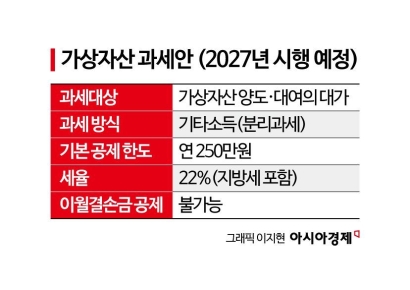 "Stocks Are Not Taxed, but Annual Crypto Gains Over 2.5 Million Won to Be Taxed Next Year... Investors Push Back"
- "Not Jealous of Winning the Lottery"... Entire Village Stunned as 200 Million Won Jackpot of Wild Ginseng Cluster Discovered at Jirisan
- "Rather Than Endure a 1.5 Million KRW Stipend, I'd Rather Earn 500 Million in the U.S." Top Talent from SNU and KAIST Are Leaving [Scientists Are Disappearing] ①
- "How Did an Employee Who Loved Samsung End Up Like This?"... Past Video of Samsung Electronics Union Chairman Resurfaces
- "Even With a 90 Million Won Salary and Bonuses, It Doesn’t Feel Like Much"... A Latecomer Rookie Who Beat 70 to 1 Odds [Scientists Are Disappearing] ③
Kim Jeong-hee, Director of the Automobile Policy Division at the Ministry of Land, Infrastructure and Transport, said, "Despite stagnation in overall vehicle sales in the third quarter, the supply of eco-friendly vehicles has increased due to the government's carbon neutrality policy and the launch of new eco-friendly models."
© The Asia Business Daily(www.asiae.co.kr). All rights reserved.







