SC Group Publishes 'Expectations Asset Report'... "66% of Korean Asset Owners Revise Life Goals"
Survey of 15,649 Wealthy Individuals Worldwide
One-Third of Korean Wealthy Show Weakened Investment Confidence
Top Reason: 'Financial Market Volatility'

[Asia Economy Reporter Song Seung-seop] More than half of Korean asset owner groups have reset their life goals after COVID-19. Additionally, one-third showed a passive attitude due to weakened investment confidence caused by COVID-19.
According to the "Expected Asset Report" published by SC Group on the 22nd, Korean asset owner groups tend to reset their life priorities in a more future-oriented way. Among the respondents who reset their life goals, 66% in total, 46% chose "health improvement." 39% set a more comfortable retirement as their top priority.
This survey was conducted online from June to July across 12 markets worldwide, including Asia, Africa, and Europe. The subjects were 15,649 asset owners classified as emerging affluent, affluent, and ultra-affluent. In Korea, 1,082 people participated in the survey.
Although asset growth through proactive investment rather than cash savings is necessary for new goals, Korean asset owners’ investment confidence has rather weakened. The report diagnosed that Korean asset owners have a strong risk-averse tendency and may not be able to utilize digital tools that simplify investment or asset management. Factors affecting investment confidence included financial market volatility (40%), insufficient income (33%), and low interest rates (28%).
The confidence decline was particularly prominent among the emerging affluent. 47% of the emerging affluent responded that they lost investment confidence, nearly twice as many as the ultra-affluent (27%). The report interpreted this as meaning that support measures are needed to help the emerging affluent, who are still building assets, recover their investment confidence.
Also, 31% of the asset owner group answered that they plan to retire before age 65. Nevertheless, 38% of respondents revealed that they are currently not saving or investing for retirement. Among those preparing for retirement, the main expected income sources after retirement were "deposit products (40%)" and "government pensions (38%)." As a result, an analysis suggests that a gap may arise between the current actions (retirement preparation) and future expectations (life goals) of the asset owner group.
Hot Picks Today
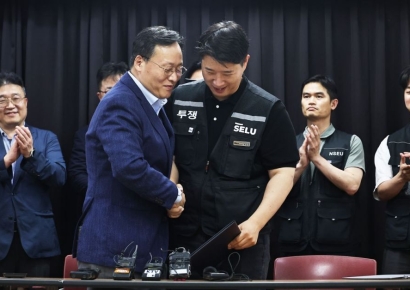 Up to 600 Million Won for Semiconductors, 160 Million Won Bonus for Loss-Making Non-Memory… Samsung Electronics Labor and Management Reach Tentative Deal on Unprecedented Performance Compensation (Comprehensive)
- "Could I Also Receive 370 Billion Won?"... No Limit on 'Stock Manipulation Whistleblower Rewards' Starting the 26th
- "From a 70 Million Won Loss to a 350 Million Won Profit with Samsung and SK hynix"... 'Stock Jackpot' Grandfather Gains Attention
- Opening a Bank Account in Korea Is Too Difficult..."It Costs 150,000 Won Just to Open a Child's Account or Check Card" [Foreigner K-Finance Status]②
- "Who Is Visiting Japan These Days?" The Once-Crowded Tourist Spots Empty Out... What's Happening?
Colin Chiang, Head of Wealth Management Division at SC First Bank (Executive Director), emphasized, “Cash savings alone are insufficient for longer lifespans and achieving new life priority goals, so long-term investment is essential for asset owner groups,” adding, “To achieve new goals, it is necessary to build a diversified investment portfolio and immediately implement the necessary measures.”
© The Asia Business Daily(www.asiae.co.kr). All rights reserved.
!["Please Help": How Much Do Those Bowing 90 Degrees Really Earn? [Data Pick]](https://cwcontent.asiae.co.kr/asiaresize/307/2026052010120870131_1779239528.png)