Korean Air Division-Level Unmanned Aerial Vehicle Selected for '2021 Industrial Technology Achievements'

[Asia Economy Reporter Dongwoo Lee] Korean Air announced on the 15th that its division-level unmanned aerial vehicle (UAV) equipped with rapid descent automatic landing technology has been selected as one of the '15 Industrial Technology Achievements of 2021' hosted by the National Academy of Engineering of Korea.
The National Academy of Engineering of Korea is a research institution that discovers talents who have contributed to the development of domestic engineering and supports related academic research. Since 2006, it has annually selected outstanding industrial technology achievements by evaluating social and market contributions, future growth potential, and more.
The division-level UAV selected this time by Korean Air is a fully automated tactical UAV measuring 4.5m in width, 3.7m in length, and 0.9m in height. It was the first UAV in Korea to obtain airworthiness certification in 2016, completed mass production last December, and is currently operated by the military.
Korean Air’s division-level UAV features full automation of all processes from takeoff, flight, to landing, enabling continuous 24-hour surveillance and reconnaissance missions through multiple vehicle control. It is designed for domestic operational environments with mountainous terrain, allowing mobility by vehicle mounting and the use of a mobile launcher to take off from anywhere.
Additionally, it applies world-class rapid descent automatic landing technology, maximizing operational safety and convenience, and is highly regarded for significantly enhancing the Republic of Korea military’s surveillance and reconnaissance capabilities.
Korean Air is currently upgrading its existing division-level UAV to develop a vertical takeoff and landing UAV using the 'lift and cruise' method. The lift and cruise method involves separately mounting rotors for takeoff (vertical rotors) and flight (horizontal rotors) along with airplane wings. During takeoff, vertical rotors lift the UAV off the ground, and upon reaching cruising altitude, horizontal rotors provide forward thrust. This method offers advantages such as high-speed flight at higher altitudes and mid-to-long-range operation compared to helicopter-type UAVs.
In addition to the division-level UAV, Korean Air possesses a variety of UAV platforms including a 5-ton high-performance strategic UAV, tiltrotor UAVs, next-generation low-observable UAVs, multipurpose unmanned helicopters, and hybrid drones.
Hot Picks Today
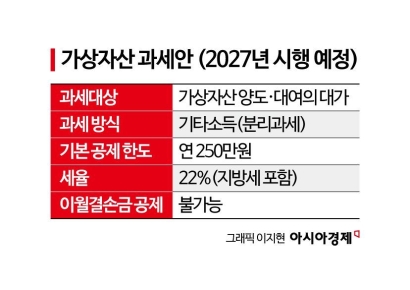 "Stocks Are Not Taxed, but Annual Crypto Gains Over 2.5 Million Won to Be Taxed Next Year... Investors Push Back"
- "Not Jealous of Winning the Lottery"... Entire Village Stunned as 200 Million Won Jackpot of Wild Ginseng Cluster Discovered at Jirisan
- "Jeong Yu-kyung Is a Neighbor"...Itaewon Standalone House with Record 23.2 Billion Won Appraisal Up for Auction [Real Estate AtoZ]
- "How Did an Employee Who Loved Samsung End Up Like This?"... Past Video of Samsung Electronics Union Chairman Resurfaces
- "Even With a 90 Million Won Salary and Bonuses, It Doesn’t Feel Like Much"... A Latecomer Rookie Who Beat 70 to 1 Odds [Scientists Are Disappearing] ③
Korean Air’s Aerospace Business Division stated, "We are continuously making efforts to build an ecosystem for UAVs and future urban air mobility (UAM) industries, including the development of traffic management systems."
© The Asia Business Daily(www.asiae.co.kr). All rights reserved.