From Next Year, 'Local Council Personnel Authority' Becomes Independent... Local Public Officials Act Approved at Cabinet Meeting
Change of Appointment Authority for Local Council Officials from Local Government Heads to Local Council Chairs

Minister Jeon Hae-cheol of the Ministry of the Interior and Safety attended the National Assembly's Public Administration and Security Committee hearing on the 1st, providing a work report on the Ministry of the Interior and Safety./Photo by Yoon Dong-joo doso7@
View original image[Asia Economy Reporter Lim Cheol-young] From now on, the appointing authority for public officials belonging to local councils will change from the ‘head of the local government’ to the ‘chairperson of the local council.’
On the 6th, the Ministry of the Interior and Safety announced that following the Cabinet meeting’s approval of the promulgation of partial amendments to the 'Local Public Officials Act' and the 'Local Public Officials Training Act,' which were passed by the National Assembly on the 28th of last month, the appointing authority for public officials belonging to local councils will be changed accordingly starting next year.
This amendment is a follow-up legislation to the full revision of the Local Autonomy Act, which established the legal basis for the independence of personnel authority of local councils, providing grounds for local councils to autonomously manage personnel affairs of their affiliated public officials.
This independence of personnel authority was achieved 30 years after the reestablishment of local councils on June 20, 1991, and is scheduled to be fully implemented from January 13 next year, coinciding with the enforcement date of the full revision of the Local Autonomy Act.
According to the amendment, the chairperson of the local council will have the appointing authority over public officials belonging to the local council. Until now, the appointing authority for public officials belonging to local councils was held by the head of the local government, but going forward, the chairperson of the local council will oversee all personnel matters including appointment, training, service, and disciplinary actions for affiliated public officials.
To handle personnel affairs for public officials belonging to local councils, a separate personnel committee under the chairperson of the local council will be established and operated, distinct from the personnel committee under the head of the local government. The personnel committee is an organization established for each appointing authority to ensure fair and objective personnel management, responsible for prior review of staffing plans, conducting appointment examinations, and pre-approval of standards for position management, promotion, and transfer appointments.
Additionally, the chairperson of the local council will be able to directly hire public officials who will work at the council. The local council will conduct public official appointment examinations to select talented individuals with the competencies required by the council. If necessary for securing excellent personnel and managing examinations, the local council may entrust the execution of examinations to the executive agency, with legal grounds also provided for this.
To ensure balanced placement of excellent personnel and enhance the capabilities of public officials, broad personnel exchanges between local councils and other institutions will also be possible. The amendment provides the basis for personnel exchanges between the Ministry of the Interior and Safety and local councils, between executive agencies of local governments and local councils, and among local councils of various local governments, allowing personnel exchanges to be conducted through consultation.
Hot Picks Today
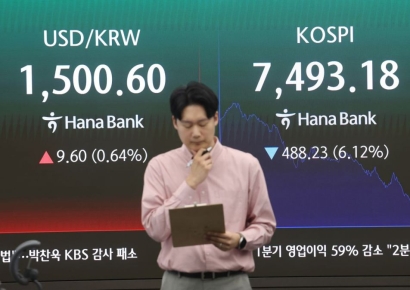 After Topping 8,000 Instead of Hitting 10,000... KOSPI Plunges—When Will It Rebound?
- "Samsung and Hynix Were Once for the Underachievers"... Hyundai Motor Employee's Lament
- [Breaking] Court Rules Against Samsung Electronics Union...1 Billion Won per Day Penalty for Exceeding Strike Scope
- Six Economic Organizations Urge Withdrawal of Samsung Electronics Strike Plan...Warn of National Loss of Opportunity
- "That? It's Already Stashed" Nightlife Scene Crosses the Line [ChwiYak Nation] ③
Minister Jeon Hae-cheol stated, “This year marks the 30th anniversary of the revival of local councils and the inaugural year of the Autonomy Decentralization 2.0 era, where the center of local autonomy shifts to residents and local councils.” He added, “With this amendment, the personnel autonomy of local councils will be secured, and the professionalism of public officials belonging to local councils will be strengthened, which is expected to enable local councils to more effectively check and monitor executive agencies.”
© The Asia Business Daily(www.asiae.co.kr). All rights reserved.