[Good Morning Stock Market] Political Risks in the US Increasing Economic Uncertainty
All Three Major New York Indexes Closed Lower on the 4th (Local Time)
2022 Fiscal Year Temporary Budget Approved...Low Risk of US Default
![[Image source=EPA Yonhap News]](http://www.asiae.co.kr/news/img_view.htm?img=2021073008542556629_1627602865.jpg)
[Asia Economy Reporter Gong Byung-sun] Political risks in the United States are increasing economic uncertainty, as the passage of the infrastructure bill, which had been a factor in the rise of the U.S. stock market, is facing difficulties. However, despite the debt ceiling issue, the possibility of a U.S. government default on debt repayment appears to be low.
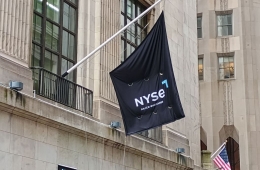
On the 4th (local time), the New York stock market fell across the board. On that day at the New York Stock Exchange, the Dow Jones Industrial Average closed at 34,002.92, down 0.94% (323.54 points) from the previous trading day. The S&P 500 index closed at 4,300.46, down 1.30% (56.58 points) from the previous session. The tech-heavy Nasdaq closed at 14,255.49, down 2.14% (311.21 points) from the previous trading day.
◆ Sangyoung Seo, Researcher at Mirae Asset Securities = On the 2nd, House Speaker Nancy Pelosi of the Democratic Party announced that the vote on the $1.2 trillion (approximately 1,424.4 trillion KRW) infrastructure bill would be postponed until October 31. Pelosi mentioned that if the vote had been held immediately, it would not have passed. In fact, progressive lawmakers stated that a $3.5 trillion social spending bill should be passed first, and if it is not approved, they would not support the $1.2 trillion infrastructure bill.
However, lawmakers opposing the budget are also standing firm. Centrist lawmakers, including Senator Joe Manchin, argue that the budget is excessive and propose passing only $1.5 trillion. Ultimately, the division within the Democratic Party is increasing uncertainty. Additionally, the Republican Party claims that the debt ceiling suspension is a prelude to passing the Democratic Party's $3.5 trillion bill, further escalating the controversy over the debt ceiling-related legislation.
In this situation, credit rating agency Fitch has warned of a downgrade of the U.S. credit rating. The problem is that since the rise in the U.S. stock market on the 1st was driven by expectations of the infrastructure bill's passage, the stock market is likely to underperform going forward.
![[Image source=AFP Yonhap News]](http://www.asiae.co.kr/news/img_view.htm?img=2021080914243369533_1628486674.jpeg)
◆ Hyunki Chae, Researcher at Cape Investment & Securities = On the 30th of last month, the U.S. Congress approved a temporary budget bill for fiscal year 2022 to prevent a federal government shutdown. However, concerns about a U.S. government default remain due to the debt ceiling issue.
Nevertheless, the debt ceiling issue is expected to be resolved before the 18th. First, if the Democratic Party uses budget reconciliation, the bill can pass with 50 Democratic senators. Moreover, although it is a matter that can be politically agreed upon, if a U.S. government default occurs due to partisan differences, unprecedented consequences such as credit rating downgrades, a sharp rise in government bond yields, and damage to the dollar's status as a global reserve currency will ensue.
Until the 18th, due to policy uncertainty, the stock market is expected to remain sideways. However, since the actual possibility of a U.S. government bond default is low, this could serve as a buying opportunity.

◆ Yumi Kim, Researcher at Kiwoom Securities = On the 4th, November West Texas Intermediate (WTI) crude oil closed at $77.62, the highest in seven years. This was because OPEC Plus (OPEC+), composed of the Organization of the Petroleum Exporting Countries (OPEC) and major non-OPEC oil-producing countries such as Russia, decided to increase production by 400,000 barrels per day in November, maintaining the existing production increase path.
There had been expectations that OPEC+ might undertake additional production increases considering the recent tight supply and demand conditions. At the same time, gold closed higher due to safe-haven demand amid U.S. political uncertainty. On the 4th, gold futures rose 0.29% from the previous day to $1,768.85.
Hot Picks Today
 "Could I Also Receive 370 Billion Won?"... No Limit on 'Stock Manipulation Whistleblower Rewards' Starting the 26th
- Samsung Electronics Labor-Management Reach Agreement, General Strike Postponed... "Deficit-Business Unit Allocation Deferred for One Year"
- "From a 70 Million Won Loss to a 350 Million Won Profit with Samsung and SK hynix"... 'Stock Jackpot' Grandfather Gains Attention
- "Stocks Are Not Taxed, but Annual Crypto Gains Over 2.5 Million Won to Be Taxed Next Year... Investors Push Back"
- "Who Is Visiting Japan These Days?" The Once-Crowded Tourist Spots Empty Out... What's Happening?
© The Asia Business Daily(www.asiae.co.kr). All rights reserved.