Raw Material Inflation... A Signal of a Bear Market or an Expansion of Stock Market Correction?
[Asia Economy Reporter Ji Yeon-jin] Concerns that rising corporate costs due to steep inflation could lead to margin pressure are weighing on global stock markets. Inflation in the first half of this year was initially seen as a sign of economic recovery but has now turned into a factor that suppresses the economy.
As the bullish market continues this year and market fatigue accumulates, stagflation is acting as a pretext for profit-taking and could stimulate a wait-and-see stance.

According to the financial investment industry on the 4th, recent supply chain bottlenecks that are fueling inflation have been exacerbated by the labor-intensive transportation industry. In the case of the gasoline crisis in the UK, it stems from a challenging labor supply, and the sharp rise in raw material prices is also linked to soaring transportation costs. Samsung Securities researcher Seo Jeong-hoon said, "Although the vaccination rate is accelerating, the absence of signs of herd immunity predicts a prolonged situation," adding, "Unless catalysts such as the introduction of COVID-19 treatments appear, it is difficult to deny that short-term resolution seems unlikely.
It is also correct to believe that the probability of this becoming structurally entrenched is low."
However, since global health authorities are easing movement restrictions based on low fatality rates, there is also a possibility that supply chain bottlenecks could lead to a relief rally after adjustments. Researcher Seo explained, "The continuous demand for various raw materials and intermediate goods is a favorable factor for domestic export companies," adding, "Even in September, when bottlenecks were prominent, domestic exports achieved a record high on a monthly value basis, indicating that good performance is possible under current conditions."
In particular, the domestic stock market is noted to have lower price burdens compared to other countries. From the perspective of foreign investors, the sharp rise in the exchange rate means they can sufficiently consider buying at low prices. Although there is a possibility of early tightening in the U.S., the financial environment remains accommodative, which is favorable for the domestic stock market.
However, there are concerns that the U.S. debt ceiling negotiations could increase short-term volatility in the stock market. It is pointed out that reaching an agreement before the "default day" designated by U.S. Treasury Secretary Janet Yellen on the 18th of this month is crucial. While the possibility of a U.S. government default on interest and principal payments is low, the increased policy uncertainty could sustain a wait-and-see stance in the market until a resolution is reached.
Hot Picks Today
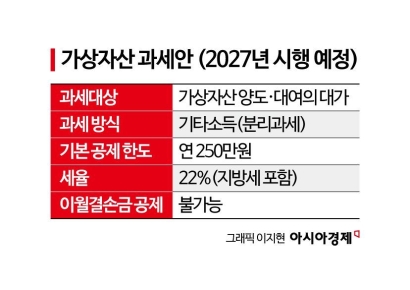 "Stocks Are Not Taxed, but Annual Crypto Gains Over 2.5 Million Won to Be Taxed Next Year... Investors Push Back"
- "Not Jealous of Winning the Lottery"... Entire Village Stunned as 200 Million Won Jackpot of Wild Ginseng Cluster Discovered at Jirisan
- "Rather Than Endure a 1.5 Million KRW Stipend, I'd Rather Earn 500 Million in the U.S." Top Talent from SNU and KAIST Are Leaving [Scientists Are Disappearing] ①
- "How Did an Employee Who Loved Samsung End Up Like This?"... Past Video of Samsung Electronics Union Chairman Resurfaces
- "Even With a 90 Million Won Salary and Bonuses, It Doesn’t Feel Like Much"... A Latecomer Rookie Who Beat 70 to 1 Odds [Scientists Are Disappearing] ③
Researcher Seo said, "If we consider the rise in raw material prices and interest rates as given constants for the time being, it is necessary to increase the weighting of materials and financial sectors," adding, "Currently, due to supply constraints and price increases, consumption of manufactured goods is difficult, which could lead to increased demand in easily accessible service sectors. Considering this, interest in media, entertainment, and gaming remains valid."
© The Asia Business Daily(www.asiae.co.kr). All rights reserved.







