Commissioner Joo Sang-young "Skeptical About Controlling House Prices and Debt with Minor Adjustments to the Base Interest Rate"
Minutes of the Monetary Policy Committee Meeting Released on the 14th
![[Image source=Yonhap News]](http://www.asiae.co.kr/news/img_view.htm?img=2021082610353192746_1629941731.jpg)
[Asia Economy Reporter Jang Sehee] Ju Sangyoung, a member of the Monetary Policy Committee (MPC) of the Bank of Korea (BOK) who was the sole dissenting voice in maintaining the base interest rate at last month's MPC meeting, expressed the opinion that it would be difficult to curb the current rise in housing prices and the increase in household debt solely through adjustments to the base interest rate.
According to the minutes of the MPC meeting published on the BOK website on the afternoon of the 14th, Ju Sangyoung stated at the monetary policy direction meeting on the 26th of last month, "The rise in housing prices over the past 6 to 7 years is a concerning phenomenon, but I am skeptical whether fine-tuning the base interest rate can control the volatility of housing prices," adding, "The primary objective of monetary policy is to mitigate economic and price volatility, and its effectiveness has been historically proven, but this does not apply to stabilizing the housing market."
He added, "The cyclical patterns of the housing market and the real economy do not coincide, which can lead to conflicts between the goals of economic stability, price stability, and housing market stabilization."
Regarding household debt, he pointed out, "There are claims that the base interest rate should be raised to curb the increase in household debt, but looking at the household debt-to-GDP ratio, it has been trending upward without reversal for 17 years since 2005," suggesting that "this is a variable difficult to control through base rate adjustments, and raising the base interest rate cannot be a fundamental solution; structural changes in household lending practices and regulatory policies are necessary."
Furthermore, considering the still unstable economy and employment situation, he argued that it is necessary to maintain the base interest rate at around 0.5%.
Except for Ju, the other committee members generally advocated for raising the base interest rate (from 0.5% to 0.75%), citing issues such as household debt, real estate prices, and 'financial imbalances,' as well as inflationary pressures.
Hot Picks Today
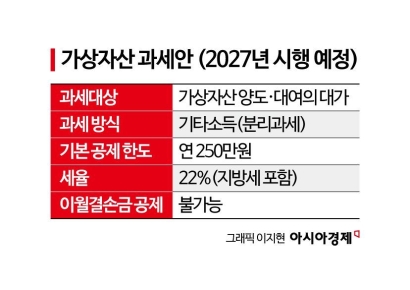 "Stocks Are Not Taxed, but Annual Crypto Gains Over 2.5 Million Won to Be Taxed Next Year... Investors Push Back"
- "Not Jealous of Winning the Lottery"... Entire Village Stunned as 200 Million Won Jackpot of Wild Ginseng Cluster Discovered at Jirisan
- "Even With a 90 Million Won Salary and Bonuses, It Doesn’t Feel Like Much"... A Latecomer Rookie Who Beat 70 to 1 Odds [Scientists Are Disappearing] ③
- "Rather Than Endure a 1.5 Million KRW Stipend, I'd Rather Earn 500 Million in the U.S." Top Talent from SNU and KAIST Are Leaving [Scientists Are Disappearing] ①
- "How Did an Employee Who Loved Samsung End Up Like This?"... Past Video of Samsung Electronics Union Chairman Resurfaces
One member stated, "Recently, liquidity expansion has occurred throughout the financial system, accelerating the accumulation of financial imbalances centered on the household sector, and it will be difficult to adequately control this solely through macroprudential policies relying on institutional regulations."
© The Asia Business Daily(www.asiae.co.kr). All rights reserved.







