Authorities Strengthening Big Tech Regulations... Will They Tackle Financial Firms' Claims of 'Reverse Discrimination System'?

[Asia Economy Reporter Kiho Sung] The financial authorities' judgment that financial platform companies selling financial products such as insurance and funds through their own applications (apps) violate the Financial Consumer Protection Act (FCPA), followed by announcements of additional regulations, has put the related industry on edge. In particular, attention is focused on whether the system, which traditional financial companies have claimed to be 'reverse discrimination,' will be reformed as the financial authorities emphasize the principle of 'same function, same regulation.'
According to the financial sector on the 12th, Financial Services Commission Chairman Seung-beom Ko recently stated to reporters after the first on-site meeting with small and medium-sized enterprises and small business organizations at the Korea Federation of SMEs, "We will uphold the principle of same function, same regulation for big tech." Regarding the possibility of additional regulations, he said, "We will continue to monitor that part."
With the Financial Services Commission declaring its stance on additional regulations, the key issue is which areas will see strengthened regulations. Traditional financial companies have voiced concerns that regulations are relatively favorable to large platform companies, resulting in reverse discrimination. The principle of same function, same regulation is a fundamental principle at the Bank for International Settlements (BIS) level, stating that the same regulations should apply to identical business activities across sectors such as banking, insurance, and securities.
The issue of same function, same regulation arose when the Financial Services Commission judged on the 7th that recommended financial products by big tech and fintech platforms constitute 'intermediation' rather than 'advertising.' According to the financial authorities' judgment, big tech and fintech must cease related services after the FCPA expires on the 24th.
With the Financial Services Commission declaring its stance on additional regulations, the related industry is showing interest in which areas will see strengthened regulations. There is also an interpretation that the financial authorities' shift in stance might signal a change in the policy focus, which had emphasized supporting fintech companies' innovative services through regulatory sandboxes.
Since April 2019, the financial authorities have granted regulatory exemptions or suspensions for up to four years only to services designated as innovative financial services under the financial regulatory sandbox system. The financial regulatory sandbox has designated a total of 153 innovative financial services, including loan comparison services, fractional investment in overseas stocks, credit card remittance services, and real-name verification services. Among these, 88 services are being tested in the market, and 132 services are scheduled to be launched in the second half of this year. There is also an interpretation that the financial authorities' shift in stance might signal a change in the policy focus, which had emphasized supporting fintech companies' innovative services through regulatory sandboxes.
The most recent controversy involves refinancing loan (loan switching) platforms. Financial companies have argued that they could become dependent on big tech due to commission issues. The MyData service, whose initial implementation target was delayed by five months to January next year, is also a system that could face additional actions from the financial authorities. The banking sector has criticized that the information provided by big tech is limited and that it blocks the use of banks' face-to-face counters.
In the case of card companies, they have argued that pay service small postpaid payments and credit card merchant fees create a tilted playing field. They have contended that allowing big tech without a credit license to effectively engage in card business without fee regulations has created another 'tilted playing field.'
Hot Picks Today
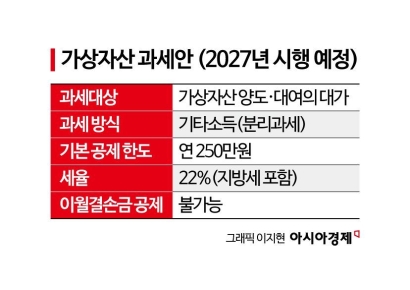 "Stocks Are Not Taxed, but Annual Crypto Gains Over 2.5 Million Won to Be Taxed Next Year... Investors Push Back"
- "Not Jealous of Winning the Lottery"... Entire Village Stunned as 200 Million Won Jackpot of Wild Ginseng Cluster Discovered at Jirisan
- "Rather Than Endure a 1.5 Million KRW Stipend, I'd Rather Earn 500 Million in the U.S." Top Talent from SNU and KAIST Are Leaving [Scientists Are Disappearing] ①
- "How Did an Employee Who Loved Samsung End Up Like This?"... Past Video of Samsung Electronics Union Chairman Resurfaces
- "Even With a 90 Million Won Salary and Bonuses, It Doesn’t Feel Like Much"... A Latecomer Rookie Who Beat 70 to 1 Odds [Scientists Are Disappearing] ③
A financial industry official said, "Currently, as the influence of big tech grows, there are many cases where collaboration increases even if disliked," adding, "We hope that through the Financial Services Commission's recent measures, fair competition between financial companies and big tech will be achieved."
© The Asia Business Daily(www.asiae.co.kr). All rights reserved.