Health and Medical Workers' Union and Government Reach Dramatic Agreement in Early Hours of the 2nd, Calling Off General Strike... "Avoiding Medical Service Gaps" (Comprehensive)
"Agreement Reached on Strengthening Public Healthcare, Expanding Health Workforce, and Improving Treatment"
![[Image source=Yonhap News]](http://www.asiae.co.kr/news/img_view.htm?img=2021090205413212205_1630528892.jpg)
[Asia Economy Reporter Seo So-jeong] The negotiations between the Korean Health and Medical Workers' Union (KHMU) under the Federation of Korean Trade Unions and the government were dramatically concluded in the early hours of the 2nd, just five hours before the planned general strike, leading the union to withdraw the strike scheduled for that day. With a sudden agreement reached on expanding public healthcare and improving the treatment of healthcare personnel, the worst-case scenario of a medical vacuum amid COVID-19 was averted.
The KHMU and the Ministry of Health and Welfare held the 13th round of practical labor-government negotiations from 3 p.m. the previous day, one day before the strike, and announced that after an 11-hour marathon negotiation, an agreement was reached in the early hours of the strike day. Initially, the KHMU planned to announce the results regarding the strike around 11 p.m. the previous day, but internal discussions prolonged, and the announcement was finally made after 2 a.m.
Ministry of Health and Welfare: "We will sincerely consult with related ministries and the National Assembly on the agreed matters"
Both sides mutually confirmed that protecting the lives and health of the people from COVID-19 and establishing a robust infectious disease response system are social responsibilities that must be addressed together, and evaluated that they derived a meaningful agreement on building an infectious disease response system, strengthening public healthcare, and resolving healthcare workforce issues.
Minister Kwon Deok-cheol of the Ministry of Health and Welfare said, "Both the Ministry and the KHMU shared the common goal and recognition that we must protect the lives of the people and ensure patient safety, which made it possible to prepare an agreement through dialogue and communication. Since this agreement was reached after 13 rounds of long discussions, the Ministry will also sincerely consult with related ministries and the National Assembly on the agreed matters today."
Na Soon-ja, Chairperson of the KHMU, said, "In the ongoing COVID-19 pandemic for one year and eight months, healthcare workers who have sacrificed and dedicated themselves to treating and caring for COVID-19 patients have deeply discussed expanding healthcare personnel, improving working conditions, enhancing labor rights, and improving treatment so that they can care for patients in better working environments. With today's dramatic labor-government agreement, the sector-wide general strike prepared by the KHMU is withdrawn."
Since late May, both sides formed a consensus on issues such as expanding public healthcare through 13 rounds of negotiations up to this day. However, they failed to significantly narrow differences on detailed tasks related to expanding public healthcare and healthcare personnel and improving treatment. Even in the 12th negotiation, they failed to reach an agreement due to differences in positions on five core tasks proposed by the union.
However, in the negotiation held the day before the general strike, they succeeded in narrowing the differences. Notably, around 3 p.m. that day, Prime Minister Kim Boo-kyum personally visited the negotiation site, met with Chairperson Na, and showed active willingness to resolve the issue.

Prime Minister Kim Boo-kyum (right) and Na Soon-ja, Chairperson of the Health and Medical Workers' Union, are leaving after holding a separate meeting following the 13th practical labor-government consultation between the Ministry of Health and Welfare and the Health and Medical Workers' Union, held on the 1st at the Healthcare Institution Evaluation and Accreditation Institute in Yeongdeungpo-gu, Seoul. Photo by Kim Hyun-min kimhyun81@
View original imageThe five core tasks that the KHMU raised as key issues were ▲ establishing staffing standards for COVID-19 dedicated hospitals and institutionalizing the Life Safety Allowance ▲ detailed plans to expand public healthcare by designating at least one responsible medical institution in each of the approximately 70 secondary medical service areas nationwide ▲ legislating the nurse-to-patient ratio ▲ expanding dedicated education nurses ▲ expanding night nursing fees.
The Ministry of Health and Welfare will prepare staffing standards for nurses working according to COVID-19 severity by September, referencing the staffing standards proposed by the KHMU, and will systematize effective infectious disease response by utilizing these standards for bed allocation and patient distribution. Detailed implementation plans will be separately prepared through practical discussions by October.
Establishment of Staffing Standards for COVID-19 Dedicated Hospitals and Institutionalization of Infectious Disease Response Medical Personnel Support Allowance
To appropriately compensate the labor value of healthcare personnel such as nurses caring for patients in infectious disease situations like COVID-19, the Infectious Disease Response Medical Personnel Support Allowance (Life Safety Allowance) will be institutionalized. Related legal amendments and budget allocations will be secured in the regular National Assembly session in the second half of the year, and the system will be implemented from January next year. The funding will be fully supported by the national treasury.
Additionally, by 2025, at least one responsible medical institution will be promptly designated and operated in each of the approximately 70 secondary medical service areas. To improve the treatment of nursing personnel, the current nursing grade differentiation system will be upgraded to a "nurse-to-actual-patient ratio" standard. This reform plan will be prepared within next year and implemented in 2023, with the specific implementation schedule to be finalized through the Health Insurance Policy Deliberation Committee. Night nursing fees and night dedicated nurse management fees will be applied to all medical institutions, including tertiary hospitals, from January 2022 after review by the Health Insurance Review and Assessment Service.
The union stated, "This agreement has laid an important foundation to prevent exhaustion and turnover of COVID-19 response personnel and to substantially expand and strengthen public healthcare. It has established a groundbreaking turning point to overcome chronic workforce shortages and poor working conditions and to achieve the expansion of healthcare personnel and improvement of treatment."
With the dramatic agreement on key issues, the union withdrew the general strike card amid the COVID-19 pandemic. The KHMU, with about 80,000 members, had 56,000 members apply for dispute mediation this time. Among them, it was estimated that about 30% of essential personnel such as emergency room and intensive care unit staff would participate in the strike, but the agreement between both sides allowed avoiding a medical vacuum.
Hot Picks Today
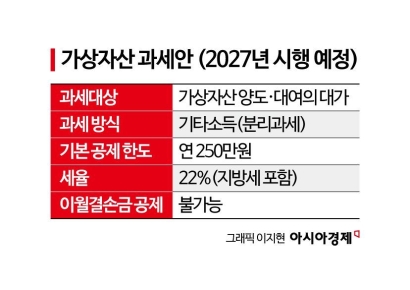 "Stocks Are Not Taxed, but Annual Crypto Gains Over 2.5 Million Won to Be Taxed Next Year... Investors Push Back"
- "Not Jealous of Winning the Lottery"... Entire Village Stunned as 200 Million Won Jackpot of Wild Ginseng Cluster Discovered at Jirisan
- General Strike D-1: Final Negotiations Between Samsung Electronics Labor and Management Over One Key Issue
- "How Did an Employee Who Loved Samsung End Up Like This?"... Past Video of Samsung Electronics Union Chairman Resurfaces
- "Even With a 90 Million Won Salary and Bonuses, It Doesn’t Feel Like Much"... A Latecomer Rookie Who Beat 70 to 1 Odds [Scientists Are Disappearing] ③
A representative of a tertiary hospital, upon hearing the news of the strike withdrawal, said, "We had prepared thoroughly from the previous day, including an emergency medical response system, just in case of any situation, so it is fortunate that the negotiations were concluded. We plan to operate normal medical services as scheduled on the 2nd."
© The Asia Business Daily(www.asiae.co.kr). All rights reserved.