Afghans Assisted by Korea Arrive Tomorrow, Controversy Over Acceptance Continues (Comprehensive)
[Asia Economy Reporter Yoo In-ho] A total of 391 Afghans who cooperated with the Korean government will arrive in Korea through Incheon International Airport on the 26th. The government plans to transfer them to the National Human Resources Development Institute in Jincheon, Chungbuk immediately after their arrival.
According to the Ministry of Foreign Affairs on the 25th, 391 local staff and their families (76 households) who have supported the activities of our government in Afghanistan are currently en route to Korea on two C130 military transport planes, departing from Kabul Airport and neighboring countries.
Among them are about 100 children, including three newborns less than a month old.
They are expected to arrive as early as dawn the next day. After arriving in Korea, they will be transferred to the Jincheon Human Resources Development Institute for a two-week quarantine period.
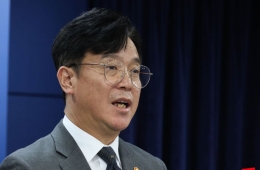
Choi Jong-moon, the 2nd Vice Minister of Foreign Affairs, said in an online briefing regarding the transfer of Afghan collaborators on the morning of the same day, "Our government has been promoting the domestic transfer of about 380 people, including local staff who have supported our government activities in Afghanistan, their spouses, minor children, and parents," adding, "They are currently entering Kabul Airport in Afghanistan and are scheduled to arrive at Incheon International Airport tomorrow using our military transport planes."
Vice Minister Choi emphasized, "They are not refugees but special contributors entering the country."
This is the first time the government has decided to accept a large number of foreigners from conflict zones on humanitarian grounds and transfer them domestically.
The government has been conducting operations since the 23rd by sending three military transport planes (including one refueling plane) to Afghanistan and neighboring countries to bring local staff and their families who supported Korean government activities in Afghanistan to Korea.
The Korean government dispatched non-combat troops in response to the United States' request for support after the 2001 war on terror led to the invasion of Afghanistan.
Although the military units withdrew in December 2007, the government recently sent Provincial Reconstruction Teams to operate local hospitals and vocational training centers, employing many locals until the regime fell to the Taliban.
They have requested help from the Korean government, stating that they face the risk of Taliban retaliation for having worked for the Korean government in the past.
Due to Taliban checkpoints and chaos around the airport, the arrival of Afghans scheduled to meet at the airport was somewhat delayed until the 24th, but the Ministry of Foreign Affairs explained that all who wished to go to Korea were able to board and depart for Korea.
An Afghan woman who worked at the Korean Embassy in Kabul for two years and four months expressed gratitude to the Korean government through the Ministry of Foreign Affairs, saying, "I decided to leave Afghanistan and go to Korea to save my family's lives."
Although 427 people initially applied to go to Korea, it is reported that 36 changed their minds to remain in Afghanistan or go to a third country.
A senior official from the Ministry of Foreign Affairs said that the ability to transfer all hopefuls was made possible thanks to the U.S. idea of transporting them all at once by bus instead of walking to the airport.
However, there is controversy in Korea regarding the transfer of Afghans. While the government remains cautious about their treatment after arrival, voices are emerging that support providing assistance to help them settle in Korea.
On the other hand, opposition to accepting refugees may arise, similar to when about 500 Yemenis entered Jeju Island in 2018. It is reported that opposition opinions have already surfaced in the Jincheon area of Chungbuk, where the Afghans are to stay at the Human Resources Development Institute.
Song Ki-seop, the mayor of Jincheon County, said, "There are growing concerns about the spread of COVID-19, damage to the image of the innovation city, and economic downturn in the region."
Meanwhile, upon arrival in Korea, they will undergo quarantine procedures such as COVID-19 testing and then stay at the National Human Resources Development Institute in Jincheon, Chungbuk. The stay at the Jincheon facility is reported to be about 6 to 8 weeks.
Hot Picks Today
 "Stocks Are Not Taxed, but Annual Crypto Gains Over 2.5 Million Won to Be Taxed Next Year... Investors Push Back"
- "Don't Throw Away Coffee Grounds" Transformed into 'High-Grade Fuel' in Just 90 Seconds [Reading Science]
- Signed Without Viewing for 1.6 Billion Won... Jamsil and Seongbuk Jeonse Prices Jump 200 Million Won in a Month [Real Estate AtoZ]
- "Groups of 5 or More Now Restricted"... Unrelenting Running Craze Leaves Citizens and Police Exhausted
- "Even With a 90 Million Won Salary and Bonuses, It Doesn’t Feel Like Much"... A Latecomer Rookie Who Beat 70 to 1 Odds [Scientists Are Disappearing] ③
Initially, short-term visas will be issued and then uniformly changed to long-term stay visas, and it is expected that they will be granted residency status and treatment equivalent to recognized refugees thereafter.
© The Asia Business Daily(www.asiae.co.kr). All rights reserved.