Supreme Court: "Even After Compensation Under the 5·18 Compensation Act, It Is Possible to File a 'Mental' Damage Lawsuit Against the State"

[Asia Economy Reporter Kim Daehyun] The Supreme Court has ruled that even if compensation was received under the 5·18 Compensation Act for the state's illegal acts during the Gwangju Democratization Movement, a separate claim for mental damages can still be filed against the state.
On the 24th, the Supreme Court's First Division (Presiding Justice No Taeak) overturned the lower court's ruling that dismissed the damages claim filed by victim A against the state during the Gwangju Democratization Movement and remanded the case to the Seoul High Court.
Previously, in June 1980, A was taken to the Joint Investigation Headquarters without a warrant and subjected to illegal detention and harsh treatment. He was tried on charges of violating the Martial Law Act and sentenced to two years in prison.
Later, through a retrial in 2012, A was acquitted and filed a damages claim totaling over 400 million won against the state, citing illegal detention and torture.
The first and second trials ruled against A, stating, "The plaintiff already agreed to the government's decision to provide support funds and received the money, and a judicial settlement was established under the 5·18 Compensation Act." Since A received approximately 99 million won in support funds from the government in 1994 under the 5·18 Compensation Act, additional damages claims were not allowed.
However, the Supreme Court ordered a retrial and reconsideration of the case. On May 27, the Constitutional Court ruled the 5·18 Compensation Act unconstitutional in its provision that receiving government support funds prohibits filing a damages claim against the state. The Constitutional Court explained that "it is difficult to consider that appropriate compensation for 'mental damages' has been made solely through compensation under the 5·18 Compensation Act."
Hot Picks Today
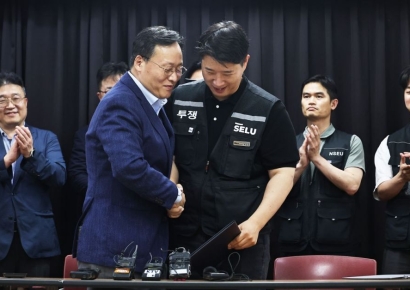 Up to 600 Million Won for Semiconductors, 160 Million Won Bonus for Loss-Making Non-Memory… Samsung Electronics Labor and Management Reach Tentative Deal on Unprecedented Performance Compensation (Comprehensive)
- "Could I Also Receive 370 Billion Won?"... No Limit on 'Stock Manipulation Whistleblower Rewards' Starting the 26th
- "From a 70 Million Won Loss to a 350 Million Won Profit with Samsung and SK hynix"... 'Stock Jackpot' Grandfather Gains Attention
- Opening a Bank Account in Korea Is Too Difficult..."It Costs 150,000 Won Just to Open a Child's Account or Check Card" [Foreigner K-Finance Status]②
- "Who Is Visiting Japan These Days?" The Once-Crowded Tourist Spots Empty Out... What's Happening?
The Supreme Court panel stated, "Even if compensation was received under the former 5·18 Compensation Act, the legal basis for considering a judicial settlement established regarding mental damages caused by illegal acts has disappeared," adding, "The lower court erred in its understanding of the statute of limitations, which affected the judgment."
© The Asia Business Daily(www.asiae.co.kr). All rights reserved.
!["Please Help": How Much Do Those Bowing 90 Degrees Really Earn? [Data Pick]](https://cwcontent.asiae.co.kr/asiaresize/307/2026052010120870131_1779239528.png)