Park Yong-jin: "We Will Break the Three Major Established Powers of Regular Workers, Public Officials, and Doctors to Redistribute Opportunities"

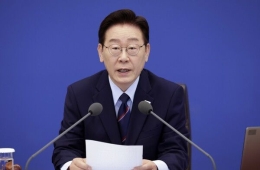
Park Yong-jin, a presidential primary candidate of the Democratic Party of Korea, is delivering a policy keynote speech at the 'One Team' agreement ceremony for the 20th presidential election held at the central party office in Yeouido, Seoul on the 28th. Photo by Yoon Dong-joo doso7@
View original image[Asia Economy Reporter Koo Chae-eun] Park Yong-jin, a presidential primary candidate of the Democratic Party of Korea, pledged on the 23rd to break down the three major vested interests?civil servants, regular workers, and doctors?and redistribute opportunities to the younger generation.
At a press conference held at the National Assembly Communication Office on the same day, Park stated, "I, Park Yong-jin, will become a president who breaks vested interests." He added, "Currently, many young people are living unstable lives with low wages, moving between regular employment, irregular employment, and unemployment. It is unfair to require them to bear 20% to 30% of their income to cover the deficits of the generous civil servant and military pensions enjoyed by the 586 generation, who have received high wages in stable jobs throughout their lives."
Regarding specific integration plans, he explained, "Civil servant pension subscribers should be 'deemed transferred' to the National Pension Scheme and integrated. The subscription period before integration should be recognized as vested rights under the existing system, and the period after integration should apply the National Pension Scheme regardless of whether the subscriber is new or currently employed." He added, "For systems with different subscription histories, the 'public pension linkage system' can be utilized."
He also pledged ▲ strengthening employment insurance coverage for voluntary unemployment ▲ introducing a 'Youth Sabbatical' system allowing workers to recharge for about one year with ordinary wages after seven years of total labor market participation ▲ expanding the 'National Employment Insurance System' covering all citizens ▲ unifying industrial accident insurance ▲ enhancing compensation for commuting accidents ▲ and establishing nationwide sickness benefits.
Park defined seniority-based wages, where wages increase according to years of service, as a core vested interest that fosters unfair wage gaps between regular and irregular workers and between large and small companies. He emphasized, "To eliminate low wages, job insecurity, and various welfare discriminations faced by irregular workers due to excessive protection of regular workers, we must move away from seniority-based wages and transition to a job-based wage system where wages are paid according to the value created by labor." He called for expanding the job-based wage system starting with the public sector.
Hot Picks Today
 "Stocks Are Not Taxed, but Annual Crypto Gains Over 2.5 Million Won to Be Taxed Next Year... Investors Push Back"
- "Don't Throw Away Coffee Grounds" Transformed into 'High-Grade Fuel' in Just 90 Seconds [Reading Science]
- Signed Without Viewing for 1.6 Billion Won... Jamsil and Seongbuk Jeonse Prices Jump 200 Million Won in a Month [Real Estate AtoZ]
- [Breaking] Bloomberg: "Korean HMM Oil Tanker Attempts Escape from Strait of Hormuz"
- "Even With a 90 Million Won Salary and Bonuses, It Doesn’t Feel Like Much"... A Latecomer Rookie Who Beat 70 to 1 Odds [Scientists Are Disappearing] ③
He vowed, "I will become a president who leads social consensus to break vested interests and advance policy discussions." He concluded, "Through the pledge to break the three major vested interests, I will realize politics of paradigm shift and build a happy Korea and an 888 society."
© The Asia Business Daily(www.asiae.co.kr). All rights reserved.