Foreigners' Sell-off of Cell Korea: How Long Will It Last?... Already 31 Trillion Won Net Sold, More Than Last Year
![[Image source=Yonhap News]](http://www.asiae.co.kr/news/img_view.htm?img=2021082015594485674_1629442785.jpg)
[Asia Economy Reporter Lee Seon-ae] This year, net selling of Korean stocks by foreigners has surpassed last year's scale. As a result, the KOSPI's returns this month have ranked the lowest among the Group of Twenty (G20) countries, drawing attention to the background and sustainability of foreign net selling.
According to the Korea Exchange on the 22nd, foreigners have net sold a total of 30.726 trillion won in the KOSPI and KOSDAQ markets from the beginning of the year through the 20th, exceeding last year's net selling amount of 24.7128 trillion won.
Thus, except for April (net buying of 82.9 billion won), foreigners have shown net selling for the other seven months this year.
In particular, foreigners have net sold 6.49 trillion won so far this month, which is the second-largest net selling amount following May (9.0216 trillion won).
The KOSPI return this month was -4.43%, ranking the lowest among the representative stock indices of G20 countries, below China (-0.87%, 17th), Japan (-0.99%, 18th), and Brazil (-3.08%, 19th).
The main reasons often cited for foreigners' "Sell Korea" trend include the weak Korean won due to the fourth wave of COVID-19 and concerns over the U.S. Federal Reserve's (Fed) tapering (asset purchase reduction) starting within the year.
However, the financial investment industry points out that these factors alone cannot fully explain the persistent foreign net selling since last year.
Foreigners continued their net selling streak for six months in the first half of last year and, even during the rapid market rebound in the second half, engaged in net selling for four months except for July (net buying of 908.5 billion won) and November (net buying of 5.8409 trillion won).
Even as the Korean economy gradually recovered from the COVID-19 shock and the stock market repeatedly hit all-time highs, foreigners mostly continued net selling during this period.
Jung Myung-ji, a researcher at Samsung Securities, said, "From the second half of last year to the first half of this year, the Korean stock market had one of the best corporate earnings momentum globally. Yet, it is honestly difficult to explain why foreigners kept selling."
Moreover, concerns such as tapering are variables common to emerging markets in general, but the Korean stock market has been uniquely shaken significantly.
Kim Byung-yeon, a researcher at NH Investment & Securities, diagnosed, "The direct cause of the recent KOSPI decline is large-scale net selling by foreigners. However, the volatility of the Korean stock market is excessive compared to other countries. It is even more pronounced than when the North Korean nuclear risk was highlighted."
He questioned, "Recently, the Turkish currency value has actually risen. Is Korea worse than Turkey?" and analyzed, "In Indonesia, where the COVID-19 spread is the steepest, the volatility of exchange rates and stock markets is more stable than Korea."
In this regard, there is also a perspective that the clue to foreign movements should be sought given that major export-dependent Asian countries such as Taiwan also showed sluggish stock markets alongside Korea.
In fact, this month, Taiwan's TAIEX (weighted index) and Hong Kong's H-Share Index (Hang Seng China Enterprises Index, HSCEI) fell by 5.25% and 5.32%, respectively, with declines larger than the KOSPI.
Researcher Jung Myung-ji explained, "A common point between Korea and Taiwan is that recent foreign net selling was large, coinciding with the timing of the Afghanistan crisis. It seems that when the global geopolitical environment worsens, stock markets of these export-dependent countries, including semiconductors, are adversely affected."
Researcher Kim Byung-yeon stated, "When considering the cause of foreign withdrawal, foreign investors regard momentum as a key factor in the Korean stock market."
Hot Picks Today
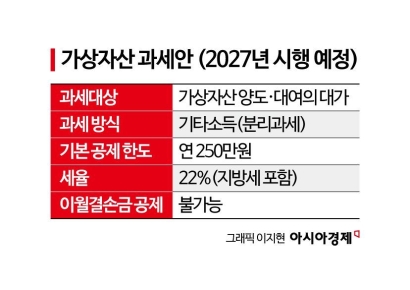 "Stocks Are Not Taxed, but Annual Crypto Gains Over 2.5 Million Won to Be Taxed Next Year... Investors Push Back"
- "Not Jealous of Winning the Lottery"... Entire Village Stunned as 200 Million Won Jackpot of Wild Ginseng Cluster Discovered at Jirisan
- "Rather Than Endure a 1.5 Million KRW Stipend, I'd Rather Earn 500 Million in the U.S." Top Talent from SNU and KAIST Are Leaving [Scientists Are Disappearing] ①
- "How Did an Employee Who Loved Samsung End Up Like This?"... Past Video of Samsung Electronics Union Chairman Resurfaces
- "Even With a 90 Million Won Salary and Bonuses, It Doesn’t Feel Like Much"... A Latecomer Rookie Who Beat 70 to 1 Odds [Scientists Are Disappearing] ③
He added, "As seen in the stock returns of Taiwan and Korea, the starting point was concerns over a semiconductor downturn. However, since the KOSPI has risen significantly and global economic momentum seems to have peaked, it can be understood that major investors are preemptively reducing their exposure to the export-driven Korean market sensitive to momentum, which explains the continued foreign net selling."
© The Asia Business Daily(www.asiae.co.kr). All rights reserved.







