[Column] Initiating Legislation on the Virtual Asset Act... Eun Seong-su Pushed Ahead of the Presidential Election
![[Image source=Reuters Yonhap News]](http://www.asiae.co.kr/news/img_view.htm?img=2021071405303032731_1626208230.jpg)
[Asia Economy Reporter Ji Yeon-jin] "To create a perfect law, it is necessary to gather opinions and have discussions."
On the 13th, Eun Sung-soo, Chairman of the Financial Services Commission, responded to a question from Kim Byung-wook, a member of the Democratic Party of Korea, during the National Assembly's Political Affairs Committee plenary session asking, "Do you agree with the Virtual Asset Act?" Eun's remarks that day showed a significant softening of hostility compared to his statement in April, when he said, "Cryptocurrency cannot be a subject of investor protection as it is on the wrong path," and "Honestly, I hope it does not enter the regulatory framework."
On the same day, the National Assembly's Political Affairs Committee submitted four bills related to the supervision and management of cryptocurrencies. These bills were proposed as the price of cryptocurrencies, which surged earlier this year, plummeted sharply from April, leading to demands for investor protection, marking the beginning of efforts to bring the cryptocurrency market into the regulatory framework.
Some expect that ahead of next year's presidential election, the political sphere will accelerate the passage of the Virtual Asset Act to target the votes of the 2030 generation. The government has also begun preliminary work to review the bill. Chairman Eun stated, "We are conducting preliminary work to classify 578 coins into payment types, token types, etc.," and said that after discussions among government ministries, the Office for Government Policy Coordination will submit a government proposal related to cryptocurrencies.
According to the "Implications of the U.S. and European Union (EU) Virtual Asset Trader Protection Systems" published last month by the Korea Capital Market Institute, virtual assets classified as financial investment products in the U.S., EU, Japan, Singapore, Hong Kong, Australia, and most other major countries are subject to existing securities laws. The institute emphasized the need to establish domestic guidelines to determine whether virtual assets qualify as financial investment products, similar to the investment contract guidelines created by the U.S. Securities and Exchange Commission (SEC).
Hot Picks Today
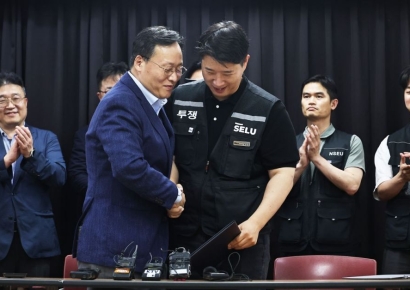 Up to 600 Million Won for Semiconductors, 160 Million Won Bonus for Loss-Making Non-Memory… Samsung Electronics Labor and Management Reach Tentative Deal on Unprecedented Performance Compensation (Comprehensive)
- "Could I Also Receive 370 Billion Won?"... No Limit on 'Stock Manipulation Whistleblower Rewards' Starting the 26th
- "From a 70 Million Won Loss to a 350 Million Won Profit with Samsung and SK hynix"... 'Stock Jackpot' Grandfather Gains Attention
- [Current State of K-Finance for Foreign Nationals]①From Niche to Core... Banks Go All-In on First-Mover Competition
- "Who Is Visiting Japan These Days?" The Once-Crowded Tourist Spots Empty Out... What's Happening?
Considering the reality of tens of trillions of won traded daily and the internationalized nature of virtual asset trading and blockchain networks, it is fortunate that legislation is being pursued even now. However, it is regrettable that the discussions appear to be driven not by the necessity of an already established market but by political events.
© The Asia Business Daily(www.asiae.co.kr). All rights reserved.