28 Countries, 216 Cases of Import Restrictions on Korean Products
[Sejong=Asia Economy Reporter Kwon Haeyoung] It has been revealed that foreign governments' import restriction measures on Korean products currently amount to 216 cases across 28 countries.
On the 29th, the Ministry of Trade, Industry and Energy held the '14th Import Restriction Council' and the '24th Non-Tariff Barrier Council' at the Korea International Trade Association in Gangnam-gu, Seoul, to review recent trends in import restrictions and non-tariff barriers and discuss joint public-private response strategies.
According to the Ministry, a total of 11 new import restriction investigations (8 anti-dumping and 3 safeguard cases) were initiated in the first half of this year, and as of June, 28 countries are implementing a total of 216 import restriction measures against Korea.
The number of new investigations increased from 25 cases in 2018 to 45 cases in 2019, then decreased to 38 cases in 2020 and 11 cases in the first half of this year. By type, anti-dumping measures are the most common with 160 cases (74.1%), followed by safeguards (47 cases, 21.7%) and countervailing duties (9 cases, 4.2%). By industry, import restrictions on steel and metals are the highest with 106 cases (81 anti-dumping, 9 countervailing duties, 16 safeguards).
Participants in the meeting shared trends and response statuses regarding major import restriction techniques such as Particular Market Situation (PMS) and Adverse Facts Available (AFA), and discussed the introduction trends of carbon border adjustment mechanisms in major countries and their impact by industry. Regarding PMS and AFA, they analyzed the logic and grounds for applying investigation techniques by industry and case, and agreed to continue closely sharing information to prevent the spread of these import restriction techniques to other industries.
In terms of non-tariff barriers, some countries have eased regulations. For example, in India, Korean exporters had to newly apply certification for some chemical products but faced difficulties due to tight preparation time. The government requested India to postpone the enforcement of the regulation, and India agreed to delay the implementation to allow Korean companies sufficient preparation time.
Hot Picks Today
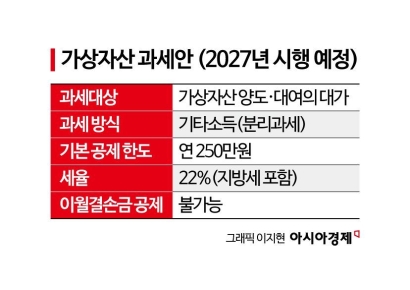 "Stocks Are Not Taxed, but Annual Crypto Gains Over 2.5 Million Won to Be Taxed Next Year... Investors Push Back"
- "Not Jealous of Winning the Lottery"... Entire Village Stunned as 200 Million Won Jackpot of Wild Ginseng Cluster Discovered at Jirisan
- "Jeong Yu-kyung Is a Neighbor"...Itaewon Standalone House with Record 23.2 Billion Won Appraisal Up for Auction [Real Estate AtoZ]
- "How Did an Employee Who Loved Samsung End Up Like This?"... Past Video of Samsung Electronics Union Chairman Resurfaces
- "Even With a 90 Million Won Salary and Bonuses, It Doesn’t Feel Like Much"... A Latecomer Rookie Who Beat 70 to 1 Odds [Scientists Are Disappearing] ③
An official from the Ministry of Trade, Industry and Energy stated, "We will actively utilize bilateral and multilateral channels to minimize damages to our companies caused by unreasonable import restrictions by continuously requesting fair investigations and minimization of unreasonable trade restrictive measures from counterpart countries," and "regarding non-tariff barriers, we will utilize the World Trade Organization (WTO), Free Trade Agreement (FTA) implementation committees, and also consider WTO litigation for measures with a high possibility of violating international norms."
© The Asia Business Daily(www.asiae.co.kr). All rights reserved.