Lee Jong-yeol, Rolls-Royce Branch Manager: "We Will Take Charge of the KDDX Heart"

[Asia Economy Yang Nak-gyu, Military Specialist Reporter] Following the Daegu-class Batch-II frigates, the Republic of Korea Navy has selected the MT30 gas turbine from the UK’s Rolls-Royce for the new Ulsan-class Batch-III frigates. The gas turbine serves as the ‘heart’ of the warship.
Rolls-Royce has expressed confidence in securing the contract for the Korean next-generation destroyer (KDDX), valued at 7 trillion won, by equipping it with the MT30 gas turbine following the new frigates. The KDDX project aims to secure combat ships to be operated as the Navy’s core force and is referred to as a ‘mini Aegis ship’ capable of performing basic missions such as missile interception, similar to Aegis destroyers.
Lee Jong-yeol, head of Rolls-Royce’s Korean branch, explained the MT30’s greatest strength: “Compared to competitors’ engines, it has more than twice the power density, resulting in higher efficiency.” While other companies’ existing engines require two engines per ship, the MT30 can deliver the same output with just one. Currently, Rolls-Royce’s MT30 is used by seven countries. The UK’s Queen Elizabeth-class aircraft carriers are also equipped with only two MT30 gas turbines.
Lee stated, “Reducing the number of engines creates extra space that can be used to add weapon systems or improve stealth capabilities through design.”
He added, “Existing engines produce only 20-30MW of power, but the MT30 engine can maintain over 40MW output,” emphasizing, “This means there is no need for performance upgrades due to power degradation or insufficiency during the ship’s lifecycle.”
In particular, he explained, “The power density of the MT30’s gas turbine engine generator is one of the key elements enabling the implementation of the Integrated Full Electric Propulsion (IFEP) system for the KDDX.” The integrated full electric propulsion system refers to a method of generating power solely through electricity, analogous to an ‘electric vehicle’ in the automotive world.
The MT30 engine was developed based on Rolls-Royce’s Trent 800 aircraft engine technology and built on over 45 million hours of operational experience. Based on this, there are plans to provide an Engine Health Monitoring (EHM) program. EHM is a technology that collects and analyzes reliable engine data and optimizes maintenance tasks during operation. Rolls-Royce explains that this reduces maintenance personnel and costs, benefiting the entire lifecycle of the ship.
Hot Picks Today
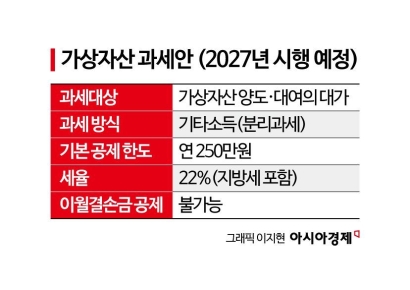 "Stocks Are Not Taxed, but Annual Crypto Gains Over 2.5 Million Won to Be Taxed Next Year... Investors Push Back"
- "Not Jealous of Winning the Lottery"... Entire Village Stunned as 200 Million Won Jackpot of Wild Ginseng Cluster Discovered at Jirisan
- "Even With a 90 Million Won Salary and Bonuses, It Doesn’t Feel Like Much"... A Latecomer Rookie Who Beat 70 to 1 Odds [Scientists Are Disappearing] ③
- "Rather Than Endure a 1.5 Million KRW Stipend, I'd Rather Earn 500 Million in the U.S." Top Talent from SNU and KAIST Are Leaving [Scientists Are Disappearing] ①
- "How Did an Employee Who Loved Samsung End Up Like This?"... Past Video of Samsung Electronics Union Chairman Resurfaces
Rolls-Royce has shown enthusiasm, even suggesting the possibility of advanced technology transfer. The Korean aircraft carrier project involves constructing a 30,000-ton light aircraft carrier capable of carrying vertical takeoff and landing fighters. The Navy plans to accelerate the project starting next year, aiming for operational deployment by 2033.
© The Asia Business Daily(www.asiae.co.kr). All rights reserved.







