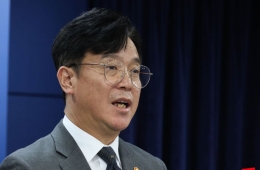
Military Sexual Crime Investigations and Trials to Be Conducted Externally
Proposed by Representative Park Jumin of the TF
Private Investigation to be Determined by the Minister of National Defense

[Asia Economy Reporter Jeon Jin-young] A bill has been proposed to conduct investigations and trials of military sexual crimes outside the military. This comes in response to issues raised regarding attempts to cover up, inadequate responses, and investigations within the military related to the recent death of an Air Force non-commissioned officer who was a victim of sexual harassment.
On the 18th, Park Joo-min, a member of the Democratic Party's "Military Sexual Crime Eradication and Victim Protection Innovation Task Force (TF)," introduced a revision to the Military Court Act that provides grounds for the Minister of National Defense to decide that sexual crimes can be investigated by civilian authorities rather than the military. The bill also includes provisions to establish a Military Investigation Review Committee, set up dedicated trial divisions and prosecutors for sexual crimes, and appoint public defenders instead of military legal officers.
The government’s previously submitted Military Court Act proposal aimed to integrate regular military courts under the Minister of National Defense, where first trials would be held, and appeals would be handled by civilian courts. In contrast, Park’s amendment allows civilian courts to conduct first trials if the victim is a civilian, deceased, or has committed suicide, or if the case raises national suspicion or is of a similar nature.
Regarding the legislative intent, Park explained, "External investigative agencies and courts respond to sexual crimes in a relatively stable and systematic manner. However, the military’s internal judicial system has not kept pace with this structure." He added, "While the military’s unique characteristics should be respected, there is no need to treat sexual crimes differently simply because the perpetrator is a soldier."
Hot Picks Today
 "Stocks Are Not Taxed, but Annual Crypto Gains Over 2.5 Million Won to Be Taxed Next Year... Investors Push Back"
- "Don't Throw Away Coffee Grounds" Transformed into 'High-Grade Fuel' in Just 90 Seconds [Reading Science]
- Kakao Union: "All Five Unions, Including Headquarters, Approve Strike Vote"
- "Groups of 5 or More Now Restricted"... Unrelenting Running Craze Leaves Citizens and Police Exhausted
- "Even With a 90 Million Won Salary and Bonuses, It Doesn’t Feel Like Much"... A Latecomer Rookie Who Beat 70 to 1 Odds [Scientists Are Disappearing] ③
Until now, crimes occurring within the military have been investigated and tried entirely by military courts, drawing criticism that "command authority is above judicial authority." In criminal cases, both first and second trials must be conducted by military courts regardless of the victim’s wishes, and if the military prosecution requests an arrest warrant, approval from the commanding officer of the unit is required. This closed structure has been criticized for allowing commanders to exert influence, leading to concealment or minimization of investigations.
© The Asia Business Daily(www.asiae.co.kr). All rights reserved.