Exchange Announces Results of Special Surveillance on Distressed Companies... Suspicions Found in 24 Distressed Companies
21 Cases of Insider Information Use Discovered, 3 Suspected Cases of Fraudulent Trading and Market Manipulation Found

[Asia Economy Reporter Gong Byung-sun] The Korea Exchange conducted a planned surveillance on marginal companies and found that their stock prices and trading volumes fluctuate sharply starting one month before the submission date of their audit reports.
On the 27th, the Exchange announced the results and key characteristics of the planned surveillance on marginal companies with fiscal year-end in December 2020. Among a total of 50 marginal company stocks, significant suspicious activities were found in 24 stocks, and psychological review requests were made for further investigation.
By type of suspicion, the most frequent was the use of undisclosed material information with 21 cases, followed by 3 cases suspected of fraudulent trading and market manipulation. By market, 6 companies in the KOSPI market and 18 companies in the KOSDAQ market had significant suspicious activities.

According to the Exchange's detailed analysis of the 24 marginal company stocks, stock prices and trading volumes showed sharp fluctuations starting one month before the audit report submission date. The average decline rate of 22 stocks with falling prices was 30.05%, while during the same period, the KOSPI rose by 0.33% and the KOSDAQ by 4.41%.
The financial structure also deteriorated. Key financial indicators such as operating profit, net income, cash flow from operating activities, and debt ratio worsened, and capital erosion occurred. The average operating loss of 18 stocks recording operating losses increased from 7.1 billion KRW in 2019 to 8.0 billion KRW last year.
Internal controls were also deficient. Frequent provision of major shareholder equity as collateral occurred, and internal controls failed due to management disputes, embezzlement, and breach of trust. Additionally, external credibility sometimes declined. Due to failure to comply with disclosure requirements, companies were designated as unfaithful disclosure corporations and sometimes added indiscriminate theme-based business purposes. Frequent changes in major shareholders also lowered external credibility.
The Exchange explained that marginal companies mainly engage in unfair trading using adverse undisclosed material information around the time of annual settlement and audit report submission, so caution is advised. It also emphasized caution when financially distressed companies are excessively exposed to theme-based issues. Violations of disclosure requirements, frequent large-scale external financing, and frequent changes in the major shareholder CEO should also be watched carefully.
Hot Picks Today
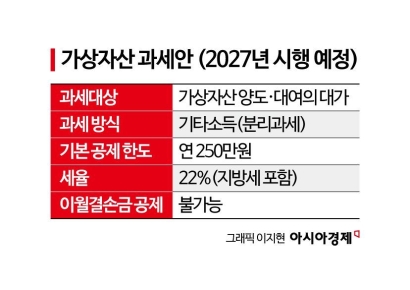 "Stocks Are Not Taxed, but Annual Crypto Gains Over 2.5 Million Won to Be Taxed Next Year... Investors Push Back"
- "Not Jealous of Winning the Lottery"... Entire Village Stunned as 200 Million Won Jackpot of Wild Ginseng Cluster Discovered at Jirisan
- "Even With a 90 Million Won Salary and Bonuses, It Doesn’t Feel Like Much"... A Latecomer Rookie Who Beat 70 to 1 Odds [Scientists Are Disappearing] ③
- "Rather Than Endure a 1.5 Million KRW Stipend, I'd Rather Earn 500 Million in the U.S." Top Talent from SNU and KAIST Are Leaving [Scientists Are Disappearing] ①
- "How Did an Employee Who Loved Samsung End Up Like This?"... Past Video of Samsung Electronics Union Chairman Resurfaces
An Exchange official stated, “After conducting psychological reviews on the requested cases, we plan to promptly notify related agencies,” and added, “In the future, we will conduct planned surveillance targeting unfair trading related to no-capital mergers and acquisitions (M&A), corporate raider-type unfair trading (fraudulent trading), earnings announcements, political theme stocks, and short selling.”
© The Asia Business Daily(www.asiae.co.kr). All rights reserved.







