Why Does Kim Young-jong, Mayor of Jongno-gu, Aim to Realize 'Resident Happiness' Policy?
Starting This Month, Implementing Concrete Policies for Resident Happiness: Developing 'Happiness Impact Assessment System', Conducting 'Resident Happiness Survey and Analysis', and Promoting 'Basic Happiness Plan'


[Asia Economy Reporter Jongil Park] Jongno-gu (Mayor Kim Young-jong) is promoting the development of a ‘Happiness Impact Assessment System,’ a ‘Resident Happiness Survey and Analysis,’ and the establishment of a ‘Basic Happiness Plan’ starting this month to realize resident happiness through concrete policies.
Since 2015, Jongno-gu has prioritized resident happiness as the top value in district administration and has made efforts to find practical ways to enhance happiness. The district has diagnosed the current state of community happiness and undertaken various initiatives to build consensus with residents.
Examples include the establishment of the nation’s first dedicated resident happiness team, the ‘Happiness Dream Team,’ the enactment of Seoul’s first ‘Jongno-gu Resident Happiness Promotion Ordinance,’ the development of a happiness measurement tool called the ‘Happiness Index,’ and the formation and operation of the Jongno-gu Resident Happiness Committee.
Building on the institutional foundation laid for policy-making on happiness, this year the district plans to develop sustainable strategies to improve residents’ happiness, especially as they endure the prolonged difficulties caused by COVID-19.
As part of this, the ‘Happiness Impact Assessment System’ will be developed to closely analyze the effects of Jongno-gu’s policies and projects on resident happiness. A checklist framework will be prepared to help officials consider and review how policies impact resident happiness, guiding them to formulate policies from the perspective of enhancing resident happiness.
The ‘Resident Happiness Survey and Analysis’ will be conducted using the Jongno Happiness Index developed in 2018. The purpose is to assess the qualitative level of residents’ lives and use the results as foundational data for policy-making.
The survey targets 2,000 residents aged 19 and older, and policies needed by residents as revealed by the survey will be incorporated into the Basic Happiness Plan as medium- to long-term development measures.
Finally, the ‘Basic Happiness Plan’ will be established to derive annual plans, key strategies, and core tasks by sub-sector. This will enable continuous monitoring and management of policies implemented to promote resident happiness.
Meanwhile, in March, Jongno-gu signed a business agreement with the Happiness Bridge Association to jointly develop related educational programs, utilize educational resources, and cooperate to spread happiness awareness within the community. The Happiness School is scheduled to open next month.
Resident student recruitment will be conducted on a first-come, first-served basis through the district office website from May 26 to June 8.
Selected participants will attend happiness education courses running from June 24 to August 12. Inquiries can be made through the Health City Division.
Additionally, in April, Jongno-gu published a white paper titled ‘Happy Jongno, Jongno Happiness,’ which summarizes happiness policies in an easy-to-understand manner. This book contains stories of Jongno-gu’s journey to resident happiness through the ‘Happiness Dream Project’ conducted from 2015 to 2020, as well as details about this year’s ‘Jongno Well-being Index Rounding Project’ aimed at enhancing resident happiness. It is being distributed to community centers, libraries, and other resident facilities to share the valuable experiences and achievements accumulated so far.
Hot Picks Today
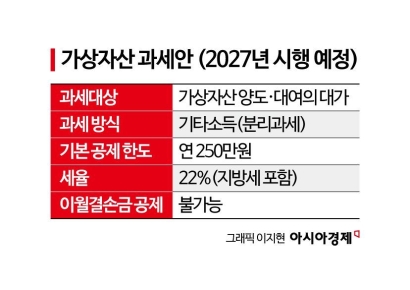 "Stocks Are Not Taxed, but Annual Crypto Gains Over 2.5 Million Won to Be Taxed Next Year... Investors Push Back"
- "Not Jealous of Winning the Lottery"... Entire Village Stunned as 200 Million Won Jackpot of Wild Ginseng Cluster Discovered at Jirisan
- "Even With a 90 Million Won Salary and Bonuses, It Doesn’t Feel Like Much"... A Latecomer Rookie Who Beat 70 to 1 Odds [Scientists Are Disappearing] ③
- "Rather Than Endure a 1.5 Million KRW Stipend, I'd Rather Earn 500 Million in the U.S." Top Talent from SNU and KAIST Are Leaving [Scientists Are Disappearing] ①
- "How Did an Employee Who Loved Samsung End Up Like This?"... Past Video of Samsung Electronics Union Chairman Resurfaces
Mayor Kim Young-jong stated, “Starting this month, we will operate happiness policy projects and use resident happiness as a milestone for solving local issues. We will continue to develop sustainable happiness policies to make Jongno a better place for all residents to live evenly and well. We also ask for your interest and participation in the Happiness School starting in June.”
© The Asia Business Daily(www.asiae.co.kr). All rights reserved.







