Financial Services Commission Advisory Group Criticizes "Inadequate Regulation of Virtual Currency and Internet Banks"
Intense Criticism Poured Out at All-Staff Workshop
Vice Chairman Do Kyusang: "We Will Deeply Reflect on the Points Raised"

[Asia Economy Reporter Kim Jin-ho] "Contrary to their original purpose, internet-only banks are operating mainly for high-credit borrowers, and young investors are suffering significant losses related to virtual currencies. It is regrettable that the Financial Services Commission (FSC) has not taken proactive market regulation."
Kim Yong-jin, Chair of the Industry and Innovation Subcommittee of the Financial Development Advisory Council (FDAC), made this remark while reflecting on the achievements of the FSC's policies over the past four years. It is a self-critical voice pointing out that internet-only banks, launched to promote mid-interest loans, have engaged in improper business practices, and that financial authorities have failed to play their role amid the recent overheating of the virtual currency market.
Given that the FDAC is the FSC's highest policy advisory body overseeing financial policy, this is indeed a "painful criticism." The statement was made at the FSC's all-staff workshop held on the 20th, titled "Achievements of Policies Pursued Over Four Years and Future Tasks."
Since the inauguration of the Moon Jae-in administration, the FSC has regarded the launch of internet-only banks as its greatest achievement. It explained that by granting banking licenses to companies like Kakao and KT to promote mid-interest loans, it nurtured them as symbols of innovative and inclusive finance.
However, contrary to the authorities' explanation, internet-only banks are focusing solely on high-credit borrowers. According to the office of Bae Jin-kyo, a lawmaker from the Justice Party, as of the end of June last year, 93.59% of Kakao Bank's unsecured loans were to high-credit grade borrowers. The proportion of mid-credit borrowers (grades 5-6), the main customers for mid-interest loans, was only 5.54%.
The FSC recently announced it would examine the actual status of mid-interest loans by internet-only banks and impose regulations. This comes more than four years after the controversy first arose.
The virtual currency issue is similar. As the market overheated, the National Assembly, regardless of party lines, has been flooding with bills aimed at investor protection and exchange supervision, but financial authorities still maintain a "watching from the sidelines" stance. In particular, while the government regulates exchanges under the Act on Reporting and Using Specified Financial Transaction Information (Special Financial Transactions Act) and plans to collect taxes from investors starting next year, the FSC has been criticized for not presenting investor protection policies.
There were also criticisms that financial authorities fail to communicate properly with the market. Shim In-sook, Chair of the FDAC, pointed out, "Since unexpected side effects and blind spots occur during policy implementation, it is necessary to communicate more broadly with the market, consumers, and the public."
A representative case is the FSC's household debt measures announced on April 29. The scope of the stringent regulations, centered on strengthening the Debt Service Ratio (DSR), was not clearly defined, causing severe market confusion for a while. As the controversy grew, the financial authorities eventually announced that the strengthened DSR regulations would not apply to balance loans for subscriptions and pre-sales made before the regulation's enforcement, but the market and the public had already experienced significant confusion.
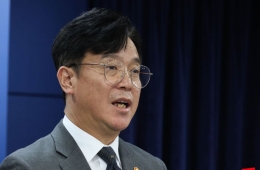
Regarding the FDAC members' criticisms, Do Kyu-sang, Vice Chairman of the FSC, said, "We will deeply reflect on the points raised and do our best in the remaining year." Vice Chairman Do emphasized, "The challenges facing the FSC remain numerous, and there must be no negligence in preparing for the future."
Hot Picks Today
 "Stocks Are Not Taxed, but Annual Crypto Gains Over 2.5 Million Won to Be Taxed Next Year... Investors Push Back"
- "Don't Throw Away Coffee Grounds" Transformed into 'High-Grade Fuel' in Just 90 Seconds [Reading Science]
- [Lee Jaemyung Administration One Year] "A Breakwater in Crisis, a Blade Against Waste"... Planning Ministry's Fiscal Tightening Earns High Marks
- "Groups of 5 or More Now Restricted"... Unrelenting Running Craze Leaves Citizens and Police Exhausted
- "Even With a 90 Million Won Salary and Bonuses, It Doesn’t Feel Like Much"... A Latecomer Rookie Who Beat 70 to 1 Odds [Scientists Are Disappearing] ③
The FSC identified its tasks for the coming year as ▲ orderly normalization of increased liquidity due to COVID-19 ▲ improvement of regulations and supervisory practices to promote competition and innovation ▲ restoration of financial trust damaged by financial accidents ▲ response to structural economic and social changes such as eco-friendliness.
© The Asia Business Daily(www.asiae.co.kr). All rights reserved.