Mobile COVID-19 Testing to Be Conducted at Nearby Schools Following Confirmed Cases (Comprehensive)
Pilot Introduction from Seoul... Asymptomatic Individuals Can Also Receive PCR Tests
Three-Person Sample Collection Teams Accept Applications and Visit Local Schools
Superintendent Cho Hee-yeon: "Proactive Testing Will Also Be Introduced for Private Academies"

Deputy Prime Minister for Social Affairs and Minister of Education Yoo Eun-hye and Seoul Metropolitan Office of Education Superintendent Cho Hee-yeon are announcing strengthened COVID-19 prevention measures for schools and academies nationwide at the Government Seoul Office in Jongno-gu, Seoul, on the 20th. Photo by Kim Hyun-min kimhyun81@
View original image[Asia Economy Reporter Han Jinju] To prevent the spread of COVID-19 infections in schools and local communities, mobile COVID-19 specimen testing will be piloted in schools in Seoul. Specimen collection teams will also visit nearby schools where confirmed cases have occurred to conduct tests.
On the 21st, the Ministry of Education announced strengthened COVID-19 prevention measures for schools and academies nationwide. Starting in early May, mobile specimen teams will visit schools to conduct PCR (polymerase chain reaction) tests for elementary, middle, and high school students and staff upon request by school quarantine officers who assess demand and apply to the education office. The PCR test method is the same as that conducted at screening clinics or public health centers.
Deputy Prime Minister and Minister of Education Yoo Eun-hye said, "We will pilot the mobile specimen testing team starting in Seoul to improve accessibility to COVID-19 diagnostic testing and proactively begin the most accurate PCR testing. In Seoul, where the infection situation is severe, we will form teams of three professionals including nurses and clinical pathologists to visit schools and conduct tests for those who wish to be tested."
Mobile Specimen Teams to Visit Nearby Schools with Confirmed Cases

Cho Hee-yeon, Superintendent of Education for Seoul, is announcing strengthened COVID-19 prevention measures for schools and academies nationwide at the Seoul Government Complex in Jongno-gu, Seoul on the 20th. Photo by Kim Hyun-min kimhyun81@
View original imageSeparate from the quarantine authorities’ testing, dedicated teams composed of qualified personnel such as nurses and clinical pathologists will conduct PCR diagnostic tests for those who wish to be tested. They will collect specimens while visiting schools and transport them to entrusted institutions to receive results.
While maintaining the quarantine authorities’ testing system, mobile specimen testing will allow students and staff who are not symptomatic or contacts of confirmed cases to be tested. Previously, students and staff near schools with confirmed cases were not eligible for testing, but now they will be able to receive COVID-19 tests promptly.
Seoul Metropolitan Office of Education Superintendent Cho Hee-yeon said, "We need to expand the method of installing temporary screening clinics only at schools with confirmed cases to COVID-19 epidemic areas to preemptively block additional infections within schools and local communities."
The Seoul Metropolitan Office of Education is also considering introducing proactive testing for academies. Superintendent Cho added, "Furthermore, we want after-school instructors, sports instructors, and cooperative instructors to benefit quickly and easily through mobile specimen testing. We will cooperate with district offices to apply mobile specimen testing to academies and strengthen quarantine by linking with academy autonomous quarantine teams."
Regarding Mayor Oh Se-hoon’s Proposal for Self-Test Kits: "Must Be Very Cautious"... Seoul National University’s Testing Method Also Reserved

On the 18th, citizens are lining up to get tested at the temporary COVID-19 screening site set up at Seoul Station Plaza. Photo by Moon Honam munonam@
View original imageRegarding the rapid antigen self-test kits proposed earlier by Seoul Mayor Oh Se-hoon, the Ministry of Education’s position is that immediate application in schools is difficult due to unverified safety.
Deputy Prime Minister Yoo said, "There are no self-test kits approved by the Ministry of Food and Drug Safety yet, and experts have differing opinions on the sensitivity and effectiveness of these kits. Since there are unverified aspects, applying them in schools must be very cautious. Approval from the Ministry of Food and Drug Safety or consultation with quarantine authorities and experts is necessary."
Superintendent Cho said, "I understand the accuracy of rapid antigen tests is about 20-40%, and the biggest problem is 'false positives.' If a student is actually negative but tests positive, the entire school would have to switch to remote learning, and if later confirmed negative, the school could fall into chaos."
The Ministry of Education also maintains a reserved stance on the rapid molecular diagnostic testing method introduced by Seoul National University. Seol Se-hoon, Director of University Academic Policy at the Ministry of Education, explained, "While it is meaningful for universities to use their own resources to introduce diagnostic testing in the current situation where face-to-face classes are not possible, since the tests are conducted with received resources, we need to observe the process and results carefully."
Vaccination for 3rd Year High School Students Planned for 2nd Quarter... Three-Week Intensive Quarantine Period to Be Operated

On the morning of April 13, when the first COVID-19 vaccinations for special and health teachers and other school staff began, Cho Hee-yeon, Superintendent of Seoul Metropolitan Office of Education (third from the left), observed the vaccination of Shim Yeon-ju, a health teacher at Hongje Elementary School, at Seodaemun-gu Public Health Center in Yeonhui-dong, Seodaemun-gu, Seoul. 2021. 4. 13 Photo by Joint Press Corps
View original imageFrom today until May 11, a three-week intensive quarantine period will be operated in kindergartens, elementary, middle, high schools, universities, and academies. Eating outside designated areas is prohibited, and operation of cafeterias or group use should be refrained from. Mask-wearing, personal distancing, ventilation, and disinfection of educational equipment such as desks and doors will be strengthened.
Symptomatic individuals will be immediately excluded from duties and undergo rapid diagnostic testing. Monitoring of suspected symptoms among external instructors will be expanded, and any unusual findings will be shared immediately. Students and staff are advised to refrain from private gatherings, club activities, and visiting multi-use facilities. Depending on the regional patient occurrence situation, proactive testing for school dormitory residents and academy or tutoring center workers will also be promoted.
Intensive quarantine inspections for academies will also be conducted. Inspection teams and quarantine inspection groups will be formed to check compliance with academy quarantine rules, and academy organizations’ self-formed 'academy autonomous quarantine teams' will also operate. To manage symptomatic academy instructors, the use of academy self-diagnosis apps will be encouraged. Currently, there are about 350,000 academy instructors, but only about 30,000 use the self-diagnosis app.
Regarding criticism that patient occurrence information is not properly shared between schools and academies, Jeong Byung-ik, Director of Lifelong Future Education Bureau at the Ministry of Education, explained, "Regarding the issue of transmission in academies, the quarantine authorities will primarily judge the patient occurrence information and its quarantine purpose and scope, and will continue to consult with quarantine authorities. We are asking academy organizations to increase participation in the self-diagnosis app."
Meanwhile, the Ministry of Education announced plans to promote vaccination for teachers and students in the 3rd year of high school during the second quarter and to work to increase vaccination rates among staff.
Hot Picks Today
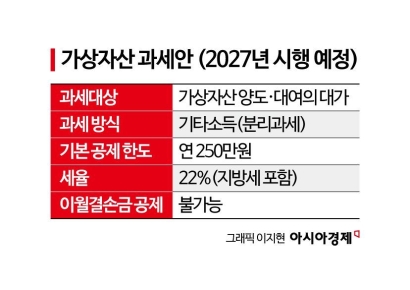 "Stocks Are Not Taxed, but Annual Crypto Gains Over 2.5 Million Won to Be Taxed Next Year... Investors Push Back"
- "Not Jealous of Winning the Lottery"... Entire Village Stunned as 200 Million Won Jackpot of Wild Ginseng Cluster Discovered at Jirisan
- "Jeong Yu-kyung Is a Neighbor"...Itaewon Standalone House with Record 23.2 Billion Won Appraisal Up for Auction [Real Estate AtoZ]
- "How Did an Employee Who Loved Samsung End Up Like This?"... Past Video of Samsung Electronics Union Chairman Resurfaces
- "Even With a 90 Million Won Salary and Bonuses, It Doesn’t Feel Like Much"... A Latecomer Rookie Who Beat 70 to 1 Odds [Scientists Are Disappearing] ③
Jeon Jin-su, Director of Student Support Bureau at the Ministry of Education, said, "Vaccination for 3rd year high school students is planned for the second quarter, and we will cooperate with the Korea Disease Control and Prevention Agency to ensure smooth progress. The consent rate for vaccination among staff such as elementary school 1st and 2nd grade teachers is understood to be over 80%, and we will make efforts through various channels to increase the vaccination rate."
© The Asia Business Daily(www.asiae.co.kr). All rights reserved.







