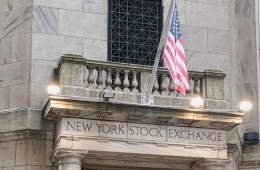
US Economic Recovery Accelerates... "Manufacturing Index Hits Highest in 37 Years"
S&P Index Surpasses 4000 for the First Time Ever
Rapid Recovery Raises Overheating Concerns

[Asia Economy New York=Special Correspondent Baek Jong-min, Reporter Kim Su-hwan] The manufacturing Purchasing Managers' Index (PMI), which indicates the trend of the U.S. manufacturing sector, has reached its highest level in 37 years, leading to analyses that the U.S. economy has entered a full-fledged recovery phase. Along with optimistic economic indicators and the impact of President Joe Biden's $2 trillion infrastructure investment plan, the U.S. S&P 500 index surpassed 4000 for the first time ever.
According to the PMI index released by the Institute for Supply Management (ISM) on the 1st (local time), last month's PMI recorded 64.7, up from 60.8 the previous month. This figure exceeds economists' forecast of 61.5 and is the highest since December 1983. Generally, a PMI index above 50 is interpreted as the economy entering an expansion phase.
"U.S. Economy Hit Bottom in February"
In addition, the ISM New Orders Index, which indicates new order trends in the manufacturing sector, recorded 68.0, surpassing the forecast of 67.0 and marking the highest level since January 2004. Also, the ISM Employment Index, which reflects manufacturing employment levels, rose to 59.6 from 54.4 the previous month. This is the highest since February 2018. CNBC reported, "As manufacturing gains momentum, demand has increased, leading companies to hire more staff," and analyzed that "there is room for continued growth in the manufacturing sector."
There are also growing expectations that the U.S. economic growth rate for the second quarter will reach double digits. The second-quarter GDP growth rates predicted by Pictet Bank and Barclays Bank are 14.8% and 11.5%, respectively. Bloomberg's average growth forecast is 9.7%.
Lee Sun Harris, Head of International Economic Research at Bank of America (BoA), said, "(These indicators) show a significant scale of economic recovery and reflect the impact of government fiscal stimulus," adding, "An unprecedented recovery is expected to continue over the next two years."
CNBC reported, "Starting from February, signs indicate that the U.S. manufacturing sector economy has bottomed out and is rebounding," and "stable economic growth can be achieved by the end of this year."
Rapid Economic Surge Could Backfire
This recovery trend has also affected stock prices. On the first day of the second quarter, the S&P 500, a representative U.S. stock index, rose 1.2% from the previous day to 4019.87, surpassing 4000 for the first time in history. The S&P 500 rose from 3000 to 4000 in just 434 trading days, marking the shortest period in index history to gain 1000 points. The Dow Jones Industrial Average rose 171.66 points (0.52%) to 33,153.21, and the Nasdaq index surged 233.24 points (1.76%) to close at 13,480.11.
However, concerns have also been raised that the sharp economic recovery could trigger inflation and economic overheating. Mark Zandi, Chief Economist at Moody's Analytics, predicted, "An excessive boom period can accelerate inflation and recession," and said, "(The economic boom) will not last more than five years."
Hot Picks Today
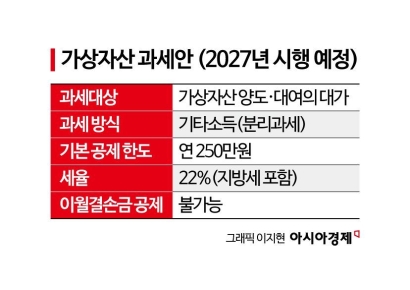 "Stocks Are Not Taxed, but Annual Crypto Gains Over 2.5 Million Won to Be Taxed Next Year... Investors Push Back"
- "Not Jealous of Winning the Lottery"... Entire Village Stunned as 200 Million Won Jackpot of Wild Ginseng Cluster Discovered at Jirisan
- "Rather Than Endure a 1.5 Million KRW Stipend, I'd Rather Earn 500 Million in the U.S." Top Talent from SNU and KAIST Are Leaving [Scientists Are Disappearing] ①
- "How Did an Employee Who Loved Samsung End Up Like This?"... Past Video of Samsung Electronics Union Chairman Resurfaces
- "Even With a 90 Million Won Salary and Bonuses, It Doesn’t Feel Like Much"... A Latecomer Rookie Who Beat 70 to 1 Odds [Scientists Are Disappearing] ③
Peter Hooper, Chief Economist at Deutsche Bank and former member of the U.S. Federal Reserve Board, also said, "Within a few years, inflation could rise to 3%, exceeding the Fed's 2% target," and warned, "The Fed could face a difficult situation."
© The Asia Business Daily(www.asiae.co.kr). All rights reserved.