Over 10,000 Investigated but Only 7 Additional Cases Found... Suspicions Only Grew Larger

Prime Minister Chung Sye-kyun is answering questions after announcing the results of the first full-scale investigation into LH employees' speculation on new towns at the Government Seoul Office in Jongno-gu, Seoul, on the 11th. Photo by Jang Jin-hyeong aymsdream@
View original image[Asia Economy Reporter Ryu Tae-min] The government declared a ‘war against speculation’ and announced the results of the first joint investigation into the ‘land speculation’ allegations involving employees of Korea Land and Housing Corporation (LH), but only seven additional suspected speculators were identified. Since most speculative transactions are conducted under borrowed names, the first investigation, which only targeted real-name transactions, has been criticized for its methodological limitations.
The government joint investigation team announced the results of the first investigation into land transactions by public officials in the 3rd phase new towns on the 11th. The investigation covered a total of 14,348 people, including 4,509 employees of the Ministry of Land, Infrastructure and Transport and 9,839 LH employees, and found that a total of 20 people engaged in speculative transactions.
The market responded with disbelief to the investigation results. Excluding the 13 suspected speculators revealed by the Lawyers for a Democratic Society (Minbyun) and People’s Solidarity for Participatory Democracy on the 1st, based on whistleblower reports from inside LH, only seven new suspected speculators were identified this time. Notably, the investigation covered all six 3rd phase new towns, but excluding the 15 suspected speculators in the Gwangmyeong-Siheung district, which sparked public outrage, only two were found in Goyang Changneung, and just one each in Namyangju Wangsuk, Gwacheon Gwacheon, and Hanam Gyosan.
Ultimately, there are criticisms that the government’s attempt to complete a full investigation in a short period only fueled negative public opinion that “government investigations cannot be trusted.” This investigation was conducted by obtaining consent from Ministry of Land and LH employees and inputting resident registration numbers into the Korea Real Estate Board’s land transaction system. As a result, only transactions conducted under real names could be identified, while the more commonly used borrowed-name or family transactions were excluded.
Accordingly, the second investigation is expected to focus on borrowed-name and family transactions. This will involve checking transaction records in the Real Estate Board’s system with the consent of spouses and direct relatives, and if necessary, will be converted into a compulsory investigation. In such cases, it will be possible to investigate land transaction records without the individual’s consent.
Hot Picks Today
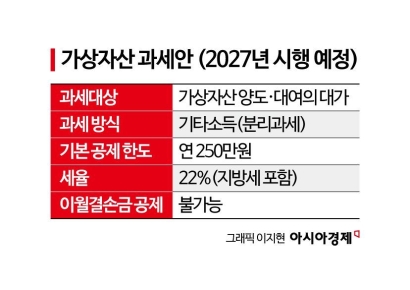 "Stocks Are Not Taxed, but Annual Crypto Gains Over 2.5 Million Won to Be Taxed Next Year... Investors Push Back"
- "Not Jealous of Winning the Lottery"... Entire Village Stunned as 200 Million Won Jackpot of Wild Ginseng Cluster Discovered at Jirisan
- "Even With a 90 Million Won Salary and Bonuses, It Doesn’t Feel Like Much"... A Latecomer Rookie Who Beat 70 to 1 Odds [Scientists Are Disappearing] ③
- "Rather Than Endure a 1.5 Million KRW Stipend, I'd Rather Earn 500 Million in the U.S." Top Talent from SNU and KAIST Are Leaving [Scientists Are Disappearing] ①
- "How Did an Employee Who Loved Samsung End Up Like This?"... Past Video of Samsung Electronics Union Chairman Resurfaces
Regarding this, Prime Minister Chung Sye-kyun stated, “Illegal acts such as borrowed-name transactions and other speculation suspicions will be thoroughly investigated and punished by the newly established government joint special investigation headquarters,” and added, “The investigation of spouses and direct relatives, which was originally assigned to the joint investigation team, will also be conducted by the special investigation headquarters.”
© The Asia Business Daily(www.asiae.co.kr). All rights reserved.







