Eunju Lee, Seoul City Council Member, Urges Thorough Management of Seoul's Pedestrian Policies and Child Protection Zones
Walking Policy 10 Years: Genuine 'Walking City, Seoul' Requires Accompanying Walking Policies... Detailed Management System Needed to Maintain Child Protection Zones Even in Closed Kindergartens
[Asia Economy Reporter Jong-il Park] Seoul Metropolitan Council Transportation Committee member Eunju Lee (Democratic Party, Nowon 2) requested thorough management and supervision of Seoul's pedestrian policies and children's protection zones during the urban transportation office work report session held on the 25th of last month during the 299th extraordinary session.
Since 2012, Seoul has been gradually expanding its pedestrian policies across various fields to transform from a car-centered city to a people- and pedestrian-centered "Pedestrian-Friendly City Seoul."

According to Councilor Lee Eunju, as part of the core pedestrian policies such as road diet and road space reorganization projects, she first criticized the fact that obstacles and power distribution lines remain even after pedestrian space improvements, which rather hinder pedestrian spaces.
Councilor Lee pointed out, "Road diet is the core of pedestrian policies that reorganize urban space from car-centered roads to pedestrian-centered roads, but upon reviewing the post-project situation, there are places where obstacles blocking pedestrian movement remain, and even bollards block tactile paving for the visually impaired."
She added that pedestrian policies, initially implemented only in the transportation sector, are now applied in various fields such as urban regeneration and housing, and it would be fair to say there are no projects unrelated to pedestrian issues anymore. In this context, with pedestrian projects increasingly linked to other sectors, the Urban Transportation Office must take the lead in pedestrian policies and meticulously manage interdepartmental coordination and administrative procedures. She emphasized the need for careful overall management of pedestrian policies.
Furthermore, according to Councilor Lee, Seoul had canceled a total of 74 kindergarten and children's protection zones in 2020, and she pointed out that some designated zones were canceled 7 to 8 years after the kindergartens had closed.
She continued that despite kindergartens being closed and the children's protection zones needing to be canceled, delayed management negligence posed risks of excessive punishment under the "Min-sik Act." She stated that the designation and cancellation of children's protection zones are Seoul's management responsibilities, and she hopes that Seoul, together with district offices, will conduct thorough on-site inspections and strengthen management and supervision.
Additionally, Councilor Lee explained that through the 299th extraordinary session, the Seoul Metropolitan Ordinance for Children's School Route Traffic Safety was partially amended to include specific provisions for the installation, management, and financial support of pedestrian safety facilities to prevent traffic accidents occurring on children's school routes.
The ordinance specifies safety facilities that can be installed to prevent increasing accidents within children's protection zones. It also clearly states the basis for supporting installation costs. When the mayor recognizes the need in vulnerable areas for children's traffic accidents, facilities such as sidewalks, road accessories, traffic safety devices, yellow carpets for visibility improvement, and LED safety signs at crosswalks, as stipulated in higher laws, can be installed. Ultimately, this aims to create a safe pedestrian environment on children's school routes.
According to Councilor Lee, the amended ordinance will systematize the installation and financial support of safety facilities by reflecting them in the basic plan and annual implementation plans under Article 4 of the current ordinance, thereby establishing a foundation for more efficient installation and management of safety facilities.
Hot Picks Today
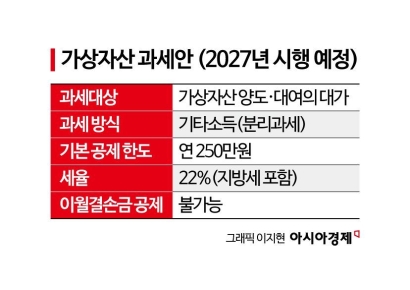 "Stocks Are Not Taxed, but Annual Crypto Gains Over 2.5 Million Won to Be Taxed Next Year... Investors Push Back"
- "Not Jealous of Winning the Lottery"... Entire Village Stunned as 200 Million Won Jackpot of Wild Ginseng Cluster Discovered at Jirisan
- "Rather Than Endure a 1.5 Million KRW Stipend, I'd Rather Earn 500 Million in the U.S." Top Talent from SNU and KAIST Are Leaving [Scientists Are Disappearing] ①
- "How Did an Employee Who Loved Samsung End Up Like This?"... Past Video of Samsung Electronics Union Chairman Resurfaces
- "Even With a 90 Million Won Salary and Bonuses, It Doesn’t Feel Like Much"... A Latecomer Rookie Who Beat 70 to 1 Odds [Scientists Are Disappearing] ③
In conclusion, Councilor Lee emphasized, "For a pedestrian-centered Seoul rather than a car-centered one, it is time to review the pedestrian policies conducted so far, evaluate them comprehensively, and consider the ultimate future direction. The Urban Transportation Office must take the lead and maintain focus on all pedestrian policies in cooperation with Seoul and district offices. Furthermore, for the expanding pedestrian policies and management of children's protection zones, Seoul must conduct thorough prior reviews to become a truly walking city and a safe Seoul."
© The Asia Business Daily(www.asiae.co.kr). All rights reserved.