[Chaos in the Financial Consumer Protection Act] Regulation Applies to Card Cash Services and Revolving Credit as Well
Financial Consumer Protection Act Q&A
Application of Suitability Principle for Customized Recommendations
[Asia Economy Reporter Kiho Sung] From the 25th of this month, cash services and revolving (partial payment amount carryover agreement) services of credit cards will also be subject to the Financial Consumer Protection Act (FCPA). Even with the introduction of the right to cancel illegal contracts related to financial products, initial costs such as loan interest, card annual fees, and fees will not be refunded to consumers by financial companies.
According to the financial sector on the 8th, the Financial Services Commission and the Financial Supervisory Service are currently posting the first responses to major inquiries received so far on their websites. The financial authorities plan to continue posting grouped responses from time to time.
Below are the main questions and answers related to the enforcement of the FCPA.
- What happens if existing loan solicitors fail to register with the FSC by the enforcement date?
△ Registration for new operators is expected to be possible from September 25. Operators who have been engaged in loan solicitation work before the 24th of this month will be considered registered with the FSC until September 25 to prevent any disadvantages due to non-registration, and no sanctions will be imposed.
- Do credit card cash services and revolving also fall under financial products under the FCPA?
△ Although cash services and revolving added by agreement upon credit card subscription are difficult to be regarded as independent separate financial products by themselves, credit cards are considered financial products. Regulations under the FCPA, such as the obligation to explain matters related to cash services and revolving in connection with credit card contract conclusion, apply. However, prepaid and debit payments are judged not to be similar to financial products.
- Does introducing financial product sellers also fall under ‘financial product sales agency/intermediation business’ that requires legal registration?
△ Introducing financial product sellers, including online, generally does not constitute intermediation if it occurs before the solicitation of financial products and is unlikely to have a direct impact on the conclusion of financial product contracts.
- In the case of non-face-to-face transactions, can it be considered that there is no solicitation by the seller and thus the suitability principle does not need to be applied?
△ In non-face-to-face (untact) transactions, if the consumer expresses an intention to receive solicitation for financial products subject to the suitability principle under the FCPA, and the financial product seller solicits contract conclusion thereafter, the suitability principle is basically applied. This includes cases where the consumer provides information necessary for tailored product recommendations or selects specific criteria to find products that meet those criteria. However, if the consumer directly inputs and searches for a specific product name, it is difficult to consider this as an expression of intention to receive solicitation.
Hot Picks Today
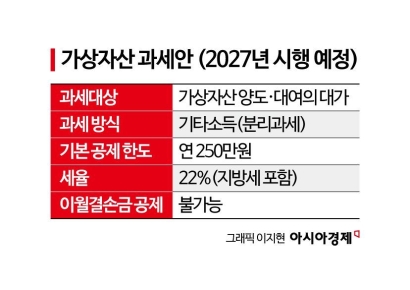 "Stocks Are Not Taxed, but Annual Crypto Gains Over 2.5 Million Won to Be Taxed Next Year... Investors Push Back"
- "Not Jealous of Winning the Lottery"... Entire Village Stunned as 200 Million Won Jackpot of Wild Ginseng Cluster Discovered at Jirisan
- "Even With a 90 Million Won Salary and Bonuses, It Doesn’t Feel Like Much"... A Latecomer Rookie Who Beat 70 to 1 Odds [Scientists Are Disappearing] ③
- "Rather Than Endure a 1.5 Million KRW Stipend, I'd Rather Earn 500 Million in the U.S." Top Talent from SNU and KAIST Are Leaving [Scientists Are Disappearing] ①
- "How Did an Employee Who Loved Samsung End Up Like This?"... Past Video of Samsung Electronics Union Chairman Resurfaces
- What is the scope of money that financial product sellers must pay to consumers when exercising the right to cancel illegal contracts?
△ The right to cancel illegal contracts differs in nature from the right to claim damages for losses caused by illegal contracts. Since the effect of canceling an illegal contract occurs prospectively, the contract becomes null and void from the time of cancellation. Therefore, costs incurred during the service provision process under the contract from contract conclusion to cancellation (such as loan interest, card annual fees, fund fees, etc.) are, in principle, not included in the scope of money to be paid to consumers after contract cancellation.
© The Asia Business Daily(www.asiae.co.kr). All rights reserved.







