Culture Ministry vs OTT Copyright Controversy... Examined at the Ministry of Science and ICT Research Forum
[Asia Economy Reporter Seulgina Jo] The Ministry of Science and ICT is taking a closer look at copyright-related issues, including the music copyright rates for online video services (OTT), which recently escalated into administrative lawsuits with the Ministry of Culture, Sports and Tourism. They also plan to examine the institutionalization status of Europe's content quota system.
On the morning of the 25th, the Ministry of Science and ICT held the 3rd meeting of the 'Internet Video Service Legal System Research Group' at the Seoul Central Post Office, composed of industry-academia-research experts related to OTT. The research group was launched in July last year to diagnose the restructuring of the media market due to the spread of OTT services and to prepare desirable legal system improvement directions.
At the 3rd meeting, recently highlighted issues regarding OTT copyright and neighboring rights, as well as the institutionalization status of the European content quota system, were discussed. First, Professor Kyungshin Park of Ewha Womans University gave a presentation on OTT-related copyright and neighboring rights issues, and Dr. Donggyun Park of KISDI introduced the institutionalization status of Europe's content quota system. This was followed by discussions among industry-academia-research experts.
The Ministry of Science and ICT reaffirmed the 'minimum regulation principle' to allow media platforms to grow autonomously during the global digital transition and activation of OTT services. Earlier this year, the ministry also announced plans to support the OTT ecosystem and improve related legal systems under the minimum regulation principle.
In particular, this meeting drew more attention as it was held amid recent administrative lawsuits filed by domestic OTT companies such as Wavve, Watcha, and TVING against the Ministry of Culture, Sports and Tourism over OTT music copyright rate issues. Following these companies, KT and LG Uplus are also expected to join the administrative lawsuits against the Ministry of Culture, Sports and Tourism. The industry is protesting that the Ministry’s revised regulations on music copyright fees are unclear, with rates increasing several times per platform even when watching the same terrestrial drama, and that proper opinion gathering was not conducted.
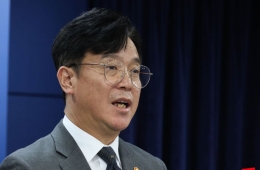
Minister Ki-young Choi of the Ministry of Science and ICT also expressed concern, saying, "(OTT fee increases, etc.) may cause user harm," and added, "We are trying to resolve the issue by acting as a mediator if possible." Meanwhile, criticism is mounting that various ministries, including the Korea Communications Commission and the Fair Trade Commission, are pushing regulations on early-stage growth platforms like OTT, causing the minimum regulation principle to disappear and only leading to power struggles within the government.
Hot Picks Today
 "Stocks Are Not Taxed, but Annual Crypto Gains Over 2.5 Million Won to Be Taxed Next Year... Investors Push Back"
- "Don't Throw Away Coffee Grounds" Transformed into 'High-Grade Fuel' in Just 90 Seconds [Reading Science]
- Signed Without Viewing for 1.6 Billion Won... Jamsil and Seongbuk Jeonse Prices Jump 200 Million Won in a Month [Real Estate AtoZ]
- "Groups of 5 or More Now Restricted"... Unrelenting Running Craze Leaves Citizens and Police Exhausted
- "Even With a 90 Million Won Salary and Bonuses, It Doesn’t Feel Like Much"... A Latecomer Rookie Who Beat 70 to 1 Odds [Scientists Are Disappearing] ③
Yongsu Oh, Director of Broadcasting Promotion Policy at the Ministry of Science and ICT, said, "Since OTT is causing disruptive innovation in the existing market and various legal system issues are emerging accordingly, it is necessary to review the legal system for industrial development and increased user welfare," adding, "The Ministry of Science and ICT, which is responsible for digital innovation policies across society, will strive to gather opinions from various ministries and industry-academia-research sectors to prepare the optimal legal system improvement direction.”
© The Asia Business Daily(www.asiae.co.kr). All rights reserved.