Will the Long-Awaited 'Contactless Service' in the Casino Industry Become Possible?
Demand to Allow 'Video Streaming Method' Betting via Agents
Philippines Sees Significant Growth by Attracting Many Chinese Customers through Non-Face-to-Face Services
Government to Approach Carefully Referencing Overseas Cases... National Awareness Shift Also Needed

[Asia Economy Reporter Donghyun Choi] There is a strong call for the introduction of ‘contactless services’ in the casino industry, which is facing a crisis due to the COVID-19 pandemic. Along with this, there is growing demand for a government-level mid- to long-term plan to transform public perception of casinos and restructure the industry.
Contactless casino services are currently impossible in South Korea. Article 28 of the Tourism Promotion Act prohibits ‘operating outside of licensed exclusive business premises.’ Now, 55 years after the first casino was established in the country, all 17 domestic casinos require customers to use services offline and in person. Unlike various industries rapidly expanding contactless services amid the Fourth Industrial Revolution and the ‘post-COVID’ era, the casino industry has yet to take even its first steps.
The conservative operation of casinos is due to their classification as gambling industries. If gambling intensifies, a culture of get-rich-quick mentality spreads socially, hindering healthy labor activities and negatively impacting the national economy. Appropriate regulation is essential for industries with strong gambling characteristics.
The casino industry does not deny this. However, many fixed ideas surrounding casino gambling need to change. An industry insider said, “There are many fields such as stocks, Bitcoin, and probability-based items in games where the degree of gambling is equal to or even more severe than casinos, yet both domestic and foreign users can freely access online services,” adding, “The concept of gambling needs to be redefined or at least regulatory fairness ensured, but due to negative perceptions of casinos, there is no sign of change.” Another insider pointed out, “The domestic casino industry, worth 3 trillion won, is overseen by only five officials from the Ministry of Culture, Sports and Tourism,” emphasizing, “It is necessary to have a long-term plan linked not only to casinos but also to integrated resorts and tourism.”
The casino industry is requesting contactless services within a limited scope. Contactless services are divided into ‘direct participation (live streaming),’ where customers place bets themselves like in online games, and ‘indirect participation (video streaming),’ where an agent at the casino places bets on behalf of the customer. The industry is asking to allow video streaming-based contactless services exclusively for VIP foreign customers who face difficulties entering or leaving the country due to COVID-19.
Video streaming involves customers playing games through an agent at the casino via communication methods such as telephone. Customers can watch the game progress online. Park Byung-ryong, chairman of the Korea Casino Industry Tourism Association, stated, “Global casino companies in the U.S., Europe, and the Philippines have already swiftly introduced contactless services with government support,” and argued, “Contactless services are necessary to secure international competitiveness, recover sales, and maintain employment.”
The Philippine casino industry, which turned early to video streaming-based contactless services, has seen rapid growth by attracting a large number of Chinese customers. According to Japanese investment bank Nomura Securities, the Philippines’ top-grossing casino, Solaire Resort and Casino, recorded sales of $1.154 billion (approximately 1.28 trillion won) in 2019. Of this, video streaming sales accounted for $115 million, about 10%. Video streaming sales have steadily increased from $81 million in 2016.
Hot Picks Today
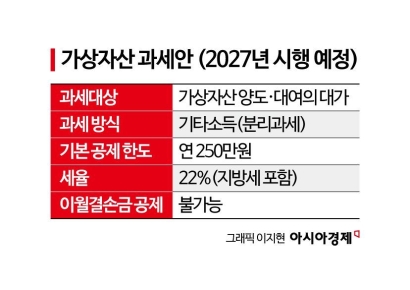 "Stocks Are Not Taxed, but Annual Crypto Gains Over 2.5 Million Won to Be Taxed Next Year... Investors Push Back"
- "Not Jealous of Winning the Lottery"... Entire Village Stunned as 200 Million Won Jackpot of Wild Ginseng Cluster Discovered at Jirisan
- "Rather Than Endure a 1.5 Million KRW Stipend, I'd Rather Earn 500 Million in the U.S." Top Talent from SNU and KAIST Are Leaving [Scientists Are Disappearing] ①
- "How Did an Employee Who Loved Samsung End Up Like This?"... Past Video of Samsung Electronics Union Chairman Resurfaces
- "Even With a 90 Million Won Salary and Bonuses, It Doesn’t Feel Like Much"... A Latecomer Rookie Who Beat 70 to 1 Odds [Scientists Are Disappearing] ③
The South Korean government’s stance is to approach the matter cautiously. A Ministry of Culture, Sports and Tourism official said, “We are currently reviewing overseas cases related to casino contactless services,” but added, “However, we have not yet started institutional implementation, such as conducting research projects.” Minister Hwang Hee also recently stated at a meeting, “Contactless services involve diplomatic issues and risks of illegal activities, so careful consideration is necessary,” and added, “We need to have many discussions going forward.”
© The Asia Business Daily(www.asiae.co.kr). All rights reserved.







