Argentina Seeks IMF Debt Repayment Postponement After COVID-19 Pandemic End
This Year's Fiscal Deficit at 8.2% of GDP, Inflation Rate Returns to 50% Range

[Asia Economy Reporter Yujin Cho] The Argentine government, which is experiencing economic difficulties, is pushing for a plan to postpone debt repayment to the International Monetary Fund (IMF) until after the end of the COVID-19 pandemic.
On the 14th (local time), major foreign media reported that Cristina Fernandez, Vice President of Argentina, plans to request the IMF to delay the repayment deadline of $44 billion (approximately 49 trillion KRW) in debt until after the COVID-19 situation has stabilized.
Foreign media reported that Alberto Fernandez, President of Argentina, who has been negotiating debt restructuring with the IMF for the past several months, is demanding "more flexible conditions."
Argentina's domestic market has been severely hit as the economic recession, which has continued since the second half of 2018, worsened further due to the COVID-19 pandemic.
As a result, last year's gross domestic product (GDP) growth rate was a low ?10.4%, and the fiscal deficit expanded to 6.5% of GDP.
Bank of America analysts told Bloomberg News, "The IMF is expected to propose lowering Argentina's fiscal deficit from the current 4.5% to 3.5% as part of the debt restructuring negotiation plan."
The news agency reported that the Argentine government aims to complete debt restructuring negotiations with the IMF by May, but said this is unlikely to be realistic.
Quoting a senior IMF official, the agency said, "There has been no substantial progress in negotiations between the IMF and the Argentine government," adding, "We do not think it is 'impossible' to finish negotiations by May, but it will certainly be an 'ambitious goal.'"
The IMF is Argentina's largest creditor and has lent $44 billion since agreeing to a $57 billion bailout in 2018.
The Argentine government has announced a series of strengthened measures for foreign exchange controls and has been negotiating debt restructuring with creditors, including the IMF, for months.
Argentina has faced a shrinking economy for three consecutive years with double-digit unemployment rates, and consumer price inflation is expected to soar back to the 50% range this year.
Hot Picks Today
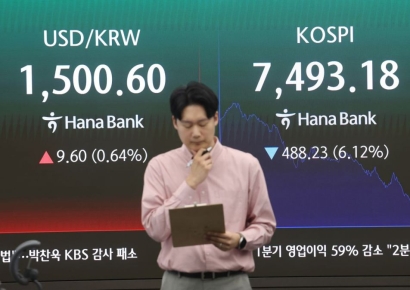 After Topping 8,000 Instead of Hitting 10,000... KOSPI Plunges—When Will It Rebound?
- "Samsung and Hynix Were Once for the Underachievers"... Hyundai Motor Employee's Lament
- [Breaking] Court Rules Against Samsung Electronics Union...1 Billion Won per Day Penalty for Exceeding Strike Scope
- Six Economic Organizations Urge Withdrawal of Samsung Electronics Strike Plan...Warn of National Loss of Opportunity
- "That? It's Already Stashed" Nightlife Scene Crosses the Line [ChwiYak Nation] ③
According to the IMF's World Economic Outlook report, Argentina's GDP growth rate this year is projected at 4.5%, which is 0.4 percentage points lower than the previous forecast of 4.9%.
© The Asia Business Daily(www.asiae.co.kr). All rights reserved.







