[Full Text] Bank of Korea Monetary Policy Committee January Monetary Policy Direction
The Bank of Korea's Monetary Policy Committee Holds Interest Rate at 0.5% for 8 Months
Concerns Over Asset Market Concentration
![[Full Text] Bank of Korea Monetary Policy Committee January Monetary Policy Direction](http://www.asiae.co.kr/news/img_view.htm?img=2021011511055028194_1610676350.jpg)
[Asia Economy Reporter Jang Sehee] The Monetary Policy Committee of the Bank of Korea decided on the 15th to maintain the base interest rate at the current annual rate of 0.5%. This decision was made to continue the accommodative monetary policy stance to support economic recovery amid the prolonged COVID-19 pandemic.
The following is the full text of the monetary policy direction.
The Monetary Policy Committee decided to operate monetary policy by maintaining the Bank of Korea base rate at the current level (0.50%) until the next monetary policy direction decision.
The global economy's recovery momentum has weakened due to the resurgence of COVID-19. In international financial markets, despite the resurgence of COVID-19, major countries' stock prices and government bond yields rose sharply due to the start of vaccinations and expectations of economic recovery, while the US dollar continued to weaken. Going forward, the global economy and international financial markets are expected to be influenced by the extent of COVID-19 resurgence, vaccine distribution status, policy responses of each country, and their ripple effects.
The domestic economy continued a moderate recovery trend. Private consumption contracted due to the intensified resurgence of COVID-19, but exports, centered on the IT sector, expanded, and facility investment also continued to improve. Employment conditions remained weak with a significant decrease in the number of employed persons. Going forward, the domestic economy is expected to show a moderate recovery mainly driven by exports and investment, but uncertainty about the growth path remains high. The GDP growth rate for this year is expected to be around 3%, as projected last November.
The consumer price inflation rate and core inflation rate (excluding food and energy) remained at a low mid-0% level due to continued declines in petroleum and public service prices. The general public's expected inflation rate remained in the high 1% range. Consumer price inflation is expected to stay in the mid-to-high 0% range for some time before gradually rising to the 1% range, while the core inflation rate is expected to remain in the low-to-mid 0% range.
In financial markets, risk appetite strengthened due to rising stock prices in major countries and expectations of improved domestic corporate earnings, leading to a sharp rise in stock prices. The won-dollar exchange rate declined, while long-term market interest rates rose. Household loans continued to increase at a high rate, and housing prices rose in both the Seoul metropolitan area and other regions.
Hot Picks Today
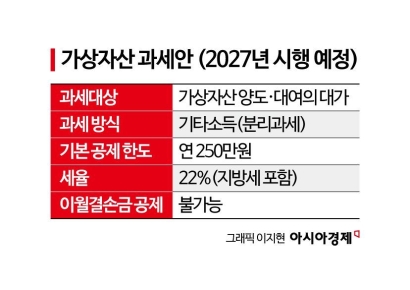 "Stocks Are Not Taxed, but Annual Crypto Gains Over 2.5 Million Won to Be Taxed Next Year... Investors Push Back"
- "Not Jealous of Winning the Lottery"... Entire Village Stunned as 200 Million Won Jackpot of Wild Ginseng Cluster Discovered at Jirisan
- "Rather Than Endure a 1.5 Million KRW Stipend, I'd Rather Earn 500 Million in the U.S." Top Talent from SNU and KAIST Are Leaving [Scientists Are Disappearing] ①
- "How Did an Employee Who Loved Samsung End Up Like This?"... Past Video of Samsung Electronics Union Chairman Resurfaces
- "Even With a 90 Million Won Salary and Bonuses, It Doesn’t Feel Like Much"... A Latecomer Rookie Who Beat 70 to 1 Odds [Scientists Are Disappearing] ③
The Monetary Policy Committee will operate monetary policy to support the recovery of growth and ensure that inflation stabilizes at the target level in the medium term, while paying attention to financial stability. As the domestic economic recovery is expected to be moderate and demand-side inflationary pressures remain low, the accommodative monetary policy stance will be maintained. In this process, the Committee will closely monitor the development of COVID-19, the ripple effects of past policy responses, and changes in financial stability conditions such as capital flows into asset markets and increases in household debt.
© The Asia Business Daily(www.asiae.co.kr). All rights reserved.