IBK, Full-Scale Launch of Labor-Recommended Director System... Concerns Over Labor Governance Following Government Control (Comprehensive)
Financial Sector's First Expected? Attention Focused
Possibility of Expansion to Private Financial Sector as Policy Banks and Financial Public Enterprises Settle
Friction Inevitable When Management Intervention Is Excessive
![[Image source=Yonhap News]](http://www.asiae.co.kr/news/img_view.htm?img=2020101615340847555_1602830048.jpg)
[Asia Economy Reporter Park Sun-mi] The IBK Industrial Bank of Korea (IBK) labor union is pushing to introduce a labor union-nominated director system ahead of the expiration of the terms of two outside directors in February and March. If the labor union nomination system is confirmed, it will be the first introduction in the financial sector. There is also a growing possibility that the labor union-nominated director system will spread to national policy banks and financial public enterprises in the future. Concerns have been raised that the competitiveness of financial institutions, which suffered from government control and political finance last year, could further deteriorate due to the expansion of labor union management intervention.
According to the financial sector on the 12th, the IBK labor union plans to select and recommend candidates for outside directors so that the labor union-nominated director system can be introduced before the term of outside director Kim Jeong-hoon expires next month. The candidate recommendation is being considered to be conducted in a public recruitment format that also gives the general public an opportunity to recommend outside directors. This is to emphasize that the labor union nomination system is not only for the benefit of the labor union but also for consumer protection and public interest.
The IBK labor union is also pushing for a revision of the articles of incorporation that includes the provision allowing the labor union to recommend one outside director, so that the labor union-nominated director system does not remain a one-time event but can be institutionalized regularly. At the labor-management council held at the end of last month, the labor union raised the introduction of the labor union-nominated director system as an agenda item, laying the groundwork for such discussions between labor and management.
A labor union official said, "We will ensure procedural fairness through a public recruitment format so that the candidate recommended by the labor union next month can become an outside director," adding, "The goal is to regularize and institutionalize the labor union-nominated director system through amendments to the articles of incorporation."
IBK Industrial Bank of Korea, Possibility of Introducing the First Labor Union-Nominated Director System in a Bank
In the industry, it is seen as highly likely this time because IBK President Yoon Jong-won promised to discuss and negotiate the labor union-nominated director system upon his inauguration, and last November, the government and labor agreed to make efforts to introduce a labor director system in public institutions before the amendment of the Public Institution Management Act that allows such introduction.
![[Image source=Yonhap News]](http://www.asiae.co.kr/news/img_view.htm?img=2020091211022176842_1599876141.jpg)
Previously, KB Financial Group attempted but failed to introduce the labor union-nominated director system. However, if IBK becomes the first in the financial sector to introduce it, the system is expected to take root in national policy banks and financial public enterprises such as KDB Industrial Bank, Korea Eximbank, and Korea Credit Guarantee Fund, and then spread to the private financial sector.
However, there is concern that if the labor union's management intervention goes beyond a proper level, conflicts with management could arise, potentially reducing work efficiency and competitiveness. National policy banks and financial public enterprises are already criticized for losing competitiveness due to the practice of appointing high-ranking officials from bureaucrats and politicians. They now face the burden of having to endure strong labor union influence on top of government-controlled and political finance.
Workers' Participation in Management... What Are the Side Effects?
In the case of IBK, although support for small and medium-sized enterprises has been highlighted due to the spread of COVID-19, labor and management failed to narrow their differences during several collective bargaining negotiations, leading to the declaration of a breakdown in negotiations last month and the application for mediation by the Central Labor Relations Commission. At that time, the labor union even considered a strike.
Concerns arise that if the labor union's influence grows stronger with the introduction of the labor union-nominated director system, discord between labor and management could lead to disruptions in the bank's core operations.
Especially in the atmosphere where the government is pushing for public institution reform, such as transitioning from the existing seniority-based wage system to a job-based wage system that reflects objective job value, a stronger labor union influence could exacerbate discord between labor and management. Criticism of reckless management is emerging for financial public enterprises, which offer better employment stability and treatment than general workplaces, and if management becomes swayed by the labor union, public backlash is likely to intensify.
Hot Picks Today
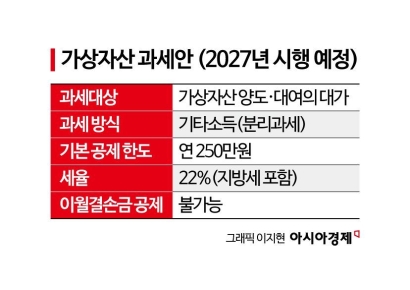 "Stocks Are Not Taxed, but Annual Crypto Gains Over 2.5 Million Won to Be Taxed Next Year... Investors Push Back"
- "Not Jealous of Winning the Lottery"... Entire Village Stunned as 200 Million Won Jackpot of Wild Ginseng Cluster Discovered at Jirisan
- "Rather Than Endure a 1.5 Million KRW Stipend, I'd Rather Earn 500 Million in the U.S." Top Talent from SNU and KAIST Are Leaving [Scientists Are Disappearing] ①
- "How Did an Employee Who Loved Samsung End Up Like This?"... Past Video of Samsung Electronics Union Chairman Resurfaces
- "Even With a 90 Million Won Salary and Bonuses, It Doesn’t Feel Like Much"... A Latecomer Rookie Who Beat 70 to 1 Odds [Scientists Are Disappearing] ③
President Yoon Jong-won’s remark at last year’s National Assembly Political Affairs Committee plenary session that "The labor union-nominated director system has the advantage of collecting diverse opinions and increasing predictability when managing an institution," but "if excessive, problems can arise," reflects such concerns from management.
© The Asia Business Daily(www.asiae.co.kr). All rights reserved.