Concerns Over Loan Overheating Resurface... Financial Authorities Again Emphasize 'Management' to Banks
Emergency Review Meeting with Deputy Heads of Credit at Commercial Banks
"Please Do Your Best to Manage the Total Household Loans This Year" Request

[Asia Economy Reporter Kangwook Cho] As loan demand in the banking sector has surged since the beginning of the new year, financial authorities have once again emphasized loan management to commercial banks.
According to the financial sector on the 11th, the Financial Supervisory Service (FSS) held a video conference in the afternoon with senior loan officers from major banks to assess the status of household loans, including the amount and purpose of loans such as credit loans by each bank. In particular, they examined the trends and causes of household loan increases and rechecked each bank's loan targets.
The FSS reportedly ordered commercial banks to continue managing household loans. Earlier, the banking sector submitted monthly household loan management plans. The FSS urged strict compliance with these plans and requested that banks do their best to manage the total volume of household loans this year.
Additionally, the FSS focused on examining how many high-value credit loans exceeding 100 million KRW exist. The government's fundamental stance is to impose "pinpoint regulations" on high-value credit loans used for non-living expenses such as real estate investments by high-income and high-credit borrowers.
The reason financial authorities have once again emphasized management is that within just seven days of the new year, or four business days, the outstanding balance of credit loans at the five major commercial banks?KB Kookmin, Shinhan, Hana, Woori, and NH Nonghyup?surged by more than 450 billion KRW. The number of new overdraft accounts exceeded 7,400.
This increase is considered unusual compared to previous years. Typically, in January, since year-end bonuses are paid out, credit loan demand decreases and savings and deposit balances increase, which is the usual trend.
Financial authorities believe that excessive household loan growth could trigger overheating in stocks and real estate, and thus they intend to take preemptive measures. With a series of major companies' initial public offerings (IPOs) scheduled early in the year, they plan to manage the situation to prevent excessive capital concentration.
However, financial authorities currently judge that the loan increase is not yet at a level of concern.
Hot Picks Today
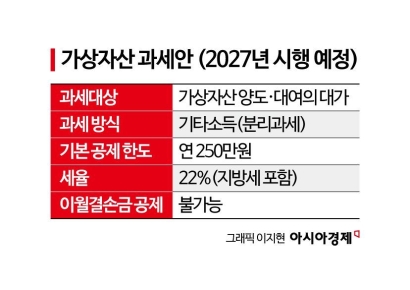 "Stocks Are Not Taxed, but Annual Crypto Gains Over 2.5 Million Won to Be Taxed Next Year... Investors Push Back"
- "Not Jealous of Winning the Lottery"... Entire Village Stunned as 200 Million Won Jackpot of Wild Ginseng Cluster Discovered at Jirisan
- "Even With a 90 Million Won Salary and Bonuses, It Doesn’t Feel Like Much"... A Latecomer Rookie Who Beat 70 to 1 Odds [Scientists Are Disappearing] ③
- "Rather Than Endure a 1.5 Million KRW Stipend, I'd Rather Earn 500 Million in the U.S." Top Talent from SNU and KAIST Are Leaving [Scientists Are Disappearing] ①
- "How Did an Employee Who Loved Samsung End Up Like This?"... Past Video of Samsung Electronics Union Chairman Resurfaces
A financial authority official said, "We are continuously monitoring the increase in credit loans, but so far, the rise is not at a 'surge' level," adding, "We plan to closely examine household loan trends together with the banking sector to ensure that excessive loans do not lead to defaults."
© The Asia Business Daily(www.asiae.co.kr). All rights reserved.







